

No More Fake Feedback – Be Specific
Most of the feedback people receive in the workplace isn’t feedback at all, it’s what I fondly refer to as Cap’n Crunch – vague and unhelpful words that put people on the defensive but don’t change behavior. If you want people to do something differently, give specific feedback.
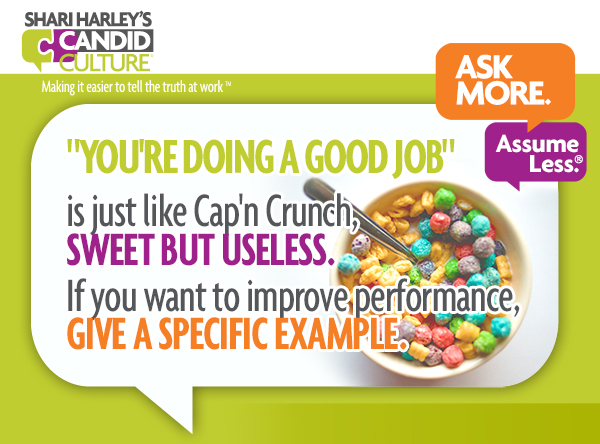
Most of the fake Cap’n Crunch feedback people get sounds like this:
“You did a great job on that.”
“You’re doing really good work.”
“You’re dressing inappropriately.”
“You’re difficult to work with.”
None of this is feedback. It’s all Cap’n Crunch. Vague, vague, and more vague.
The first words out of your mouth will invariably be Cap’n Crunch. Follow those words with, “for example” and you’ll be headed in the right direction.
“You did a great job on that. For example, I never had to ask about the status of the project. You gave me an update every Friday, and that made me feel comfortable that we were on track.”
“You dressed inappropriately for that meeting. For example, the client was dressed in business casual; you wore jeans and a t-shirt. Next time, please dress as the client dresses or a step above in khaki pants or slacks and a jacket.”
Most people are afraid to give feedback because they don’t want to deal with the defensive reaction they anticipate. The more vague you are, the more defensive people will be, because they don’t know what you’re talking about and they feel judged. Vague feedback is subjective. Subjective is judgmental. Feeling judged puts people on the defensive.
If employees shop your feedback around, asking what others think of the feedback you provided, it’s because you were vague, they disagree with you, or they’re being defensive. Feedback will be received better and resisted less if you’re specific.
Specific feedback can be captured on video. Meaning, you can video someone calling into a meeting late, rolling their eyes, and texting on their phone. I dare you to video “you were disrespectful in the meeting, you dressed inappropriately, or you’re difficult to work with.” If you can’t capture the feedback on video, you don’t yet have specific feedback. You have Cap’n Crunch.
When I teach managers to give feedback I ask the managers to, “Describe the situation to me. What did the person do?” Managers often reply with, “They were negative.” This is Cap’n Crunch. So, I keep asking questions. “What did they do that was negative? What did it look like?” After two or three questions the manager tells me, “I overheard them complaining to other employees about the decisions the company is making. I’d rather they ask me questions about the direction we’re going versus gossip to peers.” Now we have specific feedback.
Wait to give feedback until you have a specific example. If you don’t have a specific example, go get one. Without an example, employees will look at you in a confused way, question the validity of what you’re saying, and become defensive. And they’ll be justified in doing all of these things.
Most of us dread giving feedback because we don’t want to deal with people’s defensive responses. If you want more help, chapters nine through twelve of How to Say Anything to Anyone provide a clear and easy-to-follow formula for giving specific feedback.
Remember, if you’re not using the words “for example” you’re not giving specific feedback.

Tags: giving feedback, giving helpful feedback, giving negative feedback, giving negative feedback at work, giving performance feedback, how to give constructive feedback, How to Give Feedback, how to say anything to anyone, management training