Career Management Archive
 My last few blog posts focused on giving feedback. The posts were designed to help managers get ready to write and deliver performance appraisals.
Giving feedback will always be hard. No one wants to hear that she isn’t doing a good job, thus no one wants to tell her. Part of the performance appraisal process is setting expectations for the next year. And asking for what you want, before problems happen, will always be easier than giving feedback.
If you’ve seen me speak or attended one of our training programs, you received a list of Candor Questions designed to eliminate the guessing at work. They may have been questions for leaders, managers, strengthening business relationships or managing careers. Regardless of which Candor Question Cards you received, the goal is the same. Ask more. Assume less.
The most frequent request I get is for feedback training. Managers tell me, “The communication in our company isn’t good. Can you help our managers and employees be more candid?” And I tell business leaders, “I teach people to be more comfortable giving feedback. But why start with something hard? Why not start by asking more questions and getting to know people better, which is much easier and will reduce the number of feedback conversations you need to have?”
When we know what people expect, we can give people what they need. We make fewer ‘mistakes’, requiring fewer feedback conversations. So start with what’s easy. Ask more questions.
Start with what I call Introductory Candor Questions:
- How do you like to receive information – email, voicemail or text message?
- Are you a detail-oriented or a big-picture person? How much information do you want to receive and in what format?
- What are your pet peeves at work? What would I do that would be frustrating, and I’d never know it?
Then move on to Candor Questions for Managers:
- What had you choose to work here, and what would make you question that decision?
- What kind of work do you love to do most? What kind of work do you like to do least?
- What do you wish I would start, stop, and continue doing?
You can download samples of our seven types of Candor Questions here.
People are not us and don’t do things the way we do. Don’t assume someone will create a report as you would, participate in a meeting as you would, or dress for an event as you would. Setting expectations before the event of what you want, gives them a chance to be successful.
Giving Feedback is Hard – Asking for What You Want is Easier. By Shari Harley.
The Feedback Formula:
1. Introduce the conversation so feedback recipients know what to expect.
2. Empathize so both the feedback provider and the recipient feel as comfortable as possible.
3. Describe the observed behavior so the recipient can picture a specific, recent example of what you’re referring to. The more specific you are, the less defensive he will be, and the more likely he’ll be to hear you and take corrective action.
4. Sharing the impact or result describes the consequences of the behavior. It’s what happened as a result of the person’s actions.
5. Having some dialogue gives both people a chance to speak and ensures that the conversation is not one-sided. Many feedback conversations are not conversations at all; they’re monologues. One person talks and the other person pretends to listen, while thinking what an idiot you are. Good feedback conversations are dialogues during which the recipient can ask questions, share his point of view, and explore next steps.
6. Make a suggestion or request so the recipient has another way to approach the situation or task in the future. Most feedback conversations tell the person what he did wrong and the impact of the behavior; only rarely do they offer an alternative. Give people the benefit of the doubt. If people knew a better way to do something, they would do it another way.
7. Building an agreement on next steps ensures there is a plan for what the person will do going forward. Too many feedback conversations do not result in behavior change. Agreeing on next steps creates accountability.
8. Say “Thank you” to create closure and to express appreciation for the recipient’s willingness to have a difficult conversation.
If you’re giving more than one piece of feedback during a conversation, address each issue individually. For example, if you need to tell someone that she needs to arrive on time and also check her work for errors, first go through the eight steps in the formula to address lateness. When you’ve discussed an agreement of next steps about being on time, go back to step one and address the errors. But talk about one issue at a time so the person clearly understands what she’s supposed to do.
Here’s how a conversation could sound, using the eight-step Feedback Formula:
Step One: Introduce the conversation.
“John, I need to talk with you.”
Step Two: Empathize.
“This is a little awkward, and it may be uncomfortable. I want you to know that while I wish I didn’t have to tell you this, I’m doing it because I care about you and I want you to be successful.”
Just because you’re direct doesn’t mean you’re not empathetic. But remember, these are my words. You’ll need to find your own words that you feel comfortable using to deliver such a difficult message.
Step Three: Describe the observed behavior.
“John, I’ve noticed that you have an odor.”
Step Four: Share the impact or result of the behavior.
“I know this is a very awkward subject (more empathy). We work in a small space. I don’t want others to avoid working with you or say negative things about you. And as awkward as this is, I would rather you hear this from me than from someone else. Sometimes health conditions can cause certain odors, as can eating certain foods.”
Step Five: Have some dialogue. Ask the recipient for his perception of the situation.
“What are your thoughts?”
Give John time to say whatever he wishes to say.
Step Six: Make a suggestion or request for what to do next time.
“Again, I’m really sorry to have to tell you this. Please make sure you shower every day before coming to work and wash your clothes regularly. And please tell me if there’s something else you’d like me to know.”
Because of the awkwardness of this subject, skip step seven, and go to step eight.
“Thank you for being willing to have this conversation with me.”
You Can Say More Than You Think You Can
You might be gasping, thinking there is no way you could ever tell someone he smells. It’s definitely an awkward conversation, one I hope you never have to have. I used one of the most difficult things you will ever have to say to demonstrate that even the most awkward feedback can be delivered empathetically and quickly.
The short and concise body-odor conversation is a lot less uncomfortable for the recipient than the drawn-out, evasive first version. Just think, would you rather listen to someone tell you that you smell for two minutes or for twenty?
You may also think, “I shouldn’t have to tell someone to take a shower and wash their clothes.” That’s true, you shouldn’t. But if you’re working with someone who doesn’t do these things, clearly someone needs to tell him. Remember, other people are not you and don’t do things the way you do, even when those things appear to be no-brainer basics.
Lastly, you may think that telling someone to shower and wash his clothes is insulting and demeaning. It’s true: No matter how you spin it, there’s nothing nice about this message. But which is worse, having your coworkers ask for different desks and be unwilling to work with you, or having someone who has your best interests at heart tell you privately to clean it up—quite literally? When you tell people the truth, you do them a favor.
Here’s another example: A few years ago I had a coworker who was a lingerer. Lisa would hover outside my office until she saw an opportunity to interrupt. She then walked in uninvited and started talking. I was still mid-thought about whatever I’d been working on and wasn’t ready to listen. After a few sentences, I would interrupt Lisa, saying, “I’m sorry. I don’t know what you’re talking about. Will you please start over?”
Embarrassing as it sounds, this went on for more than a year. I wanted to be seen as accessible and open, yet this “lingering” method of interrupting was driving me crazy. And it was a waste of both of our time. After many months of frustration, I decided to use the eight-step Formula.
Step One: Introduce the conversation.
“Lisa, I want to talk about something I’ve noticed.”
Step Two: Empathize.
“I probably should have said something a long time ago. I’m sorry I didn’t.”
Step Three: Describe the observed behavior.
“I’ve noticed that when you want to talk to me you stand at my door, waiting for a good time to interrupt. When you come into my office, you’re often in the middle of a thought or problem that you’ve probably been thinking about for a while.”
Steps Four and Six: Share the impact or result of the behavior and make a suggestion or request for what to do next time.
“Because I’m in the middle of something completely different, it takes me a few seconds to catch up. By the time I have, I’ve missed key points about your question and I have to ask you to start over. This isn’t a good use of either of our time.
“Here is my request: When I’m in my office working and you need something, knock and ask if it’s a good time. If it is, I’ll say yes. Give me a few seconds to finish whatever I’m working on, so I’m focused on you when we start talking. I’ll tell you when I’m ready. Then start at the beginning, giving me a little background, so I have some context. And if it isn’t a good time for me, I’ll tell you that and come find you as soon as I can.”
Step Five: Have some dialogue. Allow the recipient to say whatever she needs to say.
“What do you think?”
Step Seven: Agree on next steps.
“Okay, so next time you want to talk with me, you’re going to tap on the door and ask if it’s a good time to talk. If it’s not, I’ll tell you that and come find you as soon as I can. If it is a good time, you’re going to give me a second to finish whatever I’m working on and give me some background about the issue at hand. Does that work for you?”
We have just managed “the lingerer”—a challenge you probably have, unless you work from home or in a closet.
You may have noticed that I changed the order of the Feedback Formula during this conversation. It’s not the order of the conversation that’s important. It’s that you provide specific feedback, offer alternative actions, and have some dialogue before the conversation ends.
Summary: Good Feedback Is Specific, Succinct, and Direct.
Provided you have a trusting relationship with someone and have secured permission to give feedback, there is very little you can’t say in two minutes or less. The shorter and more direct the message, the easier it is to hear and act upon. Follow the eight-step Feedback Formula. Be empathetic and direct. Cite specific examples. Give the other person a chance to talk. Come to agreement about next steps. Remember, you do people a favor by being honest with them. People may not like what you have to say, but they will invariably thank you for being candid.
This week’s blog is an excerpt from my book How to Say Anything to Anyone: A Guide for Building Business Relationships That Really Work. I hope it helps you have the conversations you need to have! Be candid. You can do it!
If I hear this one more time I might lose it.
Manager: “One of my employees has been making a lot of mistakes. He seems disengaged. I’m not sure what’s happening.”
Me: “Have you talked to him?”
Manager: “No. Performance appraisals are coming up, so I’ll just wait to give the feedback until then.”
Me: “When are performance appraisals?”
Manager: “In six weeks.”
Most people hoard feedback. We wait for the right time, aka when we’re comfortable. That time will never come. The right time to give feedback is when something happens or shortly thereafter. Practice the 24-hour rule and the one-week guideline. Give feedback when you’re not upset, but soon after the event occurs, so people remember what you’re talking about.
Most employees feel as if they’re treated unfairly during some portion of a performance appraisal. Employees receive feedback they’ve not previously heard, or receive feedback that is unbalanced – overly positive or negative, or the feedback is so vague employees aren’t sure what to do more, better or differently.
Good performance appraisals are a quick summary of all the performance conversations you’ve had during the year and planning for next year. To have an appraisal meeting like this one, managers need to meet with their employees regularly and give feedback every time you meet. And that is the management BEST suggestion I can make.
Meet regularly with your employees. If you never meet one-on-one with employees, start meeting monthly. If you meet monthly, meet twice a month. If you meet twice a month, consider meeting weekly for 30 minutes.
The one-on-one meeting agenda, which the employee owns:
- What is the employee working on that’s going well?
- What is the employee working on that is not going great, but she doesn’t want your help?
- What is the employee working on this isn’t going great and she wants your help?
- Give each other feedback: What went well since you last met? What could be improved?
** Give and receive feedback on the work and on your relationship. This will be hard the first few times you do it, but will become easier with each successive conversation.
Ask your employee to create a meeting agenda. Take notes on the agenda and keep your notes. The summary of these meetings becomes your annual performance appraisal.
Regardless of whether or not you’re meeting regularly, throughout the year and have performance notes, you can only give small pieces of feedback during the appraisal meeting. Discuss three SPECIFIC things the employee did well during the year and three things she should do next year. People can’t focus on more.
Think about the New Year’s resolutions you may have made last January. You might have promised yourself you’d save ten percent of your income, lose twenty pounds, take a two-week vacation without your phone, and apply to attend graduate school. How many of those things did you do? Setting too many aggressive goals sets us up to fail. And performance appraisals are not different.
Consider how each of your employees must impact your department and your organization’s annual goals. In that context, determine the most important things each employee did to contribute to those goals this past year and what she should have done more, better or differently? That’s your appraisal. Not more and not less.
During performance appraisals, force yourself to focus on and present ONLY the most important behaviors and outcomes, and your employees will bring the same focus to the ensuing year.

Appraisals can raise performance and morale, but most damage both. The appraisal process is broken. Summarizing an entire year’s work into one conversation and giving all that work a numerical rating is demoralizing and ineffective. Yet it’s the system most of us have to work with.
It’s time to get ready to write, deliver, and receive useful, motivating, and effective performance appraisals.
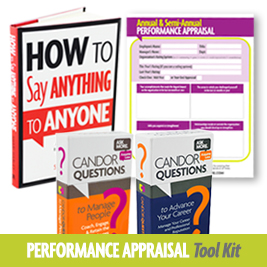 First evaluate your performance appraisal. If it’s more than two pages, it’s too long. If HR professionals are chasing appraisals, trying to get managers to complete them, the tools you’re using aren’t working. If you have to conduct a training to teach people how to complete the appraisal, it’s too complicated.
The next few blogs will be about how to write and deliver effective performance appraisals. I’ll also make Candid Culture’s effective performance appraisals tool kit available. Contact us for bulk pricing.
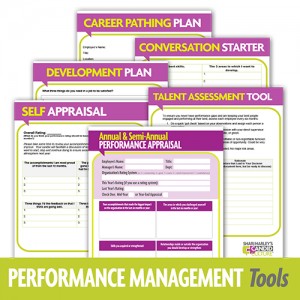 When I managed leadership training and succession planning, in a past job, I inherited a 12-page performance review that no one wanted to use. One of the leaders I supported told me, “If you can give me something that’s one page, I’ll get my people to use it.” From that day on I was on a quest to create tools for effective performance appraisals that were one or two pages. Today Candid Culture offers a suite of performance management tools – self appraisal, annual appraisal, talent assessment, development plans, etc. — that are one and two pages. Let me know if you want to talk with me about using them in your organization.
Employees, make it easy to review your performance. Write a one-page document summarizing your accomplishments. Assemble feedback you’ve received during the year from the people you support. Ask permission to provide both to your manager to make it easier to write your review.
Lastly, managers and employees, get ready to give and receive useful feedback. Most of the feedback employees receive isn’t feedback at all. It’s what I fondly refer to as CAP’N Crunch – vague and thus unhelpful. Effective performance appraisals should focus on three specific things the employee did well during the year and three specific things she can improve. People can’t focus on more than that.
 How to Say Anything to Anyone: A Guide for Building Business Relationships that Really Work is perfect preparation to get ready to deliver and receive performance feedback. I feel so strongly that the book will elevate the appraisal process, that we’re going to offer the book at a deep, bulk discount, to encourage organizations to make it available to managers and employees.
The appraisal process doesn’t have to damage relationships, lower morale and make employees question their commitment to your organization. Get ready now. Don’t wait. Start capturing what employees did well during the year and what could have been improved. Be specific. If you don’t have an example, you’re not ready to give feedback.
Next week I’ll provide specific examples of how to create useful performance feedback that will raise performance while maintaining morale. Until then, start planning! Good luck
 Giving negative feedback is hard. Asking for what you want will always be easier.
Set Expectations That Are Clear
We have all worked hard on a project, only to find out that what we created is not what our manager was expecting. When this happens, everyone is frustrated. Managers question whether or not employees listen. Employees wonder why managers who want something specific didn’t just say so when the work was assigned.
Managers would be well served by setting clear expectations at the beginning of working relationships and projects. Tell your employees what a good job looks like. Don’t make them guess.
If you want a weekly status update, tell employees that rather than being frustrated when you don’t know where projects stand. If you want a bulleted summary, tell people that rather than being annoyed when five paragraphs land in your inbox. If you envision a report with tables and charts, tell employees that versus being disappointed when they create a bulleted list.
Most of us assume people will do things the way we do. They won’t. Save time and reduce frustration by being crystal clear when you set expectations at the beginning of anything new.
When people see the title of my book How to Say Anything to Anyone, they think it’s a book about giving feedback and having difficult conversations. It’s not. How to Say Anything to Anyone is about asking more questions, so you know what your direct supervisor, coworkers, and customers need and don’t have to guess. How to Say Anything to Anyone is not about giving people bad news. It is about asking for what you want before challenges occur, and then talking about how you’ll deal with challenges when they arise.
If you work for someone who does not set expectations that are clear, then you, the employee, needs to set those expectations.
Set expectations by asking your manager:
• When do you want to see this, in what format, with how much detail?
• What does a good job look like?
• What’s your expectation of how this should look when it’s complete?
• Where does this fit, as a priority, in relation to other projects?
• How does this project fit into the department’s or organization’s goals?
Asking questions and telling people what you want is always easier than giving negative feedback. Everyone – employees and managers alike – are accountable for ensuring that the set expectations are clear and that work is done right the first time Ask more. Assume less.
Download the five questions managers must ask their employees to set expectations that are clear:
 When I was in college I wrote a paper making the case that most of the decisions we make are based on fear. My professor told me that I wouldn’t want the grade she’d put on the paper and told me to rewrite it. Many years later, I still believe the premise of what I wrote.
We often make decisions based on fear of what will and won’t happen.
Is that a good decision? What will happen if I say or do that? Will I get in trouble? Will I get what I want, or will there be negative consequences? Will we make or lose money? What impression will that decision make on other people?
Fear is pervasive. It hides in our brain and guides our decision making, without us even being aware of its presence.
I’ll never forget driving up to an ATM machine with one of my closest friends from high school. We were 30 at the time, long past high school, and were in a very quiet and safe neighborhood. And yet my friend told me not to go to the ATM machine after dark because it wasn’t safe.
Says who? A long time ago, someone told her that it wasn’t safe to go to an ATM machine at night. And she believed that she’d be robbed at night, at any ATM machine, anywhere, throughout her adult life. Not a rationale fear.
Who is running the show, you or your past?
You know what’s best for you. When you quiet the noise in your head and listen, you know what to do. Trust yourself.
 Tap into your real desires. When desire overtakes fear, the world will be at your feet. But it can take a lot to even identify that fear is running the show and to know what those desires are.
Many of you know I’ve never been married. I’ve found finding ‘that person’ elusive and challenging. This spring I met someone great. And I did everything in my power to make sure the relationship went nowhere. I put up every barrier, citing reasons from my list of dating criteria of why it would never work. My ‘list’ didn’t let me see the person in front of me. I made decisions about him that weren’t true, because I was afraid. It took weeks before I was willing to make the leap, put aside my fears, and be able to hear what my gut was telling me.
Trust yourself. Not your fear. When fear rears its head, go to a quiet place, literally and figuratively, and ask yourself:
What do I really want? What should I do? You’ll know. Don’t ask 100 people what you should do. Or do ask other people for advice, but be careful with the answers you get. Underneath all that worry and concern, you know what you want. They key is to listen and be willing to trust yourself.
 Most people wait way too long to give feedback. We wait for the right time, aka when we’re comfortable. That day will not come.
Instead of waiting to give feedback until you’re about to explode in frustration, or until a formal review, give feedback every time you meet with someone.
Managers, make it a practice to meet with each of your employees at least once a month. Twice a month or weekly would be better. But if you’re not doing one-on-one meetings now, start meeting monthly. If you’re meeting monthly, start meeting twice a month. Employees need face time with their boss. Team meetings and casual conversations do not replace individual meetings.
Direct Report One-on-One Meeting Agenda:
The direct report comes to the meeting ready to discuss:
1. What she’s working on that is going well.
2. What she’s working on that is not going well.
3. What she needs help with.
4. Then the manager gives feedback on what went well since the last meeting and what could be improved.
5. And the employee gives the manager feedback on what has gone well since the last meeting and what could be improved.
Feedback goes both directions. Managers, if you want your employees to be open to your feedback, ask for feedback from your employees on what they need from you. Give feedback on both the work and your working relationship. A poor working relationship often motivates employees to leave a job, but it’s the last thing that gets discussed.
Feedback discussions should be short. You can say anything in two minutes or fewer. No one wants to be told she isn’t cutting it for 20 minutes. Say what you need to say and end the conversation or move on to another topic.
If you’re not giving your employees regular feedback you can use this language to start:
“I’m realizing that I’m not giving you enough feedback. I want to be helpful to you. If I don’t provide regular, timely feedback, I’m not being as helpful as I could be. I’d like to start a regular practice of meeting monthly, getting an update from you on how things are going, and giving each other feedback on what went well and what could be improved since our last meeting.”
 If you work for someone who is not forthcoming with feedback, ask for feedback. You’re 100% accountable for your career. Don’t wait for your manager, customers or peers to give you feedback. Ask for feedback on a regular basis.
Here’s how you can ask for feedback from your manager:
“Your feedback helps ensure I’m focused on the right work. Can we put a monthly meeting on the calendar, and I’ll tell you what I’m working on, where I do and don’t need help, and we can discuss how things are going?”
If meetings get cancelled, reschedule them. If your manager says these meetings aren’t necessary or she doesn’t have time, tell her, “Your regular input is helpful to me. What’s the best way to ensure we catch each other for a few minutes each month?” Meaning, push the issue.
If your manager still doesn’t make time for the meetings or doesn’t provide clear and specific feedback, even when you ask for examples, ask your internal and external customers and coworkers for feedback. The people you work closely with see you work and will likely give feedback, if asked.
No news is not necessarily good news. Waiting six months or a year to receive performance feedback is like going on a road trip from St. Louis to Los Angeles but not consulting a map until you arrive in New York, frustrated and far from your desired destination.
Managers: Meet with employees monthly, semi-monthly or weekly, and give feedback every time you meet.
Employees: Ask your managers, customers, and coworkers for regular feedback, and take control of your career.
The normal, human response to negative feedback is to become defensive. Becoming defensive is a survival instinct, like hitting your breaks when the car in front of you stops short. It’s almost unavoidable.
The challenge with becoming defensive is that the person who risked telling you the truth (as she sees it) doesn’t want to deal with your defensiveness. Your defensiveness is . . . scary, intimidating, annoying – fill in the blank.
So what’s the right answer?
Here’s my recommendation on how to respond to negative feedback:
When someone gives you feedback, listen. Listening doesn’t mean you do what the other person wants. Listening merely means take in the message. Hear what the other person has to say. And ask questions for greater understanding, if you can do so without being defensive. In my experience, asking questions, in the moment, without being defensive is VERY hard to do.
I got critiqued for admitting, in last week’s blog, that I broke one of my own rules by sending feedback via email. I study, teach and write about how to communicate well. And I’m human. Sometimes my emotions get the best of me. But when they do, I clean it up fast.
The last time I got feedback from a friend I got defensive. And during the conversation, right after I became defensive, I caught myself, apologized, and asked the person to tell me again. I said, “I’m sorry I got defensive. Tell me again and I’ll do a better job of listening.”
You won’t always communicate perfectly. It’s not possible. The key is to catch yourself quickly and clean up the messes you make. If you raise your voice, apologize. If you cry, remove yourself from the situation until you can speak calmly. If you push back and defend versus listen, own your behavior and do a better job of listening. You’ll earn respect by admitting when you fall short.
It’s easy to mistake listening to feedback and saying “Thank you for telling me that” as agreement. I’m not suggesting you agree or give in. When you’re calm and can interpret the feedback, without emotion, go back to the person to talk more. It’s ok to push back. It’s ok to say you disagree or that she is mistaken. But if you have this conversation when you receive the feedback, the other person will likely be so daunted by your reaction that she is not likely to give you feedback again, and that’s a loss for you.
So few people will risk being honest with you, make it easy on those who do.
A few weeks ago one of my friends asked for feedback on how he communicated. When I told him what I thought he responded with, “So, you’re telling me I did it all wrong.” Aka, he got defensive, so I back peddled. In that moment my brain got trained, this guy can’t take feedback. So the next time he asks me, I won’t give any.
It doesn’t take much to train people not to tell you the truth. One instance of defensiveness will do it. Don’t do that to yourself. You need the data. You don’t need to agree with what the person says or change your behavior, but you need to know what people think and say about your performance.
Let’s review how to respond to negative feedback:
- Ask for feedback.
- Listen.
- Don’t defend.
- Think about what the person said.
- Wait until you’re calm.
- When you can ask questions and discuss without being defensive, talk further.
Now that you know how to respond to negative feedback, use our Advancing Career Questions to get more feedback:

 We’ve all received work from another person that wasn’t what we were expecting, hit reply, and told the other person what we thought. Then we dealt with the consequences.
A few tips for giving feedback to get more of what you want and less of what you don’t:
Don’t give feedback via email. Ever. You can’t manage your tone or see the person’s reaction.
Practice the 24-hour rule and the one week guideline. Wait until you’re not upset to give feedback, but don’t wait longer than a week.
It’s almost impossible to give feedback without putting the other person on the defensive. Becoming defensive when receiving feedback is normal and natural. It’s a way to protect ourselves when we feel attacked.
When people are defensive, it’s hard to listen and respond. The less defensive the other person becomes, the easier it is to communicate with that person. People will be less defensive if you give feedback when you’re calm and choose your words carefully.
Communicate in a way that the relationship needs versus what you need in the moment.
When we give feedback when we’re upset, we’re really communicating for us, not for the other person. I didn’t get what I want. I’m upset. And I’m going to tell you about it. Then the other person gets upset and now, in addition to you not getting what you wanted in the first place, you have to do damage control.
Communicating in a way the relationship needs means choosing the timing, words and method of communication that is likely to produce the result you want – the other person being able to hear you, while becoming minimally defensive, and taking action. Giving feedback when you’re upset, especially via email, will not produce the result you want. You’ll only damage your relationship.
Being a good communicator and maintaining good business relationships requires patience and self discipline. This is something I work on ALL the time. Last week I sent one of my vendors feedback via email, when I was upset, and spent two days trying to recover. I sent a minor email with critique, he felt attacked, and I damaged our relationship.
It doesn’t take much to raise someone’s defensiveness to the point that you have to do damage control.
Wait to give feedback until you’re not upset. Don’t send an email. Pick up the phone or walk to the person’s desk. Deliver the feedback in a way the other person can hear you. Be ready for him to become defensive. It’s human to become defensive. You can’t eliminate defensiveness, but how you deliver feedback can greatly reduce it. And you’ll get more of what you want and less of what you don’t.
Read How to Say Anything to Anyone and get the words to have even the toughest conversations.
 It’s hard to come back to work after a long weekend, no matter how much you like your job. As fun and fulfilling as work can be, we all struggle with back to work blues from time to time.
If you’re having a hard time getting back into it today, here are a few things to try:
- Be realistic about how much you’re going to do today. Move a few things on today’s to-do list to tomorrow, or maybe Wednesday. Setting unrealistic goals sets people up for frustration and feelings of failure.
- Pick one or two things you’re going to do today, and finish those two things.
- Do one thing at a time. Not five.
Stress occurs when we’re thinking about the past or the future. When we’re in the moment, there is nothing to stress about. You’re focused on what you’re doing, nothing else. This is easier said than done, which is why I do yoga. If I’m thinking about anything but the teacher’s instructions, I fall over.
- Plan something fun. When is your next vacation? What are you looking forward to? Having something fun and exciting on the horizon is motivating and keeps us going.
- If you’re not having fun at work or you’re feeling stuck, tell someone who can do something about it. Most people are so afraid of being fired, they don’t speak up at work. From my experience it’s not so easy to get fired. Look around. I suspect there are several people you work with who you think deserve to be fired, yet there they are. Worry less. Speak up more. No organization is going to fire you for wanting and being willing and able to do more.
If after all of these BRILLIANT suggestions you still find yourself in the back to work blues, gossip about a few people who haven’t made it in yet today, eat someone else’s lunch from the refrigerator that looks better than what you brought, and re-arrange the most organized person’s desk. And all will be well.
Advance your career and manage people with our top three sellers.