The approach of summer and summer office attire can make even the most seasoned HR person weary. No one wants to tell an employee that her belly button isn’t for public viewing or to leave the flip flops at home.
Like any behavior you want to generate, it’s much easier to set clear expectations of what is and isn’t acceptable summer office attire before the season begins. So this spring, do some prevention before you have to give an employee feedback for wearing something that fits better at the beach than at work.
Most organizations have a written dress code. I recommend making it visual. Like the image here, post pictures of summer office attire do’s and don’ts in visual form. A picture makes a lasting impression employees are likely to remember; bullet points are easy to forget. If employees are wearing flip flops, tank tops, sheer blouses, spaghetti straps, wrinkled capris, etc., simply post photos of those articles in the no category. Don’t make employees guess if something is appropriate, make it visually clear.
I also recommend hosting a fashion show. Order food, have employees model summer office attire do’s and don’ts. Make it fun. Watching your peers walk ‘the runway’ in both appropriate and inappropriate summer office attire will make a much bigger impact than any ‘memo’ will.
But let’s say you already have a summer dress code violater and you know you need to say something to the person. Addressing inappropriate office attire is just like any other feedback conversation. Make it short. Tell the person why you’re speaking – because you care about him and want to help him manage his reputation – and be direct.
Here are a few examples of how to tell someone she is violating the summer dress code:
Preface each example below with something like, “I care about you and I care about your career. I’ve got some input about your summer office attire. Please take my feedback in the spirit it’s intended, which is to be helpful to you.” This language is appropriate for any type of relationship – peer, manager, and direct reports.
Summer casual dress code scenario one: “Those are super cute shoes, but they violate our company dress code of no open toed shoes. Please don’t wear them again at work.”
Summer casual dress code scenario two: “I can see your bra straps under that shirt. Please wear an additional layer under the shirt, the next time you wear it.” Women should have this conversation, men should not. If a man manages a female who needs to alter her summer attire, ask another female she has a good relationship with to have that conversation for you.
Summer casual dress code scenario three: “Those pants are too tight for work. Please wear looser fitting clothing.”
Effective feedback is short and clear. You can do it. Unless you hire and manage life guards, simply tell the people you work with the truth about the impression their clothing makes and why that’s important. But it’s always easier to set clear expectations before challenges occur, so start there.
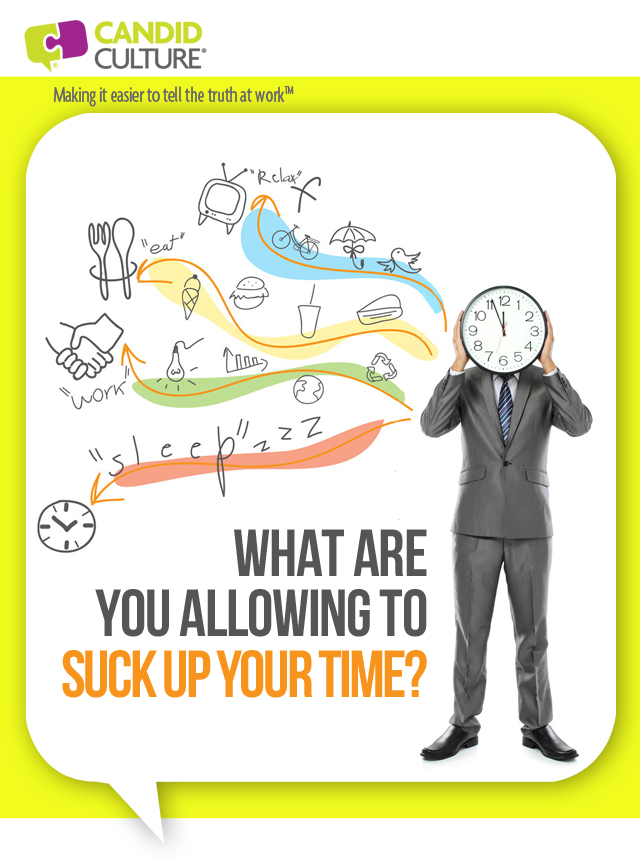
Nothing will help you with time management more than having a baby. Since having my son, deciding what to say yes and no to has become very easy. I do just what I have to and really, really want to, and say no to everything else. Work that wasn’t where I should be spending my time is now done by someone else. Social events that I didn’t really want to attend get declined.
Time is the only thing in life you can’t get back. You can make friends and lose friends. You can make money and lose money. You can gain weight and lose weight. But you never ever get back your time.
So where is your time going? What are you doing that you know someone else should be doing? What are you doing out of obligation that is devoid of enjoyment? Where do you invest more time than you need to, requiring you to give short shrift to another priority?
It may seem odd that a communications expert is writing about time management. I don’t speak or train on time management. But I am knowledgeable and passionate about people loving the work they do, where they do it. And it’s hard to love what you and do your best work when you don’t allocate your time well.
Here are five time management questions:
Time management question one: What are you doing that you know someone else could or should do?
Time management question two: If you invested a few hours training someone, what could you give up to create room for something new?
Time management question three: What personal relationships do you invest time in because you think you’re supposed to?
Time management question four: Which family events are you attending out of obligation?
Time management question five: What do you give 110% percent to that 70% would be more than sufficient, leaving more of your time and energy for something more important?
You only have so much time and energy. Where are you going to put it – on the things that matter most or on distractions that seem important?
I’m not suggesting you skip every family event you don’t want to go to. But perhaps go for less time or skip every third event. I’m not advocating cutting corners or doing mediocre work. But sometimes we spend much more time on things than we need to, when investing less time would deliver the same result.
Here are a few examples of what I mean by 70% being more than enough:
You spend 25 hours on the formatting of a presentation when the content is what’s really important. You create gorgeous tables and graphs when five bullets were what the client really wanted.
You host a party and make hand painted table tents describing each food, when your guests will have a great time with typed descriptions or no descriptions at all.
You maintain friendships you know should have ended long ago because it seems like the right thing to do.
You avoid calling friends if you don’t have an hour to talk instead of calling and saying, I only have ten minutes but really want to talk with you.
Invest your time in what produces the greatest results and maximizes your enjoyment. Work hard, do great work, invest in your family and friends, and know when “no thank you” is the right answer.
Last week I was talking with a friend who works for a large investment bank. He said, “I don’t believe in the premise of your book. There is no place for negative feedback in the workplace. It’s just not possible.” And I’m seeing firsthand how hard it is for people to receive negative feedback. All kinds of people – sensitive people and less sensitive people, Type A and laid back types. No one wants to hear she made a mistake, could have done something better, or any other type of negative feedback. It’s just too hard.
This is a massive conflict for me. At Candid Culture, we teach people how to give and receive feedback and yet, here I am wondering if it’s even possible.
We need to be able to tell people what they can do better. And the truth, is, while people may not want to hear negative feedback, most people do want to know what they can do to improve their performance and get ahead, hence the quandary. Give negative feedback and evoke others’ defensiveness or say nothing and put up with whatever isn’t working? I, of course, would prefer that you give the feedback, believing that it empowers people to make better personal and professional choices. The question is how?
Here are six steps to make giving negative feedback possible:
Set the expectation at the onset of working relationships that you will give and receive balanced (positive and negative) feedback regularly. If you’ve worked with people for years and have not set this expectation, it’s not too late. Simply say, “I realized we don’t give each other a lot of feedback. In the spirit of continuous improvement, I’d like to implement a weekly debrief during which we talk about what’s working and not working. We’ll give each other feedback during the meetings.”
Assess candidate’s openness to feedback when you interview, and don’t hire people who don’t accept negative feedback. We do practical interviews at Candid Culture. We give candidates a chance to do some of the work they’ll be doing on the job and tell candidates what they can do to improve, during the interview. Then we see how they accept our feedback. We also ask interview questions that help elucidate whether or not candidates are open to feedback and we ask candidates’ references how well the person accepts negative feedback.
Observe performance regularly and provide balanced feedback from the start. Don’t wait until a problem occurs or until you have time to give feedback. Begin the practice of meeting weekly to review and discuss work, setting the precedent that this is the way you do business.
Provide positive feedback regularly so people know the good stuff and aren’t solely focused on the negative feedback they receive.
Ask for and be open to feedback. When you demonstrate being open to feedback, you earn the right to give feedback.
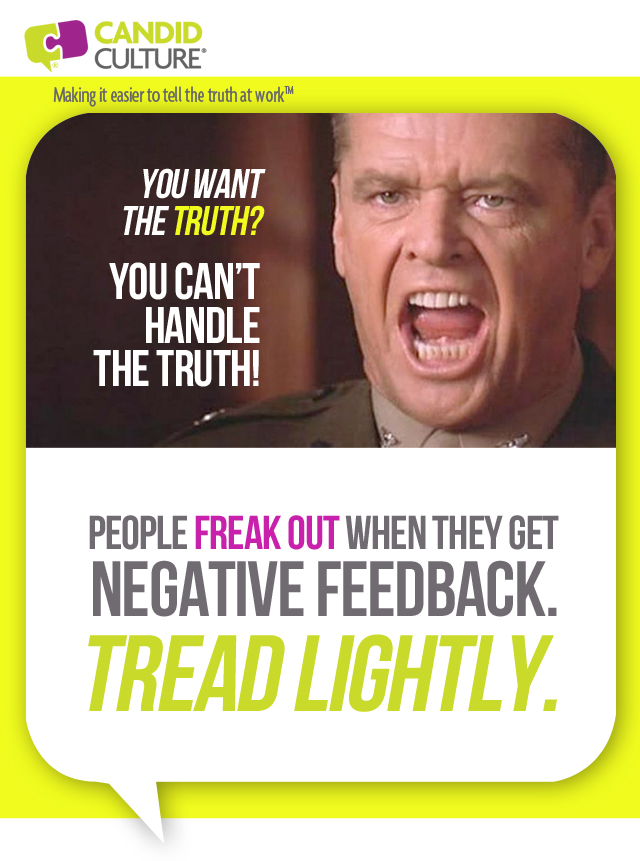
Lastly, don’t underestimate how hard it is to hear negative feedback. When some people receive negative feedback, they begin to question themselves, their skills, and their value. So tread lightly. Pick your battles. Address only what you really need to and say things gingerly, remembering that you’re talking to a sensitive person, no matter how tough he may seem.
Posted under Career Management on March 27, 2016 by Shari Harley. 0 Comments
When I was leading Leadership Development for OppenheimerFunds I told my boss, the head of HR, that one of my career goals was to be an HR generalist. He said, in his lovely British accent, “Shari, you’re very good at what you do, and you would be a terrible generalist. You will never be a generalist here.” At the next company, I also told the head of HR that one of my career goals was to be an HR generalist, and he too said, “You would be a terrible generalist. You won’t have that role here.” I could have left that company and chased my desire to be a generalist, or I could have listened to people who saw something I didn’t. I listened.
Sometimes others can see things we can’t and it makes sense to listen. That’s actually my definition of a coach – someone who can see things that we can’t, and they’re willing to tell us.
If you’re serious about achieving your career goals, consider these six practices:
Identify what you want to do.
Share your career goals with people who can help you achieve them.
Ask people you trust and those in a position to help you achieve your career goals what may prevent you from having what you want. Obstacles might be organizational (i.e. the job you want doesn’t exist at your company) or they might be personal (i.e. you don’t have the skills, acumen, or temperament for the job you want).
Work to develop skills you’re missing.
Accept things that might prevent you from getting what you want. I.e. I don’t have the temperament to be an effective HR generalist, and I never will.
Decide when to stop pursuing a goal. Make peace with that decision. And move on to something equally, if not, more compelling.
Most of us were raised to believe that quitting is taking the easy way out and that to quit is bad. I don’t know about that. Sometimes you have to listen to the feedback the world gives you and act accordingly.
When I was pregnant, I worried that I would gain sixty pounds and never take the weight off. Well, that’s not what happened. I gained 18 pounds (amazing) and most of it was gone when Grayson was a week old. Six months later, I’m fourteen pounds below my pre-pregnancy weight. I can’t explain it. It certainly isn’t a result of eating well or exercising, because I’m doing neither. But it has left me with a problem that’s impacting my professional image. None of my clothing fits. This is a good problem to have, but nonetheless, it’s a problem.
Last week I was at a networking event wearing a suit that was huge. When I put it on, I hoped no one would notice. And they might not have. For all I know, I was the only person who knew I was wearing ill-fitting clothing. But more important than what others saw, is how I felt in the suit. I felt unprofessional, unpolished and silly. Aka, I was uncomfortable. I didn’t trust my appearance and it had me doubt myself. So instead of networking, which was the purpose of the event, I went to an empty room and made phone calls.
We feel more confident and do better work when we feel good in what we’re wearing and know we look good.
Here are four things you can do to elevate your professional image:
Elevate your professional image tip #1: Take photos of yourself wearing your ‘go to’ outfits. Look at the photos and assess how you look in your favorite clothing. I’m often dismayed at how I ‘really look’ in my favorite pieces of clothing. Then start taking photos of how you look in pieces of clothing before you buy them.
Elevate your professional image tip #2: Ask a friend whose judgment you trust to weigh in on your clothing. Specifically ask, “What’s the first impression I make in this outfit? Where should I wear this? Where shouldn’t I wear it?”
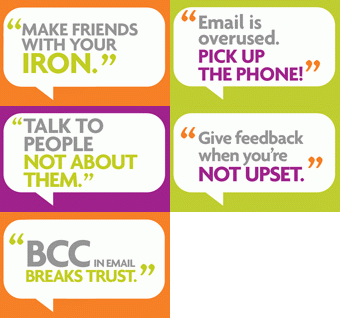
Elevate your professional image tip #3: Get a good haircut. You get what you pay for. Utilize the same practice as above. Ask a friend who always looks great to share the first impression your hair makes. Then make friends with your blow dryer. This might be the part of the blog when men check out. Stay with me. This applies to you too.
Elevate your professional image tip #4: Try on old items in your closet and get rid of everything that doesn’t pass the photo and friend evaluations. If you can’t bear to get rid of things you love, box them up so you won’t wear them.
You’ll present yourself more confidently when you have confidence in your appearance.
Note, these suggestions only apply when you’re in front of other people. If you work from home and don’t see anyone during the day but your dog and the occasional neighbor, bring on the spandex or the jammies. There is a school of thought that says you’ll do better work, even at home, if you’re professionally dressed. This isn’t true for me. I do better work when I’m comfortable. So now you know what I’m wearing when you call me. Aren’t you glad we don’t Skype!
You may not impress everyone you meet, hit every deadline, and consistently knock it out of the park. Bad days and breakdowns happen. But there are a few business etiquette practices you can consistently do to make you easy to work with and to present yourself in a professional and credible way.
Business Etiquette tip #1: Listen to your cell and work voicemail greetings. Have you recorded a personal greeting that assures callers they’ve reached your phone? If the message says, “You’ve reached 303-863-0948, callers may wonder if they’ve called the right number and are likely to hang up and call back. And make sure the greeting doesn’t sound as if you recorded it while you were outside waiting for a bus, or standing in line at the grocery store, or under water. You get the point.
Business Etiquette tip #2: Make it easy to contact you. Include all of your contact information at the bottom of your outgoing and reply emails, in a clickable format (versus a non-clickable image). Don’t make people search for your contact information. Oh, and spell check your salutation. I’m amazed at how many spelling errors and typos I see in people’s contact information.
Business Etiquette tip #3: Turn off your out-of-office voicemail and email messages when you return from a trip. Telling people that you’ll be back on January 3rd, in March, makes you appear checked out.
Business Etiquette tip #4: Don’t wear perfume or cologne to work. It likely bothers someone but s/he won’t tell you about it.
Business Etiquette tip #5: Want to avoid people asking you, “Did you get my email?” or sending you yet another email? Reply to all emails, letting people know you received their message and letting them know when you’ll respond. That could read something like, “I received your message. I’ll reply with an answer by Friday.”
I could go on – eating smelly food in a cubicle, taking phone calls via a speaker phone from a cubicle, stealing other people’s lunches out of the refrigerator, taking up two parking spots, almost finishing the coffee, but not making more, borrowing someone’s chair and returning it at a different height, leaving conference rooms a mess, ending meetings late so a posse of people wait outside to use the conference room, flushing the toilet while participating in a remote conference call, but this is a good start. I’m looking forward to listening to your personal yet succinct voicemail greeting soon!
Leave a comment and tell us your easily fixed, work-related pet peeve!
Every time I ignore the red flags I see when interviewing a candidate, or when I feel an employee is struggling, or a project is off track, I pay the price. Every single time.
You interview a candidate whose commute will be 75-minutes each each way, but she says she likes to drive. Sure, until it snows. Move on. You haven’t gotten an update from a project team in over a month, but this group is typically reliable, so things are probably fine. Check in. Even the most diligent employees need accountability and attention.
They call them red flags for a reason. If you suspect a problem, there likely is one. Don’t just wait and ‘see how things go.’ Make a hard decision, get more information, or get involved. Wait and see is often a recipe for disaster.
Sometimes we don’t get involved because we don’t have the time or want to focus on other things. Other times we just don’t trust or listen to our gut.
Trust yourself.
I usually know what I want and need to do, both personally and professionally. Yet I tend to ask LOTS of people for their opinions of what I should do. I solicit advice from friends and colleagues, and in the end, I usually do whatever I want. Why not just trust that I know the right thing to do and just do it? Dad, are you reading this? See, I listen. My dad tells me all the time to stop soliciting opinions, I often ignore anyway, and just act.
Here are a six steps you can take to help listen to yourself and ensure you don’t overlook or ignore red flags:
1. Become very clear about your desired outcome. Decide what you want.
2. Eliminate distractions. Get quiet, aka, still your mind.
3. Think about the situation at hand. Weigh the facts and your options.
4. Decide without belaboring.
5. Act on your decision.
6. Don’t look back. Your initial decision is usually the right one.
Trusting and listening to ourselves can be hard. Perhaps it’s the fear of making a mistake or being wrong. Chances are you’re right. So pay attention to the red flags, trust yourself, and listen to your gut.
I had my first baby in September. He’s amazing and every day I’m more and more grateful for him. And I hate when he cries. And as we all know, babies cry. A lot.
Soon after my son was born, I found myself suffering when he cried and working hard to get him to stop. One day while he was crying, I realized that if I wanted to enjoy my time with him I needed to not only but accept, but embrace his crying. He was supposed to be crying. This is how things were supposed to be, or they’d be another way. And in that moment, I was able to stop resisting his crying and just be with him.
I still hate to hear my son cry and I do everything I can to make him stop, but I suffer less. Babies cry. This is how life looks when it’s working. I need to accept things as they are and go with the flow. As a Type-A, perfectionist, this is hard for me to do. I want things to be a certain way, aka perfect.
When your flight gets delayed, there’s traffic when you’re in a rush, or someone doesn’t give you the information you need to finish a project on time, it’s very easy and natural to get upset and think, “There’s something wrong here.” But perhaps there is nothing wrong. Perhaps this is what happens when life’s working. It’s just another way to look at things. Accept things as they are. Go with the flow.
This isn’t any easy concept to live by all the time. Breakdowns happen. People disappoint. We do dumb stuff that has negative consequences. It’s really easy to get upset and you’re allowed to do so. It’s normal and natural. But getting upset also reduces your happiness and satisfaction. And given how much stuff goes wrong, if we get upset each time, for a long time, we’re going to be unhappy a lot of the time.
Here’s a practice to try: When something frustrating happens, say to yourself, “I guess this is what happens when life’s working.” You might need to say it a few times. Repeating this phrase might make it easy to accept things as they are and go with the flow.
In the past few weeks, my new car got hit and was totaled. The nanny I hired quit the day before I went back to work, but not before getting both me and my son sick. These are really annoying and upsetting things, and I got upset. I also told myself, several times, “This is what happens when life’s working.” It helped. I need to accept things as they are and go with the flow. That said, I also made changes.
I now work hard not to cross streets where there is not a light – how our car got hit. And I’m being more careful and slower in hiring the next nanny. But I’m suffering less.
P.S. Thank you for the many good wishes regarding Gray’s birth. I didn’t tell many people I was pregnant for a long time and was overwhelmed by the positive response. It took me three years and many, many arduous fertility treatments to have Gray. It was hard, expensive, and emotionally draining. Maybe that’s what life looks like when it’s working.
Think about all the people and situations that frustrate you. Now consider what you’re asking for. My hunch is, you’re getting what you ask for.
While most of us aren’t great at telling people when they violate our expectations, we’re not any better at asking for what we want. You might be afraid of appearing demanding or may not feel you have the right to make requests. When you tell people what you expect, you make their lives easier. Think about when someone invites you to their house for dinner. If you have any manners (and I’m sure you do), you ask what you can bring. When the other person says nothing, it makes your job (to be a good guest) harder. Now you have to guess what the other person wants. It would be so much easier if he would just tell you. This also applies to birthday gifts and where to meet for lunch. When people tell you what they want as a gift and where they want to eat, you don’t have to guess and they are easier to please.
It’s much easier to live and work with people when we know what they expect from us. And setting expectations is always easier than giving negative feedback. Negative feedback implies someone did something wrong. And no one likes to be told he is wrong. Setting expectations provides a road map to success, making it easier to win with you.
Here are a few phrases to make setting expectations easier:
Setting expectations example one: Consider saying, “I need time to get settled when I come in in the morning. Will you hold all questions and requests until 10:00 am?” You’re not telling someone she barrages you with questions before you’ve even gotten to your desk in the morning; you’re simply asking for what you need.
Setting expectations example two: You could say, “I like to have things done well before they are due. Will you send me all input for the weekly status report by Wednesday of each week so I have a few days to review your input before I have to submit it?” You’re not telling the person that working with him requires a weekly fire drill; you’re simply making a non-judgmental request.
Setting expectations example three: You could ask, “Would it be possible to touch base once a week via phone during your morning commute so I can get your input on projects?” You’re not telling the person she is impossible to get time with; you’re simply proposing an idea.
One of the keys to getting what you want is make requests in a neutral, non-judgmental way. The more you ask for and the more specific your requests, the easier you are to work with. What you need and want will be clear; there will be no guessing. People may choose to ignore your requests and violate your expectations, and then you’ll provide feedback. But start with making clear and specific requests, and see how many fewer feedback conversations you need to have.
Who have you fired lately? The person who cuts your hair or lawn? A doctor, accountant, or restaurant where you had a bad experience? Did you call any of those providers and tell them why you were replacing them? My hunch is no. There’s little incentive to do so. Why risk their defensiveness? It’s easier to just replace them. And the same is true for you.
There’s little incentive for the people you work with to tell you when you frustrate them. The perceived cost seems too high. The people you work (and live) with have experienced others’ defensive responses to negative feedback (which is no fun) and they don’t want to experience your reaction. As a result, when you disappoint or frustrate others, it’s easier to say nothing than tell you the truth.
The tendency for others to tell you things are fine when they’re not will prevent you from managing your career and relationships. People will go missing and/or you’ll be passed over for professional opportunities and never know why.
To make it more likely that people will tell you when you disappoint or frustrate them, make it easy to tell you the truth.
Here are a seven practices for receiving feedback:
Receiving Feedback Practice #1: When you begin new relationships, tell people you want their feedback.
Receiving Feedback Practice #2: Promise that no matter what people say, you’ll respond with “thank you.” This is very hard to do.
Receiving Feedback Practice #3: Tell people you already have relationships with that if you haven’t said it in the past, you really want their feedback and promise to respond graciously with “thank you.”
Receiving Feedback Practice #4: Ask people who matter to you for feedback regularly.
Receiving Feedback Practice #5: Resist the urge to get defensive.
Receiving Feedback Practice #6: Catch yourself when you start to become defensive and apologize. Say something like, “I’m getting defensive. I’m sorry. Tell me again. I’ll do a better job of listening.”
Receiving Feedback Practice #7: Take a break from conversations during which you find yourself responding defensively. Say something like, “I’m not responding as well as I’d like. How about we take a break? Give me a few minutes (hours or days) and I’ll come back to you to talk more. I really want to hear what you have to say.”
The aforementioned list provides recommendations for asking for and receiving feedback you want, not feedback you don’t. You are not a dumping ground. Don’t ask for feedback you don’t want. And when you do ask for feedback, qualify what type of feedback you’re looking for. Telling people “I want your feedback” doesn’t mean they’re welcome to say whatever they want.
The purpose of asking for feedback and making it safe to tell the truth is to give you more control over your career and relationships. It’s ok to be passed over for opportunities and relationships, but it’s unhelpful not to know why.



 Nothing will help you with time management more than having a baby. Since having my son, deciding what to say yes and no to has become very easy. I do just what I have to and really, really want to, and say no to everything else. Work that wasn’t where I should be spending my time is now done by someone else. Social events that I didn’t really want to attend get declined.
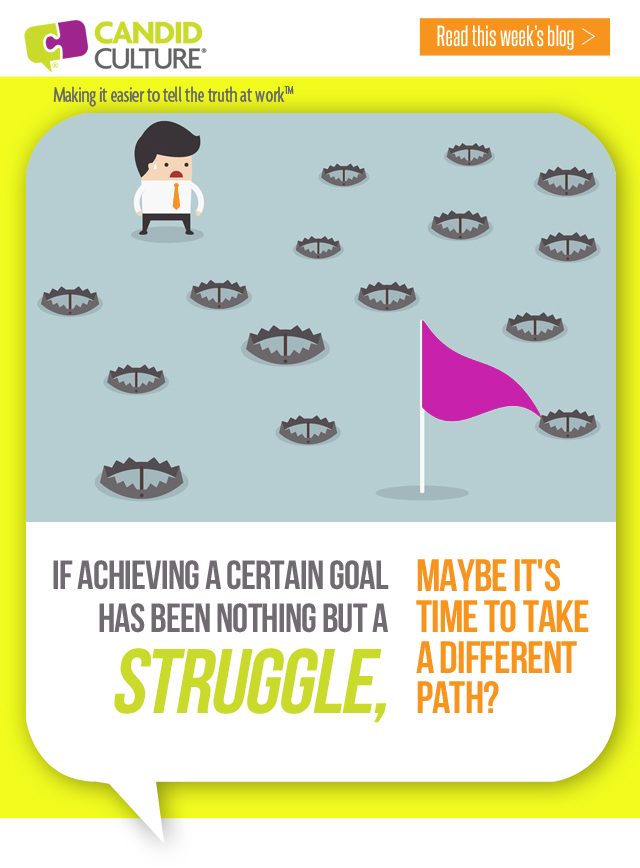 When I was leading Leadership Development for OppenheimerFunds I told my boss, the head of HR, that one of my career goals was to be an HR generalist. He said, in his lovely British accent, “Shari, you’re very good at what you do, and you would be a terrible generalist. You will never be a generalist here.” At the next company, I also told the head of HR that one of my career goals was to be an HR generalist, and he too said, “You would be a terrible generalist. You won’t have that role here.” I could have left that company and chased my desire to be a generalist, or I could have listened to people who saw something I didn’t. I listened.
 When I was pregnant, I worried that I would gain sixty pounds and never take the weight off. Well, that’s not what happened. I gained 18 pounds (amazing) and most of it was gone when Grayson was a week old. Six months later, I’m fourteen pounds below my pre-pregnancy weight. I can’t explain it. It certainly isn’t a result of eating well or exercising, because I’m doing neither. But it has left me with a problem that’s impacting my professional image. None of my clothing fits. This is a good problem to have, but nonetheless, it’s a problem.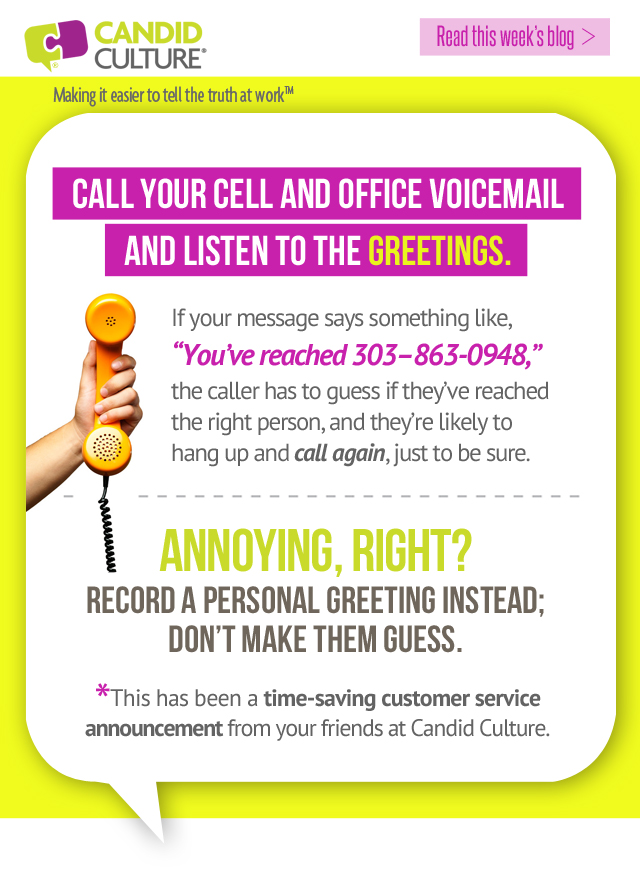
 Every time I ignore the red flags I see when interviewing a candidate, or when I feel an employee is struggling, or a project is off track, I pay the price. Every single time.
 When your flight gets delayed, there’s traffic when you’re in a rush, or someone doesn’t give you the information you need to finish a project on time, it’s very easy and natural to get upset and think, “There’s something wrong here.” But perhaps there is nothing wrong. Perhaps this is what happens when life’s working. It’s just another way to look at things. Accept things as they are. Go with the flow.
 . And the same is true for you.