Meetings go long; attendees stealthily text under the table like no one can see them; one person talks the whole time, while everyone else rolls their eyes. All the while, the facilitator does nothing.
Sound familiar?
The amount of time wasted in unproductive meetings and the degree of frustration meeting participants feel is astronomical.
The solution is simple but may not feel easy.
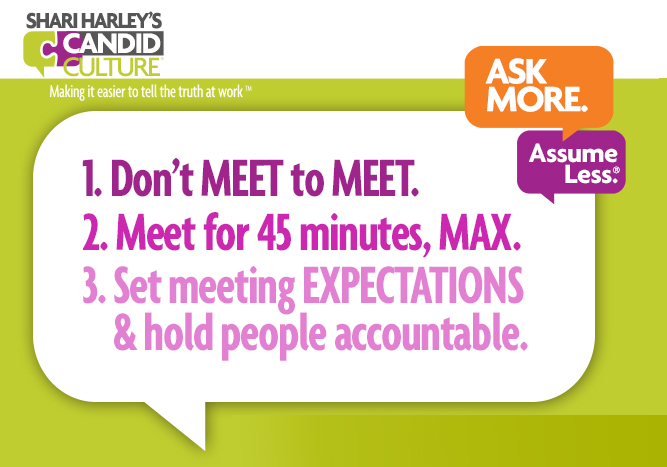
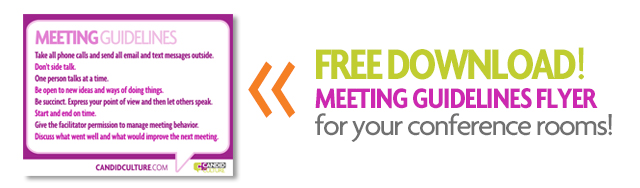
Set clear meeting expectations at the beginning of EVERY meeting and hold people accountable when they violate the guidelines.
Most meeting facilitators don’t set expectations at the beginning of meetings. Instead, facilitators expect attendees to follow the unstated, assumed guidelines. And when the meeting facilitator’s boss, peers, or customers are on their phone, it’s too hard to say something, so facilitators ignore the behavior, hoping it will stop without intervention.
The key to getting what you want in meetings (and in life) is to ask, which for the most part, we don’t. We assume people will do things as we do.
Tips for Running an Effective Meeting:
1. Set meeting expectations at your next meeting.
2. Write the expectations on a flip chart or in the chat and hang them up/post them in the chat at the beginning of every meeting.
3. Review the meeting expectations every time you meet, even with groups who meet weekly.
4. Ask meeting participants’ permission to manage meeting behavior. Your role as the meeting facilitator gives you the right to address bad meeting behavior. Asking for permission and letting people know you will say something if you see their phone etc., makes it easier to speak up.
5. Tell participants they are expected to hold themselves and each other accountable.
6. Then hold people accountable for following the meeting expectations. If you ask people not to side talk, address side talking when you hear it. If you ask people not to be on their laptops or phones, ask people to put them away. If one person talks too long, interrupt them. You will have no credibility if you set expectations but don’t hold people accountable.
The reason facilitators don’t hold people accountable is that they feel uncomfortable. It’s hard to tell your peers, boss, and coworkers to be more succinct. It’s almost impossible if you don’t set expectations about meeting behavior and set the expectation that you will say something when the meeting expectations are violated. The simple act of setting meeting expectations and asking people’s permission to manage to those expectations makes managing ‘bad’ meeting behavior easier. Not easy, but easier.
You may be thinking, “I don’t run these meetings. I’m an innocent victim.”
As a meeting participant, it is frustrating to go to poorly run meetings. But it’s also your role to speak up when you see things going poorly. Talk with the meeting facilitator.
The conversation could go something like this:
Express empathy: “That Wednesday team meeting is tough. I wouldn’t want to run it.”
Ask permission to give feedback: “I’d like to help. I’ve got a few observations and suggestions. Is it ok if I share them?”
Give feedback: “I’ve noticed that several people have been missing the meeting and others are on their phones and laptops during meetings. This definitely limits what we can get done and must be frustrating to you. What are your thoughts?”
Make a suggestion: “What do you think of setting meeting expectations at the next meeting and then telling people you’re going to hold them accountable?”
Offer help: “You’re not alone in this meeting. I’d be happy to tee up this discussion and explain why we need to set meeting expectations. What do you think?”
The facilitator knows the meetings aren’t going well. She just doesn’t know what to do. Offer to help. Don’t judge. She might be more receptive than you think. And you can stop suffering through poorly run meetings.
You’ve undoubtedly heard that it takes fewer than 30 seconds to form a first impression. The question is how frequently is your first impression wrong?
If the person sitting next to you on a plane doesn’t speak to you during the entire flight, you may initially think they are unfriendly, only to strike up a conversation as the plane is landing and find out that’s not the case. If a job candidate is outgoing, you may decide the person has good people skills, only to experience contrary behavior when they start the job. If someone is late to arrive for an initial meeting, you may decide they have an issue with time management, versus they were just running late that day.
Your first impression may be right, and it may be wrong, but it takes more than 30 seconds to be sure.
If you’ve participated in job interview training, you were probably trained to look for contrary evidence when forming an opinion about a candidate. Looking for contrary evidence is an attempt to disprove your first impression. If you quickly dismiss a candidate for lacking knowledge of your industry, you should ask interview questions to disprove your opinion before making a final decision.
Why not follow this practice in all settings? If you initially decide someone is trustworthy and reliable, spend more time with that person to be sure. If you quickly decide someone is unhelpful and uncommitted, give the person additional opportunities to behave differently before making a final judgment.
Snap judgments eliminate lots of great people and experiences from our lives.
Unfortunately, just as we prematurely exclude potential employees, friends, and life partners without having enough information, people do this to us as well, which is why it’s important to know the first impression you, your department, and your company make. If you don’t know the first impression you create, there’s nothing you can do to shift behaviors that may be costing you friends and customers.
When I was new to a job, early in my career, I asked my new coworkers to give me feedback if they saw me do anything that got in the way of my being successful at work. They agreed. But when they had negative feedback, they didn’t give it to me, they told my boss instead. That’s when I got the hard and painful lesson that people have a tendency to talk about us, not to us. It’s also when I began asking the people closest to me, who I know love me and care enough to tell me the truth, the first impression I create.
Opinions are formed quickly and they’re hard to break. Give people more than one chance and see how they show up. And know that many people will eliminate you, your department, and your company after just one interaction. So, find out the impression you create, giving you the power to do something about that impression.
Download some of the questions I ask to learn my reputation.
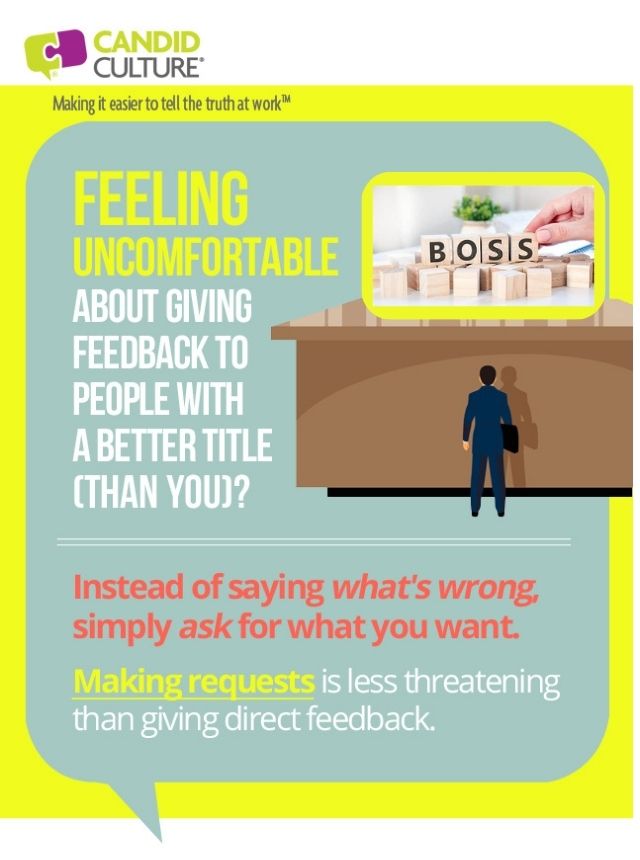
I’m often asked, “Can I give my boss or the people above me feedback? Is that really realistic?” Giving people ‘above’ you feedback has everything to do with the quality of your relationship and less to do with the person’s title. If your relationship is good and your boss is open to feedback, then yes, you can give them feedback. If your relationship isn’t that solid or your boss isn’t open to your feedback, practice managing up by asking for what you want instead of giving direct feedback.
No one likes to be criticized or told that they are wrong. When giving someone direct feedback, no matter how kind the delivery, you are telling someone, “You’re doing ______ wrong. Please do _____ instead.” Being that direct is challenging when you don’t have a trusting relationship or when people are highly defensive. You can achieve the same desired results by simply asking for what you want.
Asking for what you want is less judgmental than giving direct feedback and is a subtle way of telling someone they are not giving you what you need. And people who are paying attention will get that. They don’t need it spelled out.
Here are a few ways to practice managing up with your boss and other leaders in your organization:
Example One:
Giving Direct Feedback: “You don’t make time for me. I’m getting behind on projects because you don’t take the time to review my work.”
Managing Up by Asking: “How can we ensure you get to review my work each week, so I can finish the projects I’m working on?”
Example Two:
Giving Direct Feedback: “Every time we have a meeting scheduled, you cancel it.”
Managing Up by Asking: “If meetings get cancelled, is it ok if I reschedule them?
Example Three:
Giving Direct Feedback: “You’re a micromanager. I feel like I can’t make a move without your permission.”
Managing Up by Asking: “I’d like to manage ________ project. What do you need to feel comfortable with me doing that?”
Telling someone at any level they are doing something wrong, will likely evoke defensiveness. And being direct requires both courage and a good relationship. If you don’t have the relationship to be so direct, simply ask for what you want.
Time is the only thing in life you can’t get back. You can make friends and lose friends. You can make money and lose money. You can gain weight and lose weight. But you never ever get back your time.
So where is your time going? What are you doing that you know someone else should be doing? What are you doing out of obligation that is devoid of enjoyment? Where do you invest more time than you need to, requiring you to give short shrift to other priorities?
It may seem odd that a communications expert is writing about time management. I don’t speak or train on time management. But I do teach coaching and delegation, and effective managers and coaches know when to give something away.
Here are five time-management questions:
What are you doing at work that you know someone else could or should do?
If you invested a few hours training someone, what could you give up, creating room for something new?
What personal relationships do you invest time in because you think you’re supposed to?
Which family events are you attending out of obligation?
What do you give 110% percent to that 70% would be more than sufficient, leaving more of your time and energy for something more important?
You only have so much time and energy. Where are you going to put it – on the things that matter most or on distractions that seem important?
I’m not suggesting you skip every family event you don’t want to go to. But perhaps go for less time or skip every third event. I’m not advocating cutting corners or doing mediocre work. But sometimes we spend much more time on things than we need to, when investing less time would deliver the same result.
Here are a few examples of what I mean by 70% being more than enough:
You spend 25 hours on the formatting of a presentation when the content is what’s really important. You create gorgeous tables and graphs when five bullets were what the client really wanted.
You host a party and make hand painted table tents describing each food, when your guests will have a great time with typed descriptions or no descriptions at all.
You maintain friendships you know should have ended long ago because it seems like the right thing to do.
You avoid calling friends if you don’t have an hour to talk instead of calling and saying, I only have ten minutes but really want to talk with you.
Invest your time in what produces the greatest results and maximizes your enjoyment. Work hard, do great work, invest in your family and friends, and know when “no thank you” is the right answer.
A few years ago, I was facilitating a training when one of my client’s employees confided that she could see the train wreck coming on her team but wasn’t planning to say anything. She was going to watch the predicted mayhem happen, without saying a word.
Why wasn’t she planning to speak up about the breakdowns she could see were coming? Did she not care about her job or company? Was she not invested? The problem wasn’t any of those things. She simply didn’t believe that anyone wanted to hear what she had to say, the negative consequences for speaking up felt high, and quite simply, it was easier to say nothing.
When we were little, our parents likely told us, “If you have nothing nice to say, don’t say anything at all.” As young professionals, when we did speak up and someone didn’t like what we had to say, we got ‘in trouble’. And no one wants to hurt people’s feelings, damage relationships, or get labeled as the person who complains. The odds are stacked against speaking candidly.
The problem is, when employees don’t speak up about concerns, avoidable breakdowns happen, innovation is stifled, and dissatisfaction festers. We must find a way to speak up, even when we’re afraid or uncomfortable.
Many years ago, a colleague said to me, “The truth is one ingredient in the recipe, it’s not the whole meal.” I can’t take credit for this bit of wisdom, but it stuck with me. You don’t have to say everything you’re thinking, you can just say a little.
If you want to speak up at work but are hesitant, test the waters. Provide a little bit of information and see what happens. Was the person receptive? Did you face negative consequences? Were you treated unfairly? If the person handled your message well, provide a little more information. See how that goes. Be judicious in how much input you provide. Remember, every time you give someone negative feedback, you may bruise their ego and every person and organization has its own pace for change.
Silence leads to stale ideas, employee turnover, and cultures where people don’t want to work. Speak up, just a little.
People get defensive when they receive negative feedback. It’s hard not to. Everyone wants to be seen as competent, and when we receive negative feedback, our competence is called into question, so we react.
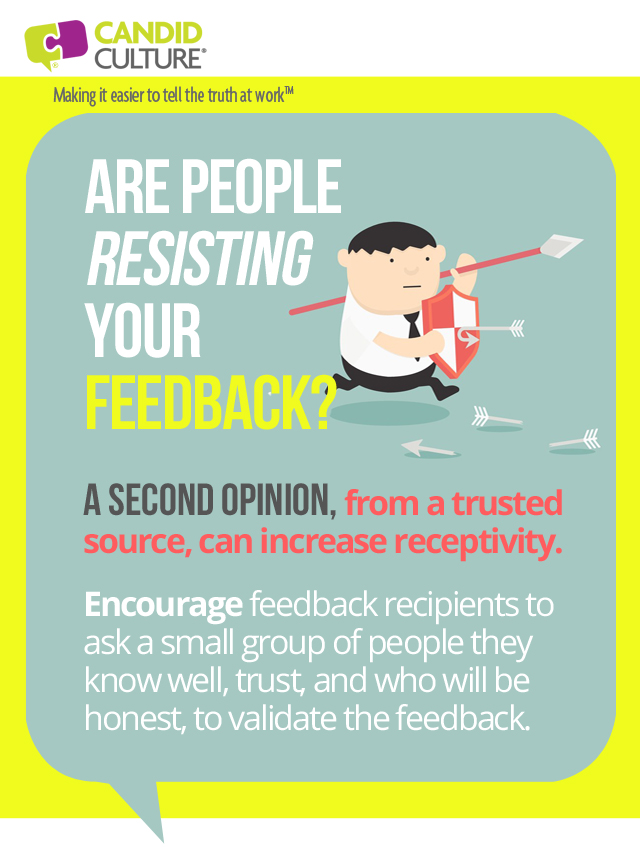
There are several things you can do to reduce others’ defensiveness – ensure you have a trusting relationship and thus have earned the right to give feedback, watch your words, deliver feedback in a private setting, etc. But for today, I’m going to focus on getting a second opinion.
If you want people to be more receptive to your feedback, consider encouraging them to get a second, third, or fourth opinion. I’m a fan of casual 360-degree feedback – when we ask for feedback from people both inside and possibly outside our organization. Think of 360-degree feedback like an orange, it’s all the way around, like a sphere. When you get 360-degree feedback, you gather input from all the different types of people you interact with, thus getting a more comprehensive and accurate picture of performance. There are different types of 360-degree feedback. 360-degree feedback ranges from a formal, online, anonymous survey to casual conversations. In this instance, I’m suggesting something I call The Core Team.
I suggest everyone has a Core Team of three to five people who love you, know you well, and have your back. Most important is that you trust these people. Your Core Team may be personal or professional relationships or a mixture of both. You may have worked with Core Team members or not. What all Core Team members have in common is that they know you well, want what’s best for you, and will tell you the truth when asked.
My core team consists of a friend from high school, two people I used to work with, and my dad. When I get feedback that I’m having a hard time reconciling, I ask people on my Core Team to validate the feedback. It doesn’t matter if they’ve worked with me or not. I am who I am. I do the same annoying stuff in my personal and professional relationships. A personal Core Team member can provide valid, professional feedback. Sometimes they agree with the feedback I’ve been given and sometimes they don’t. But I always get compelling information to think about. And because I trust the people on my Core Team, I listen to what they have to say.
Don’t be disheartened if people don’t trust your feedback and aren’t receptive. Instead, see their resistance as human and encourage them to get a second opinion. And then talk again a week or a couple of weeks. Listening to and incorporating feedback is a process. It takes time, courage, and patience.
When I led leadership development training for a large mutual fund company we offered a lot of training focused on helping people have hard conversations. Over time I realized that despite that I’d bought and offered the best training programs I could find, the training wasn’t helping. Managers didn’t give enough feedback, and when they did give feedback, employees were often left confused, wondering what they needed to do differently.
I decided that what was missing was the conversation before the crucial conversation. It wasn’t that managers didn’t know what they wanted to say; many managers felt they couldn’t say what they wanted to say. There wasn’t sufficient safety or permission for giving feedback, so managers said little or delivered messages that were so vague, employees were left wondering if there was a problem. This is how the idea for Candid Culture was born.
If you’re struggling with giving feedback, I doubt it’s the message that’s the challenge. The distinction between being able to tell the truth (as you see it) and saying nothing, is the quality of your relationship.
Think about the people – personal and professional – who can say anything to you. These are the people who can tell you the person you’re dating is wrong for you, that a piece of clothing is not flattering, or that you dropped the ball. You may not enjoy getting the feedback, but you’re able to hear what they have to say and take it in, because you know they care about you and have your best interests at heart. You trust their motives. When you trust people’s motives, they can say anything to you. When you don’t trust people’s motives, there is little they can say.
If you’re struggling to give feedback, evaluate your relationship by asking these questions:
Does this person trust me?
Does this person know that I have their back under any circumstances?
If the answer to either of the questions is no, it’s not giving feedback you’re struggling with, it’s the quality of your relationship. Work on building trust with this person and you’ll be able to say whatever you feel you need to say.
Here are four steps to building trusting relationships:
Ask questions to get to know people better than you know them now.
Tell people you want them to succeed and demonstrate that by being supportive of their efforts.
Set the expectation that you will give both positive and upgrade feedback as events happen, because you want the person to be successful.
When you deliver feedback, be extremely specific. Feedback that is specific will be received much better than vague feedback, which is typically judgmental.
When people know that you respect and support them, you have a great deal of freedom to speak up. When people don’t trust your motives, giving feedback is almost impossible. The recipient will become defensive and dismiss whatever you say, rationalizing that you don’t like them.
Worry less about giving feedback – for now. Instead, build trust. Get to know people better, then work on giving feedback.
One of the most frequent questions I get is how to retain an organization’s culture and build teamwork when people work virtually. It’s easy to forget about team building when you’re working hybrid or think that team building can’t be done virtually, or decide to wait to do team building until your whole team can get together in person. My advice; don’t wait.
Often the most meaningful aspects of work are the people we work with and the relationships we build. When you leave a job, you leave your laptop and take your friendships. You can build team work virtually; you just need to make the time.
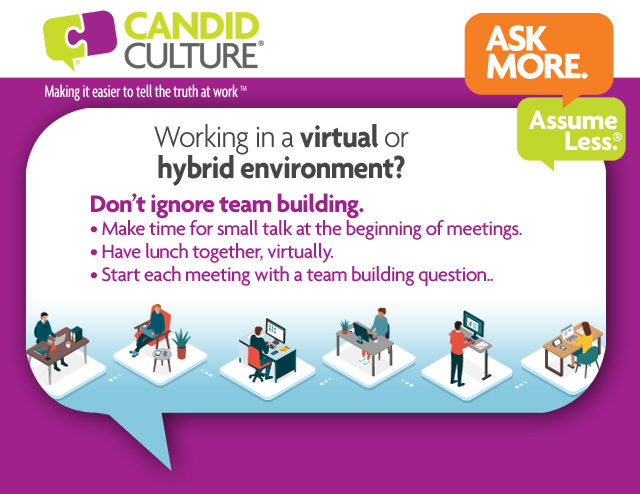
Spend the first few minutes of virtual or hybrid meetings on small talk, just like you would if you were gathering in a physical conference room.
Eat lunch together, virtually. Remember when people used to sit together in the office breakroom or cafeteria? Why not eat together via video? Team building doesn’t have to be elaborate. It can just be spending time together.
Humans need people contact and relationships. Connections with our coworkers make us feel connected to our organizations.
Small talk and group lunches create camaraderie, but they don’t teach people how to work together. In addition to social activities, give people a chance to talk about working style preferences. You don’t have to do personality assessments and long training programs to build teamwork. Just give people a chance to talk about how they like to work, on a regular basis.
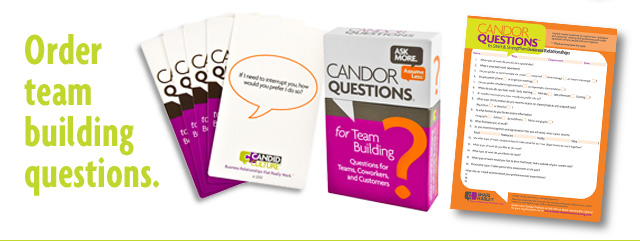
Tell your team you want to help people get to know each other better, so work gets done more easily. Start each team meeting with one of the questions below, then move on to your meeting agenda. Do this all year.
Here are a few team building questions you can use:
What are your pet peeves at work?
What time of day do you do your best work?
Do you leave your email, phone, or text alerts on at night? If I text you after hours, will you get a ping?
If I email you on weekends and evenings, do you think I expect a response? Would you prefer I send messages only during regular business hours?
What’s an area of our business you’d like to learn more about?
What’s something you’d like to learn to do that you don’t have a chance to do now?
Read a question to the group. Give everyone at the meeting the opportunity to answer the question about themselves. And remember, the meeting leader/facilitator speaks last. People will often follow the most senior person’s lead. You want people to answer authentically rather than providing what they think is the ‘right’ answer.
Team building doesn’t have to take a lot of time or money. Don’t wait until everyone is in the office or for a future retreat. Help coworkers spend time together formally and informally, getting to know each other better now.
Leaders and managers work hard to retain employees. Employees watch how their organization’s leaders and managers work, and often make career decisions based on the hours the most senior people keep.
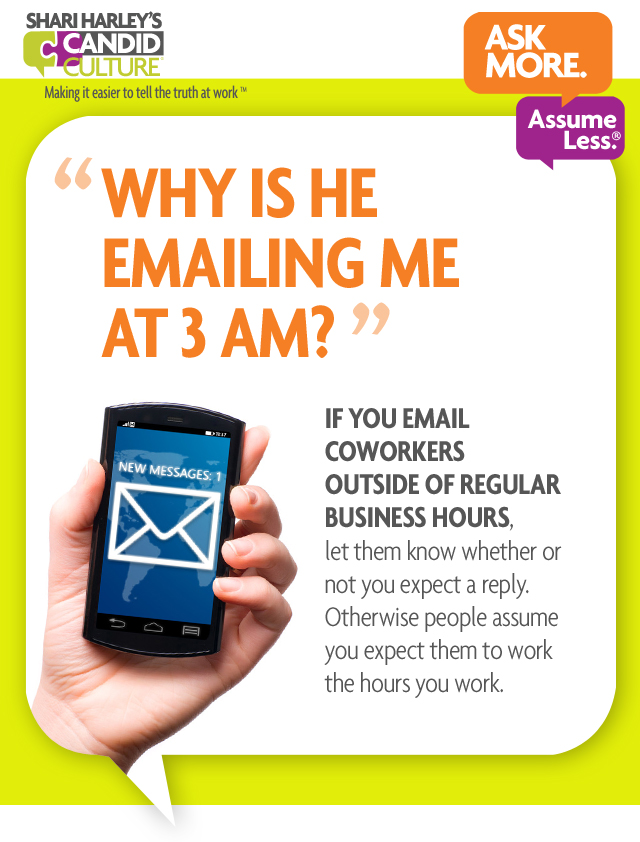
Employees pay attention to how often managers and senior leaders take time off and whether or not leaders attend meetings and respond to emails while they’re on vacation. Employees observe the late nights that leaders and managers put in and the emails sent at 11:00 pm and on the weekends. I’ve heard lots of employees say, “If I need to work like my boss works to get ahead in this organization, I’m not interested.”
Managers, one of the keys to retaining employees is to communicate expectations. If you’re available while you’re on vacation, but don’t expect employees to do the same, set that expectation. If you send an email outside of regular business hours but don’t expect employees to respond until the next business day, tell them so. They don’t know. Many employees assume that if you email them at night, you expect a reply.
Microsoft has made these situations easy to avoid, with the ability to program emails to go out during regular business hours. And some people state in their email signatures, “I work outside of regular business hours, but don’t expect you to.”
Instead of allowing employees to make assumptions about what managers do and don’t expect, set clear expectations. Be overt and clear. When you hire employees, tell them, “I work most evenings and weekends, but don’t expect you to do so. And I work these hours because I enjoy it, not because I have to. If I email you outside of regular business hours, I am not expecting you to reply.” Retaining good employees begins during the interview process when initial expectations are set.
Managers, if you expect employees to check and respond to emails outside of regular business hours and to be available while on vacation, tell candidates during the interview process.
Employees, if your manager emails you outside of regular business hours and doesn’t tell you whether or not she expects you to reply, ask. Simply say, “I often receive emails outside of regular business hours. How will I know when you need me to reply?” Likewise, if you notice your manager emails you on vacation, you can say, “I typically hear from you when you’re on vacation. Are you expecting me to check in while I’m off?”
The need to ask questions and set expectations goes both ways. Don’t wait to be told. Ask.
Managers and employees, ask these Candor Questions about working style preferences to aid in retaining employees:
How do you feel about being contacted outside of regular business hours?
If I need to reach you over a weekend or in the evening, what method is best?
Would you prefer I text you so you don’t have to check your email outside of business hours?
What time is too early and too late to call, text, and/or email?
Ask more. Assume less and make retaining employees easier.
People leave feedback training armed with new skills and they unfortunately sometimes use those skills as a weapon. It goes something like this, “I need to have a candid conversation with you.” And then the person proceeds to dump, dump, dump. This couldn’t be more wrong, wrong, wrong.
When you give someone negative feedback you are essentially telling them they did something wrong. And who likes to be wrong? The ego gets bruised and people often start to question themselves. This normal reaction doesn’t mean you shouldn’t give feedback, you just need to do it judiciously.
Ask yourself these four questions when deciding whether or not to give someone feedback:
Do I have the relationship to provide feedback? Does the recipient trust me and my motives?
Do I have permission to give feedback? If the recipient doesn’t work for you, you need permission to give feedback.
Is this something the person can do something about? If it’s not a change the recipient can make, keep your thoughts to yourself.
Is the feedback helpful? Ultimately the purpose of all feedback is to be helpful.
Let’s say you’re on the receiving end of too much feedback. What should you do? It’s ok to say “no thank you” to feedback. Here’s what you could say:
“Thank you for taking the time to bring this to my attention. I really appreciate it. You’ve given me a lot of feedback today. I’d like something to focus on that I can impact right now. What’s the most important thing I should do?” You’ve validated the other person and demonstrated openness and interest. You’ve also set some boundaries and expectations of what you will and won’t do.
“Thank you for taking the time to share your requests about… We won’t be making any changes to that and here’s why.” It’s ok not to act on all feedback, simply tell people why you won’t.
“I appreciate your concern. I’m not looking for feedback on that right now.” Can you say that to someone? Yes. Should you? Sometimes. To your boss – no. To someone who offers unsolicited advice that’s outside of their lane, yes. They’ll get the message.
People can only act on and digest small amounts of feedback at a time. Be judicious and assess your motives. The purpose of feedback is to be helpful, when the feedback is requested and when you have the relationship to give it.
If you receive too much feedback or unsolicited feedback, it’s ok to decline. You’re not the 7-11, aka you’re not always open.