Archive for November, 2025
Posted under
Uncategorized on November 28, 2025 by Shari Harley. Comments
Many people worry about giving feedback because they fear they don’t have the ‘right’ words. They’re concerned they’ll say ‘it’ wrong and damage relationships.
Feedback is hard enough to give without worrying about saying everything perfectly. Worry less about having all the right words and more about whether or not people trust your motives.
When people trust your motives – why you’re giving feedback – you can say almost anything. When they don’t trust your motives, you can say almost nothing.

Getting negative feedback is hard. It’s easier to listen to feedback when we trust the person who’s giving us the feedback – we know their intentions are to help versus to judge or hurt us.
Speak from the heart, be authentic, and worry less. Be yourself. If you’re nervous to say what you want to say, tell the other person you’re nervous. If you’re struggling to find the right words, say so. If you’re worried you’ll damage the relationship or that it isn’t your role to give the feedback, say that. Authenticity goes a long way.
Here’s how to give feedback you’re apprehensive about:
How to give feedback example one: Consider saying, “There’s something I need to talk with you about, but I’m concerned that I won’t use the right words and will damage our relationship.”
How to give feedback example two: “There’s something I want to talk with you about, but I’m concerned how it will come across. Is it ok if I say what I need to say?”
How to give feedback example three: “I want to share my thoughts on something, but I’m concerned it’s not my place to do so. Is it ok if I share my ideas about _________?”
Other people aren’t expecting you to be perfect, but they do want to know they’re working with a human being. And human beings are fallible. We have fears. We make mistakes. And sometimes we don’t say things perfectly. You don’t have to be perfect; you just have to be real.

If you visit family and friends this holiday season, you may receive unsolicited feedback and advice. Sometimes people who care and want what’s best for us, provide input we didn’t ask for.
Despite that people are trying to help, unsolicited feedback usually feels like criticism. Underneath the feedback might be the message, “If you were doing this right, I wouldn’t need to give you this advice.” I put unsolicited feedback and advice in the same bucket.
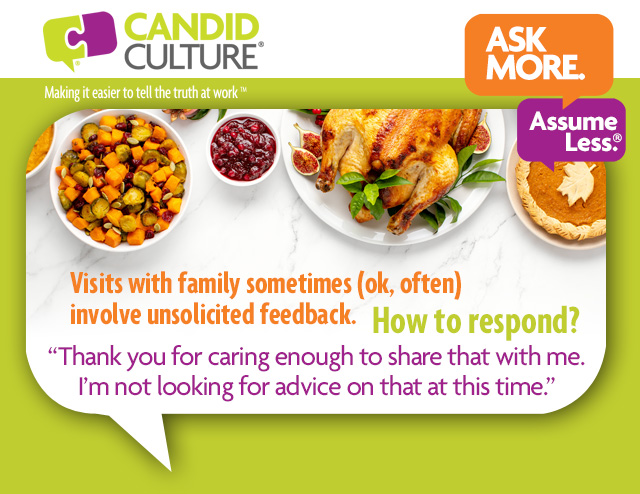
If you find yourself receiving unsolicited advice, you don’t have to smile politely and take it. It’s ok to put an end to unwanted feedback and advice.
Simply smile, tell the person you appreciate them caring enough to give you that advice, and say that you’re not looking for advice on that topic at this time. And then smile again. Smiling softens most messages. Say nothing more. Most people will stop talking. What else is there to say?
This method of acknowledging the person giving unwanted advice is respectful and firm. To pull it off, watch your tone. If you can safely add the words, “you dummy” to anything you say, you have a tone issue. Be genuinely appreciative and enforce boundaries. You’re not the 7/11. You don’t have to be open to feedback and others’ input all the time.
If the person continues giving you advice, simply say the same thing again. “Thank you for caring enough about me to share that with me. I really appreciate your concern. And I’m not looking for advice on that at this time.” If the person keeps talking, just say, “I’m going to get a drink.” Then get up and go get a drink.
If stopping unsolicited feedback feels uncomfortable, prevent it. Tell people before you see them, “I don’t want to talk about _____________ (fill in the blank). Please don’t bring it up over Thanksgiving.” You can soften that request any way you like.
Setting boundaries might be feel uncomfortable. But it’s likely not as uncomfortable as having a conversation you don’t want to have and then feeling like you need to avoid someone for the rest of the evening and possibly year. It’s ok to say, “No, thank you. Please pass the pie.”
Breakdowns happen. There will be days people won’t give you what you need to complete projects. Things will break. And you will look bad. When breakdowns happen, I always ask myself, “What could I have done to prevent this situation?” or “What did I do to help create this situation?” I see myself as accountable for whatever breakdowns occur.
It may sound odd that I always look at myself when breakdowns occur, even when it’s someone else who didn’t do their job, but it’s just easier. I can’t control anyone else. But I can control me (admittedly, some days I do a better job at this than others). When I can identify something I could have done to make a situation go differently, I feel more in control – aka better.
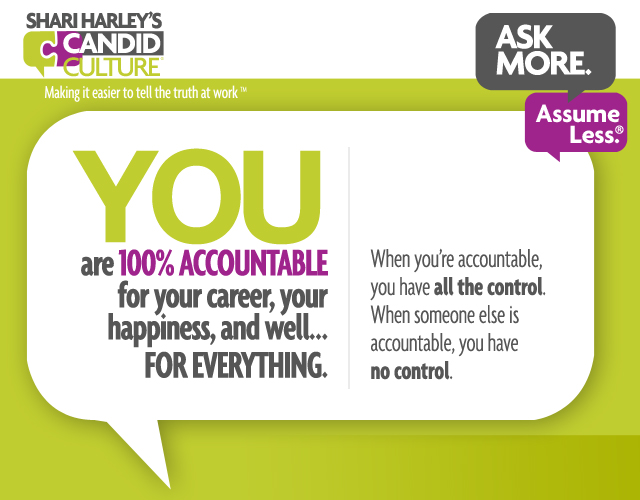
It’s like getting off a highway versus sitting in bumper-to-bumper traffic. The alternate route may take longer, but at least I’m moving. I feel like I’m doing something and thus have more control. Taking responsibility for everything that happens to you is similar. When you’re accountable, you can do something to improve your situation. When someone else is accountable, you’re at the mercy of other people and have very little control.
There are, of course, exceptions to the practice that “we’re always accountable.” Terrible acts of violence, crime, and illness happen to people, about which they have no control. But in general, in our day-to-day lives, there is typically something we did to contribute to a bad situation or something we can do to improve it.
Here are five practices for improving difficult situations at work, even when you didn’t create the mess (alone).
1) Ask more questions. If you’re not clear about what someone is expecting from you, ask. You’re responsible for doing good work, regardless of the type of direction you receive.
2) Tell people what you think they’re expecting and how you’re planning to approach a project or task, to ensure everyone’s expectations are aligned. Clarifying expectations beats doing several weeks worth of work, only to discover what you created isn’t what someone else had it mind.
3) Ask for specific feedback as projects progress. Don’t wait until the end of a project to find out how you performed.
4) Say “thank you” for whatever feedback you receive versus defending yourself. The person providing feedback will be pleasantly surprised at your receptivity, and their frustration will dissipate more quickly. This could sound like, “That’s good feedback. I’m sorry that happened. Thank you for telling me.”
5) Admit when you make a mistake or when you wish you had done something differently. Don’t wait for someone to tell you. Saying, “I’m sorry. How can I make this right with you?” goes a long way.
I consistently ask the following questions:
“What could I have done differently?”
“What did I do to contribute to this situation?”
“What can I do now to make this situation better?”
“What can I do to prevent this from happening again?”
I encourage you to ask these questions, even when someone else drops the ball. You can’t control others, but you can control you. And your happiness and success is your responsibility.

At the end of presentations, attendees often approach me and say something like, “People tell me my communication style is really direct and that it can be off putting. I don’t know what to do about this.” Or they say, “People say I’m really quiet and hard to read. They have a difficult time getting to know me.”
If you’ve been given the same feedback repeatedly or know you create a first impression that may be challenging to others, set expectations and tell people about your communication style when you begin working with them. Don’t wait until they feel offended, confused, or frustrated. Simply tell people when you meet them, “I’ve been told that I’m too direct and how I provide feedback can be off putting. Anything I say is to be helpful. If I ever offend you or provide too much information, I hope you’ll tell me.” Or you could say something like, “I’m told that I’m quiet and it’s hard to know my thoughts on projects and initiatives. Please feel free to ask anything you want to know about me or my thoughts on company initiatives.”
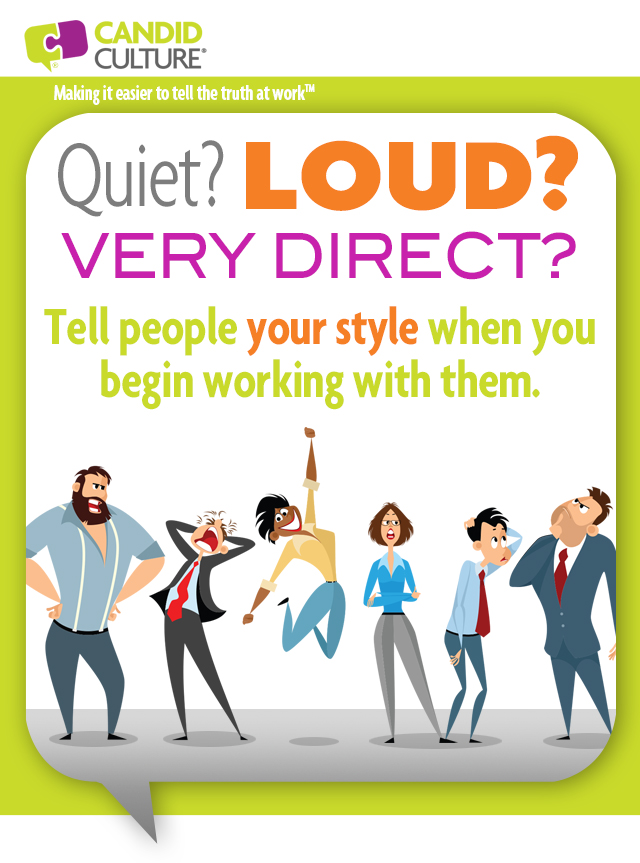
People will make decisions about and judge you. There is nothing you can do about this. But you can practice what I call, ‘get there first.’ Set people’s expectations about your communication style and what you’re like to work with, and then ask people to speak freely when they aren’t getting something they need.
The root of frustration and upset is violated expectations. People may not be aware of their expectations of you or be able to articulate those expectations. But if they didn’t have certain expectations, they wouldn’t be upset when you acted differently than how they (possibly unconsciously) expected.
I’m a proponent of anticipating challenges and talking about them before problems arise. If you know something about your behavior is off putting or confusing to others, why not be upfront about it?
When people interview to work for me, I set clear expectations about my communication style and what I’m like to work with. I tell them all the things I think they’ll like about working for me and all the things I suspect they won’t. People often nod their heads and say, “no problem,” which, of course, may not be true. They won’t know how my style will impact them until they begin working with me. But when I do things I gave them a heads up would likely be off putting, we can more easily talk about those behaviors, than if I had said nothing.
Talk about your communication style when projects and relationships begin. Replace judgment and damaged relationships with dialogue.

Lots of organizations send out employee engagement surveys with the desire of improving employee engagement and retention; unfortunately, they often damage both in the process.
There are a few employee engagement survey pitfalls that luckily are easy to avoid.
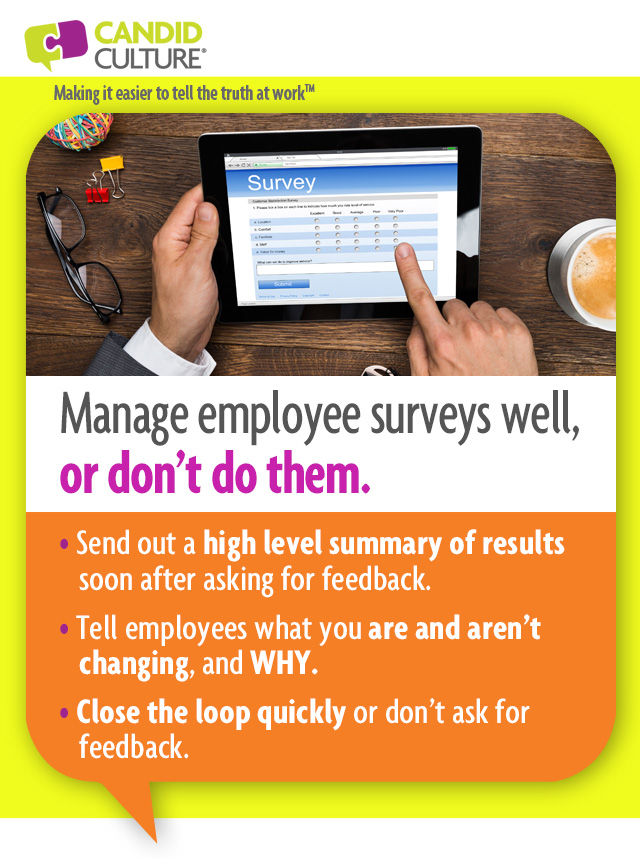
Here are three practices to follow when sending out employee engagement surveys:
- Shorter is better. I hate to say this, but no one wants to fill out an employee engagement survey. It’s time consuming, employees doubt the survey will yield results, and they worry that their feedback isn’t really confidential.
Make your employee engagement survey easy to fill out by making it short. And by short, I mean 25 questions or fewer. You’ll get a better response rate to a 25-question survey than a 65-question one.
- Provide employees with survey results quickly. Most organizations ask for too much information. Leaders are overwhelmed by the volume of survey information, so they spend months and months reviewing it, while employees comment on yet another employee survey with no communication.
Send out a succinct communication sharing the top few learnings – the good and the not-so-good — within a few weeks of sending out the survey. You don’t need to take action at the same time. Simply keep employees in the loop by communicating a quick summary of what you learned. If you wait too long to share the feedback, it often never gets communicated. And the next time you send out a survey, employees will remember the absence of information and be hesitant to fill it out.
- Within 90-days, tell employees what you will and won’t be changing, based on the survey feedback, and tell them why. Employees don’t need or expect all of their input to be utilized. Closing the loop with clear communication about what you are and aren’t changing, and why, is often sufficient.