Archive for April, 2014
 Companies want people who make things happen. And to make things happen, you have to speak up. No, anticipating the train wreck and commenting after the train goes off the tracks doesn’t count.
What if you said what you thought, in a way other people could hear you, when you had the right to do so? Meaning, you have the relationship with the other person to tell the truth and you’ve asked permission to be candid?
6 Courageous Steps to Advance Your Career:
- Look for opportunities to make things better.
- Ask for permission to take the ball and run with it.
- Build relationships with other people who are making things happen.
- Don’t say yes, when they mean no.
- Find a way to say no, while engaging the other person in a conversation so a new approach is generated.
- Are willing to go out on a limb, work hard, and fail.
Here’s how to speak up for change without being labeled as the problem person who finds flaws in everything:
- Look for and present solutions, not merely problems.
- Offer to do the work to move towards a better way of doing things. Don’t drop problems at your other people’s doors.
- Ask questions versus overtly say why something is wrong. That could sound something like, “I’d love to help. Tell me more about the process. Perhaps we can insert a step to make this better. What do you think of trying…?” No one likes to be told he’s wrong. Asking questions elicits participation more than overtly saying, “This is broken. We need to fix it.”
Many people are afraid to speak up at work and believe that people who speak up get fired. I haven’t found this to be the case. People who work hard and produce results are typically the last people to be let go.
Say what you think in a way that is not critical; offer solutions not just problems; be a force for good and take an active role in making things better, and my hunch is your career will accelerate faster than you ever thought possible.

 I’ll never forget a coaching meeting I had about two years ago. I gave the manager I was coaching some tough feedback and he replied by saying, “I know I do that.” So I asked him, “If you know this is an issue, why are we having the discussion? He told me, “I just figured this is the way I am.” And I realized that knowing a behavior is ineffective doesn’t mean we know what to do to make things better.
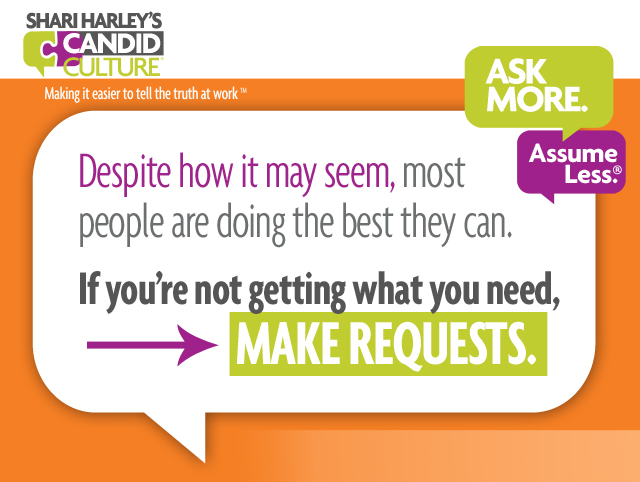
The people you work with want to do a good job. They want you to think well of them. Yes, even the people you think do little work and/or are out to get you. Give people the benefit of the doubt. Assume people are doing the best they know how to do. And when you don’t get what you want, make requests.
There are two ways to give feedback. One way is very direct.
Version one: “You did this thing and here’s why it’s a problem.”
The other way is less direct. Rather than telling the person what went wrong, simply make a request.
Version two: “Would you be willing to…” Or, “It would be really great to get this report on Monday’s instead of Wednesday. Would you be willing to do that?”
It’s very difficult to give feedback directly without the other person feeling judged. Making a request is much more neutral than giving direct feedback, doesn’t evoke as much defensiveness, and achieves the same result. You still get what you want.
When I teach giving feedback, I often give the example of asking a waitstaff in a restaurant for ketchup. Let’s say your waiter comes to your table to ask how your food is and your table doesn’t have any ketchup.
Option one: Give direct feedback. “Our table doesn’t have any ketchup.”
Option two: Make a request. “Can we get some ketchup?”
Both methods achieve the desired result. Option one overtly tells the waiter, “You’re not doing your job.” Option two still tells the waiter he isn’t doing his job, but the method is more subtle and thus is less likely to put him on the defensive.
You are always dealing with people’s egos. And when egos get bruised, defenses rise. When defenses rise, it’s hard to have a good conversation. People stop listening and start defending themselves. Defending oneself is a normal and natural reaction to negative feedback. It’s a survival instinct.
You’re more likely to get what you want from others when they don’t feel attacked and don’t feel the need to defend themselves. Consider simply asking for what you want rather than telling people what they’re doing wrong, and see what happens.
I will admit, asking for what you want in a neutral and non-judgmental way when you’re frustrated is very hard to do. The antidote is to anticipate your needs and ask for what you want at the onset of anything new. And when things go awry, wait until you’re not upset to make a request. If you are critical, apologize and promise to do better next time. It’s all trial and error. And luckily, because most of us aren’t great at setting expectations and human beings are human and make mistakes, you’ll have lots and lots of chances to practice giving feedback and making requests.

 Surveys are a great way to gather data. They’re not a great way to build relationships. In addition to sending out employee engagement surveys, ask questions live. Employees want to talk about their experience working with your organization. And employees will give you real, honest, and salient data, if you ask them and make it safe to tell the truth.
Here are a few methods of gathering data, in addition to sending employee engagement surveys:
Managers, ask questions during every one-on-one and team meeting with employees.
Managers, consider asking:
- What’s being talked about in the rumor mill?
- What do I need to know about that you suspect I don’t?
- What makes your job harder than it has to be? What would make your job easier?
- What meetings are not a good use of time?
Listen and be careful not to defend. Employees want to be heard. Respond if you’re able, but don’t deflect the feedback you’ve received.
Leaders, conduct roundtable discussions with small groups of employees throughout the year. I’d suggest discussions with groups of six employees. Have lunch or coffee. Keep the meetings informal.
Leaders, consider asking:
- What’s a good decision we made in the last six months. What’s a decision we made that you question?
- What would need to happen for you to be comfortable referring your friends to work here?
- What’s something happening in the organization that you’re concerned about?
How to Get the Truth:
- Share as much information as you can. Trust your employees.
- Ensure there are no negative consequences for people who tell you the truth.
- Give positive attention to the people who risk and give you negative information.
- Tell employees what you learn during these discussions and what you will and won’t be doing with the information.
- You don’t need to act on every piece of data you receive. Just acknowledge what you heard and explain why you will or won’t be taking action.
Employees are loyal to managers and organizations they feel connected to. And connections are formed through conversations. So in addition to sending employee engagement surveys, ask questions during every conversation and make it clear that you’re listening to the answers.
The fear of saying what we think and asking for what we want at work is prevalent across organizations. We want more money, but don’t know how to ask for it. We want to advance our careers but are concerned about the impression we’ll make if we ask for more. Instead of making requests, many employees assume they won’t get their needs met and choose to leave their jobs, either physically or emotionally.
How to Retain Good Employees:
The key to keeping the best employees engaged and doing their best work is to ask more questions and make it safe to tell the truth.
Managers: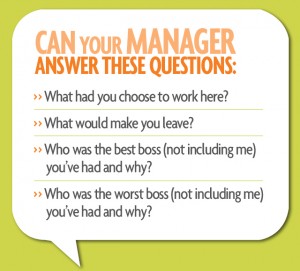
- Do you know why your employees chose your organization and what would make them leave?
- Do you know your employees’ best and worst boss?
The answers to these questions tells managers what employees need from the organization, job, and from the manager/employee working relationship.
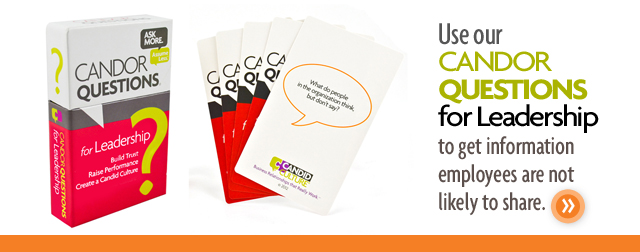
Can your manager answer these questions – that I call Candor Questions – about you? For most people, the answer is no. Most managers don’t ask these questions. And most employees are not comfortable giving this information, especially if the manager hasn’t asked for it.
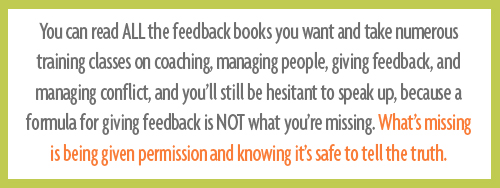
It’s easy to mistake my book, How to Say Anything to Anyone, as a book about giving feedback. It’s not. It takes me nine chapters to get to feedback. The first eight chapters of the book are about how to create relationships in which you can tell the truth without fear. You can read all the feedback books you want and take numerous training classes on coaching, managing people, giving feedback, and managing conflict, and you’ll still be hesitant to speak up, because a formula for giving feedback is not what you’re missing. What’s missing is being given permission and knowing it’s safe to tell the truth.
Managers, here’s how to retain good employees:
“I appreciate you choosing to work here. I want this to be the best career move you’ve made, and I want to be the best boss you’ve had. I don’t want to have to guess what’s important to you. I’d like to ask you some questions to get to know you and your career goals better. Please tell me anything you’re comfortable saying. And if you’re not comfortable answering a question, just know that I’m interested and I care. And if, at any point, you’re comfortable telling me, I’d like to know.”
 Then ask the Candor Questions during job interviews, one-on-one, and team meetings. We’re always learning how to work with people. So continue asking questions throughout your relationships. These conversations are not one-time events.
If you work for someone who isn’t asking you these questions, offer the information. You could say:
“I wanted to tell you why I chose this organization and job, and what keeps me here. I also want to tell you the things I really need to be happy and do my best work. Is it ok if I share?”
Your manager will be caught off guard, but it is likely that she will also be grateful. It’s much easier to manage people when you know what they need and why. Most managers want this information, it just may not occur to them to ask.
If the language above makes you uncomfortable, you can always blame me. You could say:
“I read this blog and the author suggested I tell you what brought me to this organization and what I really need to be happy here and do my best work. She said I’d be easier to manage if you had that information. Is it ok if I share?”
Yes, this might feel a little awkward at first, but the conversation will flow, and both you and your manager will learn a great deal about each other.
The ability to tell the truth starts with asking questions, giving people permission to speak candidly, and listening to the answers.