At the end of presentations, attendees often approach me and say something like, “People tell me my communication style is really direct and that it can be off putting. I don’t know what to do about this.” Or they say, “People say I’m really quiet and hard to read. They have a difficult time getting to know me.”
If you’ve been given the same feedback repeatedly, or know you create a first impression that may be challenging to others, set expectations and tell people about your communication style when you begin working with them. Don’t wait until they feel offended, confused, or frustrated. Simply tell people when you meet them, “I’ve been told that I’m too direct and how I provide feedback can be off putting. Anything I say is to be helpful. If I ever offend you or provide too much information, I hope you’ll tell me.” Or you could say something like, “I’m told that I’m quiet and it’s hard to get to know me. I’m more open than I may appear. If you want to know anything about me, feel free to ask.”

People will make decisions about and judge you. There is nothing you can do about this. But you can practice what I call, ‘get there first.’ Set people’s expectations about your communication style and what you’re like to work with, and then ask people to speak freely when they aren’t getting something they need.
The root of frustration and upset is violated expectations. People may not be aware of their expectations of you or be able to articulate those expectations, but if they didn’t have certain expectations, they wouldn’t be upset when you acted differently than how they (possibly unconsciously) expected.
I’m a proponent of anticipating challenges and talking about them before problems arise. If you know something about your behavior is off putting to others, why not be upfront about it.
When people interview to work for me, I set clear expectations about my communication style and what I’m like to work with. I tell them all the things I think they’ll like about working for me and all the things I suspect they won’t. I tell them the feedback I’ve received from past employees and things I’m working to alter. People often nod their heads and say, “no problem,” which, of course, may not be true. They won’t know how my style will impact them until they begin working with me. But when I do the things I warned them would likely be annoying, we can more easily talk about those behaviors, than if I had said nothing.
Talk about your communication style when projects and relationships begin. Replace judgment and damaged relationships with dialogue.

At some point, you’ll get passed over for a promotion, project, or piece of work, and no one will tell you why. Why should they? There is little incentive to deal with your likely (human and normal) defensive response. It’s easier to say nothing.
The problem is that this lack of information gives you no ability to manage your career.
Most people get almost no feedback at work. “Good job” isn’t feedback. Neither is, “You seem distracted.” And being told, “You just weren’t the right fit,” is utterly unhelpful.
If you want to manage your career, you need more information. Getting this information might seem scary. You might be thinking, “What if I don’t want to hear what people have to say? What happens if I hear something really bad?” People are so hesitant to give feedback, they’ll be ‘nice’ to you. You won’t hear anything you can’t handle.
There are people in your life who will tell you the impression you create, what you’re like to work with, and why you might not have gotten a job you really want. They’ll tell you, if you ask and make it safe to tell you the truth. Making it safe means you can’t defend yourself. No matter what the person says and how hard it may be to hear, you must respond with, “Thank you for telling me that,” even if you’re convinced they’re wrong.
The easier it is to give you feedback, the more feedback you’ll get. The harder it is to give you feedback, the less you’ll get. Remember, no one wants to deal with your defensive response. It’s easier to say nothing.
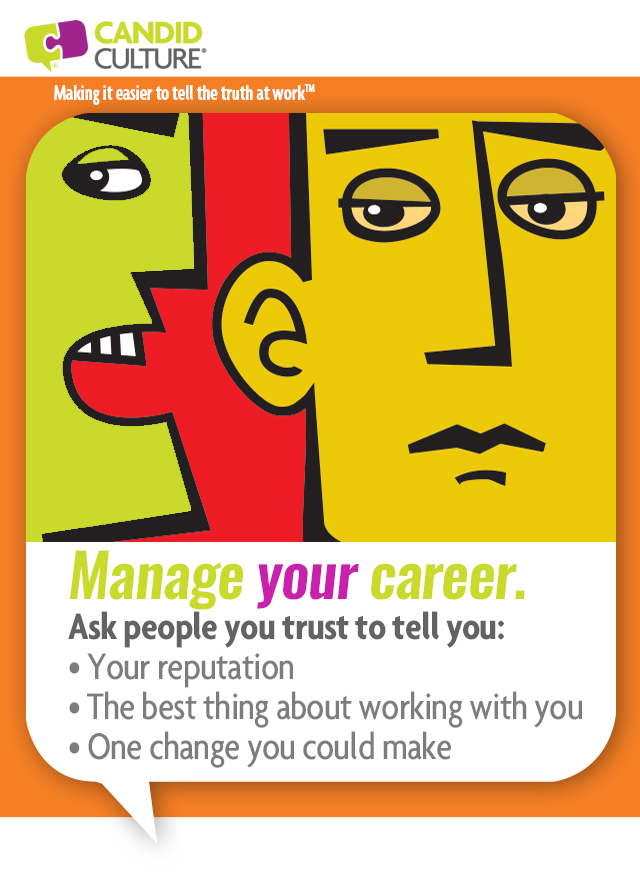
Identify five people in your life who care about you, who you trust. They might work with you now, but perhaps not. Don’t overlook your friends, family, spouse and past co-workers. Tell each person, individually, that you want to know more about the impression you make and what you’re like to work/interact with. Do this over the phone or in-person. Emailing the request doesn’t demonstrate seriousness. Ask the person to schedule a conversation with you. Send your questions in advance, so the person is prepared. Have the scheduled meeting; don’t cancel it, even if something important comes up. Consider asking: The first impression you make; what you’re like to work/interact with; the best thing about you; and one change you could make. Say, “thank you,” for the information and not more. Don’t underestimate the power of your emotions. Everyone gets defensive when receiving feedback. Defensiveness can be off putting and scary to others. Don’t do anything to limit future feedback.
Ask these questions a few times a year. You don’t necessarily need to make any changes, based on what you learned. The point isn’t to act on the information, it’s merely to have it. Information is power, and power is control. You can now choose how to act vs. working in the dark.