The approach of summer and summer office attire can make even the most seasoned HR person weary. No one wants to tell an employee that her belly button isn’t for public viewing or to leave the flip flops at home.
Like any behavior you want to generate, it’s much easier to set clear expectations of what is and isn’t acceptable summer office attire before the season begins. So this spring, do some prevention before you have to give an employee feedback for wearing something that fits better at the beach than at work.
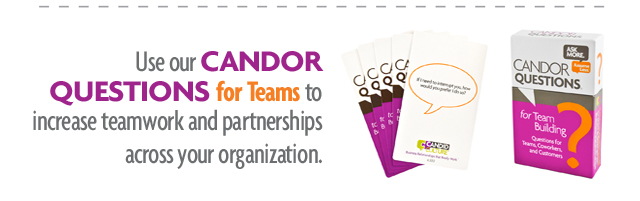
Most organizations have a written dress code. I recommend making it visual. Like the image here, post pictures of summer office attire do’s and don’ts in visual form. A picture makes a lasting impression employees are likely to remember; bullet points are easy to forget. If employees are wearing flip flops, tank tops, sheer blouses, spaghetti straps, wrinkled capris, etc., simply post photos of those articles in the no category. Don’t make employees guess if something is appropriate, make it visually clear.
I also recommend hosting a fashion show. Order food, have employees model summer office attire do’s and don’ts. Make it fun. Watching your peers walk ‘the runway’ in both appropriate and inappropriate summer office attire will make a much bigger impact than any ‘memo’ will.
But let’s say you already have a summer dress code violater and you know you need to say something to the person. Addressing inappropriate office attire is just like any other feedback conversation. Make it short. Tell the person why you’re speaking – because you care about him and want to help him manage his reputation – and be direct.
Here are a few examples of how to tell someone she is violating the summer dress code:
Preface each example below with something like, “I care about you and I care about your career. I’ve got some input about your summer office attire. Please take my feedback in the spirit it’s intended, which is to be helpful to you.” This language is appropriate for any type of relationship – peer, manager, and direct reports.
Summer casual dress code scenario one: “Those are super cute shoes, but they violate our company dress code of no open toed shoes. Please don’t wear them again at work.”
Summer casual dress code scenario two: “I can see your bra straps under that shirt. Please wear an additional layer under the shirt, the next time you wear it.” Women should have this conversation, men should not. If a man manages a female who needs to alter her summer attire, ask another female she has a good relationship with to have that conversation for you.
Summer casual dress code scenario three: “Those pants are too tight for work. Please wear looser fitting clothing.”
Effective feedback is short and clear. You can do it. Unless you hire and manage life guards, simply tell the people you work with the truth about the impression their clothing makes and why that’s important. But it’s always easier to set clear expectations before challenges occur, so start there.
People sometimes leave feedback training confused. Armed with the skills to be candid, they think they have the right to say anything they want. Not the case. Feedback isn’t a weapon or a license to barf your opinion on people. Unsolicited and unwelcome feedback is like fish you left on your counter top for too long. It stinks.
You have the right to ask for and accept the feedback you want and reject the feedback you don’t, from peers and customers. Help people know the difference by providing clear parameters on what type of input you do and don’t want. You are not a dumping ground.
Follow these steps to manage the feedback you get from others:
Giving and receiving feedback tip one: Don’t ask for feedback because you think you’re supposed to. There are lots of leadership books and training programs that tell leaders to be open to and ask for others’ input. Only ask for input you want. If you’ve made a decision or don’t want others’ input, don’t ask for it. While you might get more buy in by asking people for their input on decisions that impact them, you’re allowed to decide without forming a committee.
Giving and receiving feedback tip two: When you ask for input, be very specific about the type of input you want. Guide people. Tell them, “I’m specifically looking for input on ____________. I’m not looking for input on ____________.” And if you still receive unwanted feedback, remind people about the input you are and aren’t looking for. In the spirit of being helpful, people can overstep their bounds.
Giving and receiving feedback tip three: Don’t be afraid to shut people down who provide unsolicited feedback. The words, “Thank you for your concern. I’m not looking for input on that at this time” will do the trick. Yes, you really can say that.
Giving and receiving feedback tip four: Don’t take feedback personally. While most people don’t think about it in this way, giving feedback subtly tells you that you’re doing something wrong, or at least not how the other person would do it. There are lots of ways to skin a cat. Their way may or may not be better than yours. To “skin a cat” is a terrible expression, by the way.
Giving and receiving feedback tip five: Trust yourself. You likely know what you want to do a lot of the time. If you find yourself asking for input when you know what you want to do, stop asking. Listen to your gut and decide.
Feedback has a time and a place. I ask for and listen to a lot of feedback, but not all the time and not about everything. If I listened to everything everyone in my life suggested, I wouldn’t own a business or have a baby. Sometimes you know best.
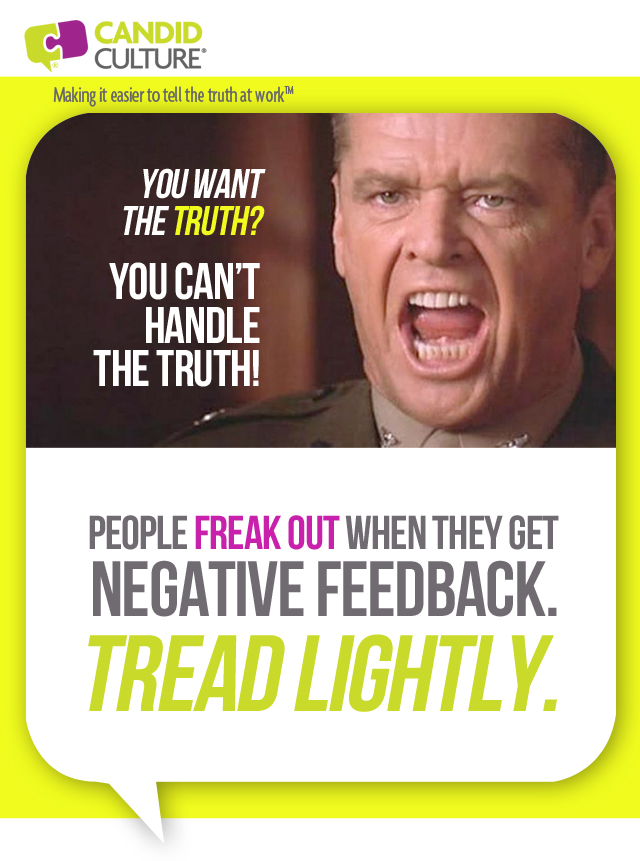
Last week I was talking with a friend who works for a large investment bank. He said, “I don’t believe in the premise of your book. There is no place for negative feedback in the workplace. It’s just not possible.” And I’m seeing firsthand how hard it is for people to receive negative feedback. All kinds of people – sensitive people and less sensitive people, Type A and laid back types. No one wants to hear she made a mistake, could have done something better, or any other type of negative feedback. It’s just too hard.
This is a massive conflict for me. At Candid Culture, we teach people how to give and receive feedback and yet, here I am wondering if it’s even possible.
We need to be able to tell people what they can do better. And the truth, is, while people may not want to hear negative feedback, most people do want to know what they can do to improve their performance and get ahead, hence the quandary. Give negative feedback and evoke others’ defensiveness or say nothing and put up with whatever isn’t working? I, of course, would prefer that you give the feedback, believing that it empowers people to make better personal and professional choices. The question is how?
Here are six steps to make giving negative feedback possible:
Set the expectation at the onset of working relationships that you will give and receive balanced (positive and negative) feedback regularly. If you’ve worked with people for years and have not set this expectation, it’s not too late. Simply say, “I realized we don’t give each other a lot of feedback. In the spirit of continuous improvement, I’d like to implement a weekly debrief during which we talk about what’s working and not working. We’ll give each other feedback during the meetings.”
Assess candidate’s openness to feedback when you interview, and don’t hire people who don’t accept negative feedback. We do practical interviews at Candid Culture. We give candidates a chance to do some of the work they’ll be doing on the job and tell candidates what they can do to improve, during the interview. Then we see how they accept our feedback. We also ask interview questions that help elucidate whether or not candidates are open to feedback and we ask candidates’ references how well the person accepts negative feedback.
Observe performance regularly and provide balanced feedback from the start. Don’t wait until a problem occurs or until you have time to give feedback. Begin the practice of meeting weekly to review and discuss work, setting the precedent that this is the way you do business.
Provide positive feedback regularly so people know the good stuff and aren’t solely focused on the negative feedback they receive.
Ask for and be open to feedback. When you demonstrate being open to feedback, you earn the right to give feedback.
Lastly, don’t underestimate how hard it is to hear negative feedback. When some people receive negative feedback, they begin to question themselves, their skills, and their value. So tread lightly. Pick your battles. Address only what you really need to and say things gingerly, remembering that you’re talking to a sensitive person, no matter how tough he may seem.
Every time I ignore the red flags I see when interviewing a candidate, or when I feel an employee is struggling, or a project is off track, I pay the price. Every single time.
You interview a candidate whose commute will be 75-minutes each each way, but she says she likes to drive. Sure, until it snows. Move on. You haven’t gotten an update from a project team in over a month, but this group is typically reliable, so things are probably fine. Check in. Even the most diligent employees need accountability and attention.
They call them red flags for a reason. If you suspect a problem, there likely is one. Don’t just wait and ‘see how things go.’ Make a hard decision, get more information, or get involved. Wait and see is often a recipe for disaster.
Sometimes we don’t get involved because we don’t have the time or want to focus on other things. Other times we just don’t trust or listen to our gut.
Trust yourself.
I usually know what I want and need to do, both personally and professionally. Yet I tend to ask LOTS of people for their opinions of what I should do. I solicit advice from friends and colleagues, and in the end, I usually do whatever I want. Why not just trust that I know the right thing to do and just do it? Dad, are you reading this? See, I listen. My dad tells me all the time to stop soliciting opinions, I often ignore anyway, and just act.
Here are a six steps you can take to help listen to yourself and ensure you don’t overlook or ignore red flags:
1. Become very clear about your desired outcome. Decide what you want.
2. Eliminate distractions. Get quiet, aka, still your mind.
3. Think about the situation at hand. Weigh the facts and your options.
4. Decide without belaboring.
5. Act on your decision.
6. Don’t look back. Your initial decision is usually the right one.
Trusting and listening to ourselves can be hard. Perhaps it’s the fear of making a mistake or being wrong. Chances are you’re right. So pay attention to the red flags, trust yourself, and listen to your gut.
Think about all the people and situations that frustrate you. Now consider what you’re asking for. My hunch is, you’re getting what you ask for.
While most of us aren’t great at telling people when they violate our expectations, we’re not any better at asking for what we want. You might be afraid of appearing demanding or may not feel you have the right to make requests. When you tell people what you expect, you make their lives easier. Think about when someone invites you to their house for dinner. If you have any manners (and I’m sure you do), you ask what you can bring. When the other person says nothing, it makes your job (to be a good guest) harder. Now you have to guess what the other person wants. It would be so much easier if he would just tell you. This also applies to birthday gifts and where to meet for lunch. When people tell you what they want as a gift and where they want to eat, you don’t have to guess and they are easier to please.
It’s much easier to live and work with people when we know what they expect from us. And setting expectations is always easier than giving negative feedback. Negative feedback implies someone did something wrong. And no one likes to be told he is wrong. Setting expectations provides a road map to success, making it easier to win with you.
Here are a few phrases to make setting expectations easier:
Setting expectations example one: Consider saying, “I need time to get settled when I come in in the morning. Will you hold all questions and requests until 10:00 am?” You’re not telling someone she barrages you with questions before you’ve even gotten to your desk in the morning; you’re simply asking for what you need.
Setting expectations example two: You could say, “I like to have things done well before they are due. Will you send me all input for the weekly status report by Wednesday of each week so I have a few days to review your input before I have to submit it?” You’re not telling the person that working with him requires a weekly fire drill; you’re simply making a non-judgmental request.
Setting expectations example three: You could ask, “Would it be possible to touch base once a week via phone during your morning commute so I can get your input on projects?” You’re not telling the person she is impossible to get time with; you’re simply proposing an idea.
One of the keys to getting what you want is make requests in a neutral, non-judgmental way. The more you ask for and the more specific your requests, the easier you are to work with. What you need and want will be clear; there will be no guessing. People may choose to ignore your requests and violate your expectations, and then you’ll provide feedback. But start with making clear and specific requests, and see how many fewer feedback conversations you need to have.
You probably have coworkers, customers and employees you rarely, if ever, see in person. You might even work for or with someone you’ve never met. While all feedback conversations can be hard, conversations with people we work with remotely seem even more challenging.
If I got a new pair of shoes every time someone said to me, “I’ve got this person and she isn’t (fill in the blank with anything that would trouble you). I’m going to see her in six weeks, so I’ll just have the conversation then.” Waiting six weeks to give feedback is unhelpful and wimpy.
There is nothing you can’t say or do over the phone. I used to think you couldn’t lay someone off via phone, but I’ve done it, so now I know it can be done.
Here are eight tips for remote management of employees and all types of working relationships:
Remote management tip number one: Know that any conversation you can have in person, you can have via phone.
Remote management tip number two: Schedule the same meetings you have with local employees, coworkers, and customers with those who live/work remotely. When you talk with people regularly, giving feedback is (hopefully) a part of your regular conversations. Having a feedback conversation with someone you rarely talk with will probably be more difficult.
Remote management tip number three: Set clear expectations for how often you want to meet and the purpose of the meetings. Tell people that you will discuss the same things via phone as you would in person and invite them to do the same.
Remote management tip number four: Work hard not to cancel meetings and reschedule all cancelled meetings as soon as possible. Time goes by so fast. By the time you know it, a month will have passed and you still won’t have had ‘that’ conversation.
Remote management tip number five: If you’re not a phone person, force yourself to have the conversations. If you’d prefer to use video conferencing, skype or Facetime, do that. Although for remote employees that will require not wearing pajamas, and they might not like that.
Remote management tip number six: Keep phone meetings shorter than in-person meetings. It’s easy to become distracted via phone. Keep meetings focused and short.
Remote management tip number seven: Give feedback verbally. Don’t rely on email to deliver hard messages. It’s easy to send feedback via email with people you work with remotely. You can’t manage the tone of written feedback the way you can during a live conversation.
Remote management tip number eight: Use whatever form of communication remote coworkers and customers prefer to schedule meetings. If they’re texters, text. If they like email, use that. You’ll get better participation and responses from people when you use their preferred method of communication.
One of our vendors isn’t a phone person. Her ringer is typically off. So if I call without warning, I get voicemail. So I text her, tell her a need to talk with her, and ask when is a good time. Then my calls get answered. You may be thinking, “Vendors work for you. You shouldn’t have to do that.” Maybe. But I try hard to live in the world of what works versus what’s right. When I communicate with people how they like to communicate, I get a better response, and you will too.
Approach remote business relationships just as you would in-person relationships. Schedule regular meetings. Pick up the phone to deal with tough issues, don’t fall back on email to give feedback. And don’t wait. The time to have any challenging conversation is now. You can do it. Pick up the phone.
Many people worry about giving feedback because they fear they don’t have the ‘right’ words. They’re concerned they’ll say ‘it’ wrong and damage their relationships.
Feedback is hard enough to give without worrying about saying everything perfectly. Worry less about having all the right words and more about whether or not people trust your motives.
When people trust your motives – why you’re giving feedback – you can say almost anything. When they don’t trust your motives you can say almost nothing.
Getting negative feedback is hard. It’s easier to listen to feedback when we trust the person who’s giving us the feedback – we know their intentions are to help versus to judge or hurt us.
Speak from the heart, be authentic, and worry less. Be yourself. If you’re nervous to say what you want to say, tell the other person you’re nervous. If you’re struggling to find the right words, say so. If you’re worried you’ll damage the relationship or that it isn’t your role to give the feedback, say that. Authenticity goes a long way.
How’s how to give feedback you’re apprehensive about:
How to give feedback phrase one: Consider saying, “There’s something I need to talk with you about but I’m concerned that I won’t use the right words and will damage our relationship.”
How to give feedback phrase two: “There’s something I want to talk with you about, but I’m concerned how it will come across. Is it ok if I say what I need to say?”
How to give feedback phrase three: “I want to give you my thoughts on something but I’m concerned that it’s not my place to do so. Is it ok if I share my ideas about _________?”
Other people aren’t expecting you to be perfect. But they do want to know they’re working with a human being. And human beings are fallible. We have fears. We make mistakes. And sometimes we don’t say things perfectly.
You don’t have to be perfect, you just have to be real.
Who have you fired lately? The person who cuts your hair or lawn? A doctor, accountant, or restaurant where you had a bad experience? Did you call any of those providers and tell them why you were replacing them? My hunch is no. There’s little incentive to do so. Why risk their defensiveness? It’s easier to just replace them. And the same is true for you.
There’s little incentive for the people you work with to tell you when you frustrate them. The perceived cost seems too high. The people you work (and live) with have experienced others’ defensive responses to negative feedback (which is no fun) and they don’t want to experience your reaction. As a result, when you disappoint or frustrate others, it’s easier to say nothing than tell you the truth.
The tendency for others to tell you things are fine when they’re not will prevent you from managing your career and relationships. People will go missing and/or you’ll be passed over for professional opportunities and never know why.
To make it more likely that people will tell you when you disappoint or frustrate them, make it easy to tell you the truth.
Here are a seven practices for receiving feedback:
Receiving Feedback Practice #1: When you begin new relationships, tell people you want their feedback.
Receiving Feedback Practice #2: Promise that no matter what people say, you’ll respond with “thank you.” This is very hard to do.
Receiving Feedback Practice #3: Tell people you already have relationships with that if you haven’t said it in the past, you really want their feedback and promise to respond graciously with “thank you.”
Receiving Feedback Practice #4: Ask people who matter to you for feedback regularly.
Receiving Feedback Practice #5: Resist the urge to get defensive.
Receiving Feedback Practice #6: Catch yourself when you start to become defensive and apologize. Say something like, “I’m getting defensive. I’m sorry. Tell me again. I’ll do a better job of listening.”
Receiving Feedback Practice #7: Take a break from conversations during which you find yourself responding defensively. Say something like, “I’m not responding as well as I’d like. How about we take a break? Give me a few minutes (hours or days) and I’ll come back to you to talk more. I really want to hear what you have to say.”
The aforementioned list provides recommendations for asking for and receiving feedback you want, not feedback you don’t. You are not a dumping ground. Don’t ask for feedback you don’t want. And when you do ask for feedback, qualify what type of feedback you’re looking for. Telling people “I want your feedback” doesn’t mean they’re welcome to say whatever they want.
The purpose of asking for feedback and making it safe to tell the truth is to give you more control over your career and relationships. It’s ok to be passed over for opportunities and relationships, but it’s unhelpful not to know why.
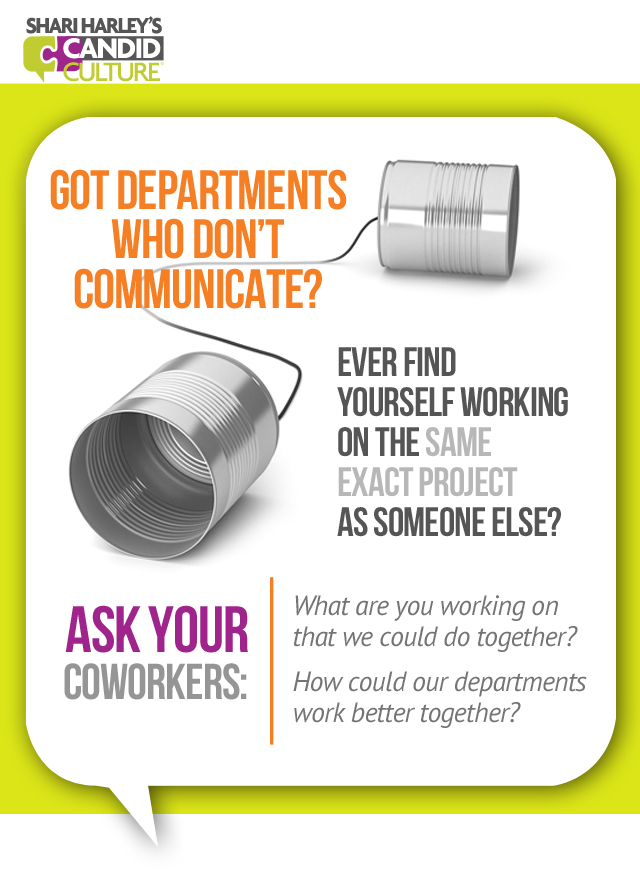
I’ll never forget sitting in a meeting with other department leaders, at my last job, and hearing that another department was working on the very thing that my department had been working on for months. We were a lean organization. No one had time for unnecessarily redundant work. And yet there were two departments working on the same project without knowing it.
As crazy as it sounds, this isn’t uncommon. People often know very little about what others across their organization do. Sometimes people on the same team don’t even know what type of work fellow team members are doing. This lack of knowledge can lead to conflict (i.e. get off my turf), wasted resources, and stale ideas. If you know two departments are working to solve similar challenges, sharing ideas is likely to generate better solutions.
Friday is National Swap Ideas Day. This sounds like a cheesy, invented holiday, but we’ve all been frustrated or constrained by a lack of sharing of ideas in our workplaces. So in honor of this invented holiday, here are five ways to find out what others in your organization are doing in the hopes of sharing more ideas and resources.
Workplace Communication Tip #1: This will sound basic, but be sure to let the people and departments impacted by your work know what you’re doing. I.e., if you’re advertising a new product, let the folks in fulfillment know they need to staff up the day the advertisement hits prospects’ and clients’ offices or they may not have enough people to fulfill orders. I’m embarrassed to admit we’ve made this mistake at Candid Culture. Oops.
Workplace Communication Tip #2: Create opportunities for departments who impact each other to communicate on a regular basis. Either literally get teams together quarterly to discuss what they’re working on, or if that’s not feasible, select liaisons from each department to meet regularly and discuss current and upcoming projects.
During the discussions, ask these questions:
What are you working on?
What challenges are you having?
What are you trying to change?
How can we help you?
What are you working on that we could do together?
How could our departments work better together?
Workplace Communication Tip #3: Widen your net and ask people you typically don’t have a lot (or any) contact with for their ideas on something you’re working on. Someone doesn’t necessarily need deep knowledge or expertise to offer a suggestion, they just need to think differently than you do.
Workplace Communication Tip #4: Be open to help, new ideas, and sharing projects. It’s easy to feel threatened and territorial at work, thinking that if someone else can do what you do, that you become extraneous. It’s not easy to find employees who are hardworking, reliable, effective, and low drama. Bring all of those qualities to work, and you have nothing to worry about. So start sharing.
Workplace Communication Tip #5: Keep up whatever idea-sharing practice you start. It’s common to try one of the ideas suggested above and then let the practice lapse when things get busy. Put processes in place to make sharing ideas the normal way that you work.
You likely have enough to do. You don’t need to be working on projects that someone else is working on. And sometimes hearing how a coworker would approach a problem will give you a solution you need. Share ideas. Work together across teams and departments and maybe you’ll end working less.
Having a good manager is key to a happy life. A good manager can make your job (and life) a happy experience. A bad manager can make your job (and life) hell. If you’ve worked long enough to have both good and bad boss’s, you already know this. Having a good manager is worth a lot.
If you’re lucky enough to have a good manager, say “thank you” on National Hug Your Boss Day, this Friday. Don’t physically hug her, of course. She isn’t likely to appreciate that. But there are lots of other ways to say “thank you.”
I don’t think it’s appropriate for employees to buy managers gifts. But there are lots of ways to show appreciation without spending money. Think about what’s meaningful to you. I’m sure an email containing positive feedback, a handwritten note, or a positive verbal comment all feel good to you, and they’ll feel good to your boss as well.
Here are six ways to show your boss you appreciate her on hug your boss day:
Hug your boss day idea #1: Send your boss an email, telling her some of the things she does that make you feel valued and that make your organization a good place to work. Be as specific as you can. Specific feedback is more meaningful, authentic, and helpful than vague generalities. For example, rather than saying, “You’re such a great boss! I really appreciate you,” considering saying something like, “I really appreciate the time you take teaching me about our business. I’ve learned a lotl in the past six months.” When you give specific feedback your boss will know what she does that’s meaningful to you, making it more likely that she’ll replicate that behavior in the future. If you provide specific feedback, you’ll both get something out of the recognition you provide.
Hug your boss day idea #2: Write her a handwritten note. A handwritten note is more impactful than an email. It’s so rare for anyone to get a handwritten note, let alone from a direct report, it’s something your boss will appreciate and keep for a long time. Like the suggestion above, be sure to provide specific feedback about what your boss does that you appreciate.
Hug your boss day idea #3: Equally impactful to a handwritten note is to talk to your boss in person. Giving verbal feedback may feel a little weird if it’s not something you do often, but she’ll appreciate the risk you took in being honest and vulnerable to make her feel appreciated.
Hug your boss day idea #4: Have your team write and act out a skit for your manager. This may sound corny, but skits are a fun and unique way to thank your boss, and something she likely hasn’t experienced before. During the skit, demonstrate some of the things your boss does that team members appreciate. Ham it up. It’ll be fun and she’ll learn a lot about what’s important to the team.
Hug your boss day idea #5: Write a song that tells your boss what you appreciate about her and have your team perform it. Like skits, this is a fun team activity that will be memorable for everyone. Have whomever on your team loves stuff like this spearhead the effort versus the person who is tortured by it.
I realize that skits and songs may not sound fun. In fact, some of you might now feel physically ill. In my experience, people typically roll their eyes at first and then end up having a great time. Try it! Teams that post a picture of themselves performing a skit or a song for their boss on our Facebook page will be entered in a contest to receive free Candor Bars (very delicious chocolate bars) How’s that for an incentive?!
Hug your boss day idea #6: Have a pot luck lunch. This is a good opportunity for the team to spend time together. Just make sure you pick food she likes. If my team brought in Mexican food (I’m not a fan. I know I’m weird), I’d know that they really didn’t like me. Are you guys reading this???
Don’t take a good boss for granted. Find a way to say “thank you” this Friday that will be meaningful to her.



 People sometimes leave feedback training confused. Armed with the skills to be candid, they think they have the right to say anything they want. Not the case. Feedback isn’t a weapon or a license to barf your opinion on people. Unsolicited and unwelcome feedback is like fish you left on your counter top for too long. It stinks.

 Every time I ignore the red flags I see when interviewing a candidate, or when I feel an employee is struggling, or a project is off track, I pay the price. Every single time.

 You probably have coworkers, customers and employees you rarely, if ever, see in person. You might even work for or with someone you’ve never met. While all feedback conversations can be hard, conversations with people we work with remotely seem even more challenging.


 . And the same is true for you.