Career Management Archive

Last week had some really, really terrible moments. Our office WIFI went out during a webinar. Not even the phone worked. I took on a commitment I knew I shouldn’t have, and it required too many long nights, flights, and time away from my family. And I self-medicated with chocolate, and possibly coffee cake, and maybe pizza. There’s more, but I don’t want to bore you.
Some days are going to be terrible. It’s so easy to feel like we’re screwing things up and that we are indeed a screw up. Give yourself a break. The thing to know and remember, in the moment, is that you’re not terrible. You’re a human being, doing the best you can.
Here is a list of ways to give yourself a break and as a result, do your best work. I’ll admit, I’m working on doing these things too. Every day, I’m annoyed that I’m not perfect. I want to be a combination of Sheryl Sandberg, Mary Poppins, and Kate Middleton. I’m not. I’m a business owner, working mom, who hasn’t seen the inside of a gym in over a year, and dreams of nights at the Ritz Carlton, by myself.
Nine Way to Give Yourself a Break:
- Set realistic deadlines. Set yourself up to win and look good.
- Ask yourself, “Do I really want to do this,” before agreeing to any new commitment.
- Turn off the alerts on your phone and laptop. You’ll be more focused and get more work done.
- Ask for help. If there is someone who can help with a project (and it won’t make you look bad), let them.
- Go to bed earlier than you think you need to.
- Take a day off. Your company offers vacation time for a reason. People do better work when they take time to relax and rejuvenate.
- Take time for yourself, even if it’s 30 minutes.
- Drink more water and make sure you eat breakfast and lunch. I’m starting to sound like your mom.
- Say “thank you” more and “I’m sorry” less.
Some of these things are business focused, some are personal. You bring yourself – your whole self – to work. It’s why you’re good at what you do. People want to work with real people. And real people over commit, make mistakes, and spend too much time on Facebook. Give yourself a break.

The inspiration for this week’s blog came from the most unlikely source, time with my son. I want each of his days to be exciting and fun. On the days we do nothing but hang out and play at home, I feel like I’ve failed just a little bit. It’s a lot of pressure. Not unlike work and creating an office culture.
I want each of my employees to be happy and to enjoy their jobs and enjoy working for me, every day. That can’t and won’t happen. Some days are hard. Some are dull. Sometimes I’m fun and easy to work for. Lots of days I’m not.
I had a manager years ago who told me that my need to be liked by my employees would take me down. He was right. Unfortunately, I’m not the only manager with this challenge.
Lots of managers tell me they’re hesitant to give feedback because they’re afraid employees will quit. Other managers do work they know they shouldn’t be doing, because they don’t want to burden their employees.
Not every day will be great. And that’s ok. Work is a roller coaster. Some days are awesome. Others are the pits. Your job isn’t to make people happy at every moment, it’s to create a supportive environment and ensure people have the tools to be successful.
My son has a clean and safe home full of fun toys. I’ve created a positive environment for him. My employees have all the tools they need to be successful. I work hard to set clear expectations and give timely positive and upgrade feedback. The rest is up to them. Some days I’m sure they’re happy. Most days, hopefully. And then I’m sure there are days that a job at Taco Bell sounds appealing.
Here are five actions to create a positive culture at work:
Office culture tip #1: Set clear expectations at the beginning of every new project and task. The root of frustration and unhappiness is thwarted expectations.
Office culture tip #2: Ask for and be open to feedback from your employees and coworkers. Ask for feedback regularly and work to respond with, “Thank you for telling me that.”
Office culture tip #3: Respond to feedback by changing what it makes sense to change. Giving feedback that is never acted upon creates cynicism and distrust.
Office culture tip #4: Provide rationale for your decisions. It’s fine to do things the way you want to do them, even if others disagree. Explain your rationale. You’ll get more buy in.
Office culture tip #5: Don’t be afraid to make decisions that are unpopular. There is a reason that you want to do what you want to do, the way you want to do it. Vet your plans, when appropriate. Be open to others’ input. And then do what you think is right (within the scope of your role).
Your job isn’t to please everyone and trying to do so will likely produce lesser results and be exhausting.





At some point, you’ll get passed over for a promotion, project, or piece of work, and no one will tell you why. Why should they? There is little incentive to deal with your likely (human and normal) defensive response. It’s easier to say nothing.
The problem is that this lack of information gives you no ability to manage your career.
Most people get almost no feedback at work. “Good job” isn’t feedback. Neither is, “You seem distracted.” And being told, “You just weren’t the right fit,” is utterly unhelpful.
If you want to manage your career, you need more information. Getting this information might seem scary. You might be thinking, “What if I don’t want to hear what people have to say? What happens if I hear something really bad?” People are so hesitant to give feedback, they’ll be ‘nice’ to you. You won’t hear anything you can’t handle.
There are people in your life who will tell you the impression you create, what you’re like to work with, and why you might not have gotten a job you really want. They’ll tell you, if you ask and make it safe to tell you the truth. Making it safe means you can’t defend yourself. No matter what the person says and how hard it may be to hear, you must respond with, “Thank you for telling me that,” even if you’re convinced they’re wrong.
The easier it is to give you feedback, the more feedback you’ll get. The harder it is to give you feedback, the less you’ll get. Remember, no one wants to deal with your defensive response. It’s easier to say nothing.
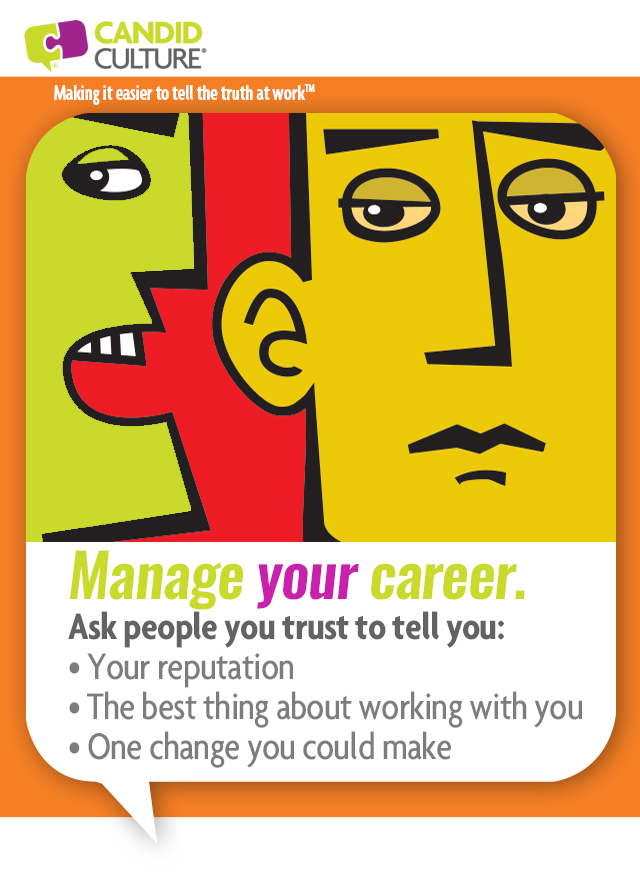
Identify five people in your life who care about you, who you trust. They might work with you now, but perhaps not. Don’t overlook your friends, family, spouse and past co-workers. Tell each person, individually, that you want to know more about the impression you make and what you’re like to work/interact with. Do this over the phone or in-person. Emailing the request doesn’t demonstrate seriousness. Ask the person to schedule a conversation with you. Send your questions in advance, so the person is prepared. Have the scheduled meeting; don’t cancel it, even if something important comes up. Consider asking: The first impression you make; what you’re like to work/interact with; the best thing about you; and one change you could make. Say, “thank you,” for the information and not more. Don’t underestimate the power of your emotions. Everyone gets defensive when receiving feedback. Defensiveness can be off putting and scary to others. Don’t do anything to limit future feedback.
Ask these questions a few times a year. You don’t necessarily need to make any changes, based on what you learned. The point isn’t to act on the information, it’s merely to have it. Information is power, and power is control. You can now choose how to act vs. working in the dark.
It’s not easy to admit when we’re overwhelmed and need help. In fact, it’s such a hard thing to say that instead of asking for help, most of us either work harder or longer or job hunt.
Admitting work overload isn’t a weakness and it isn’t bad. It’s all in how you handle it.
If you find yourself with work overload and you aren’t sure what to do, consider taking these four steps.
Eliminate work overload step one: Every time you find yourself doing something that someone else could and should do, write it down, including how much time the task took. Doing this will create awareness of how much time you spend doing things that may not be the best use of your skills and experience. Then work with whomever you need to in your organization to align that work where it belongs. This practice isn’t to make you sound like an entitled prima donna. It’s an entrepreneurial way to approach your work.
The business owner’s mantra is, “If I can pay someone less than I get paid to do something, I should do that.” Consider how you can apply that practice to your workplace, without appearing to be someone who won’t ‘wash windows.’ Meaning, you don’t want to be or appear to be someone who isn’t willing to do grunt work. Every job has it. But those tasks shouldn’t be where you spend most of your time, unless your job description and annual goals say so.
Eliminate work overload step two: Watch out for and eliminate time suckers. This includes people, problems, and processes. If you find yourself in meetings all day long, consider which meetings you can skip or send someone else on your team. If someone in your office swings by daily to have personal conversations, tell the person, “I’d love to talk with you and I’m working under a deadline. Can we catch up later?”
Lots of people are at work longer than they need to be because of time spent talking with coworkers they don’t know how to ask to go away. You’re doing everyone a favor when you end conversations that are distracting. If you really want to talk about what’s happening with your coworkers’ kids, mother-in-law, and home renovation, go to lunch or happy hour.
Eliminate work overload step three: Sometimes doing 110% percent isn’t important. Notice when you’re doing more than you need to and when that additional work doesn’t add significant value. I.e., you put together an elaborate PowerPoint presentation and then spent five more hours printing and stuffing folders to put the presentation in. Next time, focus on the content and worry less about the aesthetics.
Eliminate work overload step four: Lastly, know when and how to ask for help. The last organization where I worked, before starting Candid Culture, was very fast paced and lean. I worked all the time and consistently felt overwhelmed. I eventually went to my boss to ask for help. I made a list of everything I was working on and asked him to rate each item based on how important he saw the project/task. He put an “A” next to the things that needed to get done first, a “B” next to the things that came next, and a “C” next to the things that were the least important. He told me to do the A’s first, then the B’s, and if I got to the C’s, great, if not, no problem.
The meeting was eye opening for me. I assumed he thought everything on my list was an “A” and that left me stressed with an inability to prioritize. Hearing how he perceived my workload reduced my anxiety and gave me permission to ease up on projects I’d previously considered timely.
Don’t suffer in silence. But do approach reducing work overload in a positive way. Rather than whining to your boss and coworkers, end conversations that you know are a time drain, limit work that doesn’t add significant value, and ask for help prioritizing when you can’t do it for yourself.
 A professional athlete would never get on the court, field, or ice without knowing the rules of the game. Athletes know every action that will result in points, penalties, and other positive and negative consequences. Yet many of us go to work without any idea of how we’re being held accountable and what a good job looks like.
In the next few weeks, way too many people will have a performance review during which they will receive feedback that’s a surprise.
Writing clear, specific, and measurable goals is the key to managing your own work performance and to not being caught off guard by performance appraisals. Writing goals may not be sexy or fun, but doing so is the key to taking control of your year.
Four tips for setting goals at work:
1. Setting goals at work: Don’t wait for your manager to suggest writing goals. Ask permission to draft 5 to 7 goals.
2. Setting goals at work: Discuss and finalize each goal with your manager, and ask that the goals be the criteria for your 2017 evaluation.
3. Setting goals at work: Write such specific goals, that at the end of the year, it’s very clear whether you did or didn’t produce the agreed-upon results. When goals are specific, performance appraisals write themselves.
4. Setting goals at work: As business priorities and objectives change, goals change as well. Review your goals with your manager quarterly and make changes as appropriate.
Here are questions to answer when writing goals:
- What results will you produce? What will be different in the organization at the end of the year? (X%) Assign each goal a percentage. Weight each goal by importance.
- What actions will you take? What will you do, and when will you do it?
- How will you know you’ve made progress or achieved your goal? What will be different as a result of your work? (This should be quantitative. Use numbers.)
Here is a completed sample goal:
Results to produce: Retain 90% of new customers. Weighting: 40%
Actions to take:
- Have a setting-expectation meeting with each new customer.
- Return all customer calls within 24-hours.
- Call 10% of customers quarterly, and ask for feedback.
Milestones and year-end results:
- Customer complaints will drop by 20%.
- Customer change orders will drop by 10%.
When what you need to do during the year is clearly articulated, you’ve set yourself up to win. You know exactly what you need to do to be successful. Early in my career, I worked for an organization that did goal setting well. Each employee wrote 5 to 7 goals that were weighted and extraordinarily specific. It was obvious, throughout the year, if employees were meeting performance standards. And at the end of the year, it was so clear whether or not employees had done what they needed to do, employees could write their own performance appraisal. That’s the power of goals. Well–written goals drive performance, empower employees, and remove the debate about results.
Not every goal or objective at work is numerical and clear cut, but many are. Write down what you need to do and what the desired outcome looks like, whenever possible, and you’ll feel more empowered and in control at work than you previously thought possible.
Since having a baby a year ago, the words “I’m sorry” have taken over my life. “I’m sorry I missed your birthday.” “I’m sorry I’m delayed in replying.” “I’m sorry I missed your call.” “I’m sorry it took me four months to send you a thank you card.” These two words come out of my mouth so often that they’ve taken over my vocabulary.
I’m a big fan of taking responsibility and personal accountability. I think being accountable is easier than passing the buck. When I’m accountable, I have more power and control. When someone else is accountable, I have neither. But there’s a difference between being accountable and apologizing for yourself. Of late, I’ve been apologizing for myself, and it’s demoralizing.
Even telling you this, my clients, feels risky. Don’t worry. I arrived at every speaking engagement this year early and got great feedback. But anyone who knows me well knows I’m working on all the things I write about.
Last week I vowed to stop saying, “I’m sorry.” And yet, the next words out of my mouth were apologetic. Apologizing for oneself is so natural, it’s pervasive, aka, a hard habit to break.
Below are a few strategies for being accountable but not apologetic:
- Be accountable: Establish clear priorities and boundaries. When I had a baby, I set very clear guidelines for myself on work hours and travel practices. And I stick to those 99% of the time. Having clearly established boundaries makes decision making easy.
- Be accountable: Only commit to things you know you will do. For personal situations, only commit to things you genuinely want to do.
- Be accountable: Tell the truth. If you don’t plan to do something, say so, without apology. “Thank you but no” has a lot of power.
- Be accountable: Know your limits and what you need to be healthy and functioning at an optimum level. If you need eight hours of sleep, structure your life to get it. If you need weekends focused on your family, do that. If a trip home over the holidays feels like too much, don’t go. Taking care of yourself enables you to take care of others.
- Be accountable: Renegotiate when you need to. If you realize something you agreed to isn’t feasible or in your best interest, renegotiate versus suffer through it. Or, keep your commitment, but don’t recommit the next time a similar opportunity or request comes around.
- Be accountable: Don’t sweat the small stuff. I love you all and you will never get a printed holiday card from me. Ever. I want to send you one. I really do. Just pretend you got it and it has a really cute picture of me and the baby on it.
- Be accountable: Give yourself a break. You’re doing the best you can. You’re a human like everyone else. We’re all doing the best we can.
Being accountable isn’t being perfect. It’s being human with points for effort. Be yourself. Take care of yourself. And do your best, unapologetically.
It’s the time of year when people start to think about their goals for 2017 and make New Year’s resolutions. I won’t suggest you do either. You likely have enough to do. My only suggestion (in this arena), is to ensure you’re doing what you really want to do.
There are lots of things we need to do and think we should be doing. And it’s really easy to get caught up in that long list of could and should do’s. If that list brings you joy, do those things. If not, consider another path.
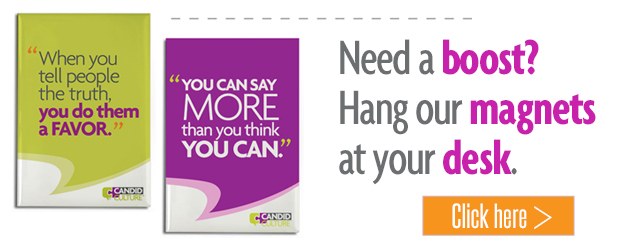
I’m pretty sure at least one person reading this blog has a magnet or card hung at her desk with the words, “What are you going to do with your one precious life?” As far as we know, we only get one go around. So while the question may be overused, what are you going to do to create your life with the time you’re given?
I have an existential friend who is trying to convince me that there is no such thing as time. I am not persuaded. All we have is time, and it’s the only thing we can’t get back. You can gain weight and lose weight, make money and lose it, make friends and lose them, but you can never get back your time. So what are you doing with your time?
You create your life.
A few questions to consider:
- What do you love doing most? How often are you doing that?
- What’s most important to you in life? Does what’s most important to you make up a majority of where your time and energy goes?
- How much time do you spend doing things you think you should be doing, but don’t really want to be doing?
- How much time do you spend doing things someone else wants you to do?
I’m not suggesting you live an indulgent life without compromise. If you’re in relationship with other people, you will, at times, do things you don’t want to do. But I’m hoping that doing things out of obligation is not what your life’s about.
Not everyone in your life will approve of your choices. That’s ok. This is your life. Don’t knowingly harm anyone or anything. Besides that, I don’t know of any rules, except for this, don’t get to the end of the road and wonder “what if.” Create your life.
Read How to Say Anything to Anyone and take charge of your career and life. The book is on sale for $15 to celebrate our 4th printing. It’s the perfect holiday gift. Get your copy now! Offer ends 12/31/16.
Many of us have seen our friends, coworkers and even manager do really dumb things at the company holiday party.
Here are list of my favorites:
- Having a few too many drinks and sharing confidential information.
- Wearing a dress that shows the people you work with more of your body than they should see.
- Showing moves on the dance floor that you don’t have.
- Hooking up with coworkers.
Your company holiday party is a company event, and anything you wear, do, or say is grounds for gossip the next day at work.
Don’t become the topic of conversation the day after your company holiday party.
A few rules to live by at your company holiday party:
- If you wouldn’t want a picture of you wearing it hung up in a conference room, don’t wear it to the holiday party.
- Don’t get drunk at a company event, ever. If you get ‘chatty’ after two drinks, then two is too many.
- If you wouldn’t say something to someone at work, don’t say it at the holiday party.
The last rule: Help your friends and coworkers by stopping them from making career limited moves at company events. Rather than watching the train wreck go by as your friends say and do things they shouldn’t, gather your courage, and tell them it’s time to switch to club soda.
You may feel like you can’t give this type of feedback. It is hard to do, unless you’ve made an agreement before the party starts to do so. And even if you do make an agreement to tell people when they do something dumb, it’s still hard to do. But it will probably feel almost impossible if you haven’t set the expectation in advance.
So make a deal with your friends at work. If anyone says, does, or wears something really misguided to the holiday party, you will tell each other without negative recourse. And if all else fails, and you break every ‘rule’ listed here, just call out sick for two weeks after the company holiday party, because that won’t raise any red flags at all.
I’ve always thought it was weird to sit next to someone on a plane and not say hello. I don’t mean a long chat, “Where are you going? Do you live there? What do you do for work,” merely a hello. Or to pass someone on the street or at the gym who pretends not to see me. It’s downright weird. And it’s even worse at work.
Passing someone in the hallway at work who you may or may not know and not saying hello can be off putting to many people. Admittedly, some people don’t care. But more do.
Many of the people you work with are affronted if you pass them in the hallway and don’t smile and/or say hello. They’ll never tell you they’re put off by the lack of social graces, they’ll just make decisions and assume they’re right. They’ll tell themselves, “We sit in multiple meetings together, and that guy doesn’t even know who I am.” Or, “I’ve walked past this woman every day for five years and it’s like she’s never seen me before.” Or, “Bob never says hello when he sees me in the hallway. I wonder why he doesn’t like me?”
Chances are you’re not thinking any of these things about the people you work with. You’re busy and focused on other things, and your mind is not on making small talk when you pass people in the hallway. But know that not saying hello can have an impact on the people around you and your corporate culture.
Start this simple practice: Smile and say hello to everyone you pass at work. Saying hello in the hallway won’t cost you anything or take any more time. And you never know the doors it might open. Maybe the person in accounts payable who’s been kicking back your expense reports will cut you a reimbursement check even when you fill out the wrong form. Or maybe IT will come to your desk first versus eighth when your laptop decides it’s taking a vacation day.
Get more simple ways to strengthen your corporate culture with a signed copy of How to Say Anything to Anyone. The book is on sale for $15 to celebrate our 4th printing. It’s the perfect holiday gift. Get your copy now! Offer ends 12/31/16.
Most of what comes through our phones is probably not all that compelling – emails we don’t really want to read, advertisements for things we won’t buy, and social media updates we don’t really care about. And yet those little devices are so seductive. It’s hard not to check your email, texts, and social media updates constantly. Being so connected electronically and thus so continuously distracted has its benefits but it also has real costs. 
Most of you know I had my first child last year. And I’m committed to being a present and involved mom. I spend a lot of time with my son. But the best times are when I leave my phone behind. Without my phone I’m fully present with him, in the moment, enjoying him. When I have my phone, I’m distracted, often stressed, and typically torn. Can’t I read this email and reply quickly? What’s the harm? It will only take a second.
And each time I take a minute to read my email, I’m gone. I’m focused on my phone. And then I feel guilty and sad for not being as engaged as I want to be. Then I recommit to being fully present. And then read my email again. It’s a vicious cycle.
There is a huge cost to being distracted most of the time. Our relationships suffer. Car accidents have increased. People are tired.
Every productivity expert will tell you to check your messages three times a day, respond, and to not be constantly reading email. It’s fantastic advice. And I suspect no one, including productivity experts, follows it. It’s just too hard. We’re lured by our phones, tablets and laptops. Not checking them regularly makes us antsy, uncomfortable, and nervous.
What would happen if we set defined periods of time for each thing we did? I.e., Spend from 1:00 pm – 4:00 pm with your children. At 4:00 p.m., check your phone. Take the weekend off and check your messages at 7:00 p.m. on Sunday. Work on a project without interruption from 9:00 a.m. to 10:00 a.m. I suspect we’d get way more done and feel less stressed. But we have to give ourselves permission to put the phone away.
Here are three ways to be more focused and productive, and hopefully, happy:
1. Schedule work and personal activities for realistic, defined periods of time, and stick to them.
2. Agree on no cell phones or other electronics during personal meals and outings. I like the game people are playing in restaurants by putting cell phones face down in a pile on the table. The first person who touches their cell phone pays the entire bill.
3. Agree on no cell phones during group or one-on-one meetings. Your meetings will be shorter, easier to manage, and more productive. Meeting attendees are dying to tell their peers to put away their phones. Strong facilitators who set and hold to this expectation earn others’ respect and get more done.
In a nut shell, give yourself permission to focus. Do one thing at a time for a short period of time. Allow similar chunks of time to read and reply to messages and read Facebook updates you don’t care about. Then put the phone down and walk away. Your family and friends miss you.
Want to improve your relationships? Read How to Say Anything to Anyone. The book is on sale for $15 to celebrate our 4th printing. It’s the perfect holiday gift. Get your copies now! Offer ends 12/31/16.