Archive for August, 2017
Most training programs about giving feedback focus on negative feedback, because giving negative feedback is hard and makes us uncomfortable. But most people aren’t any better at giving positive feedback.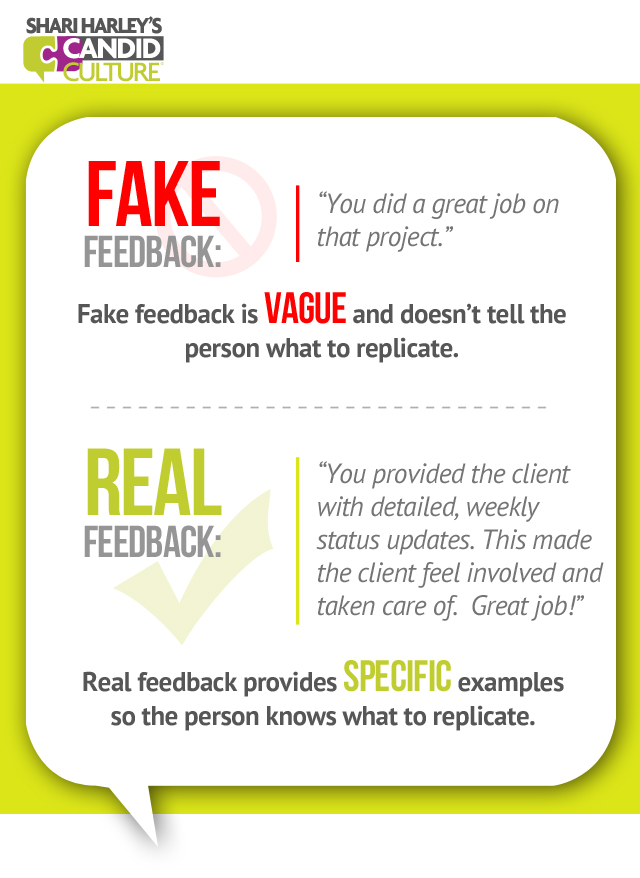
Most of the positive feedback people get at work really isn’t feedback at all. It’s vague, fluffy, and unhelpful. Aka, Cap’n Crunch – sweet but useless.
“Great job.” “You’re awesome.” “You’re great to work with.” None of this qualifies as real feedback.
The purpose of positive feedback is to make people feel valued and appreciated and to get them to replicate a behavior. Telling someone, “great job” or “you’re doing great work” will make the person feel good (momentarily), but won’t tell her what to replicate. These phrases are vague, and vague positive comments come across as inauthentic at best and unhelpful at worst.
Here are a few examples of what I refer to as real vs. fake feedback:
Examples of positive feedback:
Fake feedback: “Great job.”
Real feedback: “You researched three vendors when making a proposal of who we should choose to manage our payroll operations. You included all the necessary information for us to make a decision and presented the information in a one-page table that was easy to read. Your work made it really easy to make a decision. Great job!”
Examples of positive feedback:
Fake feedback: “You’re really reliable.”
Real feedback: “I know that whatever I give you to do will get done the first time I ask and will be accurate. I don’t have to ask again or check your work. You check your work for typos and mistakes before submitting it.”
Examples of positive feedback:
Fake feedback: “You make my job easy.”
Real feedback: “Last week you noticed an invoice that didn’t seem accurate. You researched the invoice and got the mistake corrected before I even knew there was a problem. You make my job easy.”
Examples of positive feedback:
Fake feedback: “You’re awesome.”
Real feedback: “You always do what’s right for the company. Last week you called a vendor whose service has been spotty. You provided them with feedback and asked for their plan to improve their service levels. This added a lot of value to our organization.”
The guidelines for giving positive feedback are the same as giving negative feedback:
- Be specific.
- Give an example.
- Give feedback close to the time an event happens.
To give specific and meaningful positive comments, you will have to observe performance, and that takes time. But if you want someone to replicate a behavior, tell the person specifically what she did well.
People are not us; they do things their way, not ours. This is so obvious. Yet violated expectations are consistently a source of lots of frustration and upset, both personally and professionally. “How could you not check your work before submitting information to a client?” “What do you mean you didn’t call that person back?” “You said what?!”
The most frequent request we get at Candid Culture is for feedback training. The call usually goes something like this, “The  communication isn’t great at our company. Managers don’t give a lot of feedback. People don’t talk directly to each other when there are problems, they talk about each other. Can you help?”
Sure, we can help. But once we’re having this conversation people are already frustrated. Trust has been violated and relationships and reputations have been damaged. Instead of waiting for problems to occur, expect the unexpected. Set clear expectations before people don’t proofread reports, miss deadlines, and do other things you wouldn’t dream of doing.
How to avoid violated (often unstated) expectations? Ask more questions.
Here are five questions you should ask every person you work with to set expectations. And if you do, your workplace will have fewer frustrations and violated expectations:
- What’s most important that you’re working on right now? What are your goals this quarter?
- What are we both working on that we can work on together? Or what should one of us stop working on?
- How do you like to communicate? Phone, in-person, by appointment or drop by’s.
- How do you like to receive information – email, voicemail, text message or instant messenger?
- If I need information from you and I haven’t heard back from you, what should I do, and is it ok to do that?
- What are your pet peeves at work? How will I annoy you and not even know it?
- How do you like to be interrupted? (You’re going to be interrupted. You might as well have a preference.)
I know. That was seven questions, not five. I could keep going. But this is a good start.
Here’s the philosophy and practice: People aren’t you. Anticipate challenges, breakdowns, and violated expectations, and talk about them before they happen. Make requests. Ask questions.
It’s always easier to ask for what you want than to give feedback.
Most of us aren’t eager to admit when we don’t know something, need help, or make a mistake. We fear these things will damage our reputation and make us appear less than to others. But neither are true. It takes strength and self confidence to admit mistakes, accept feedback, and ask for help. Strong, self confident people do all of these things.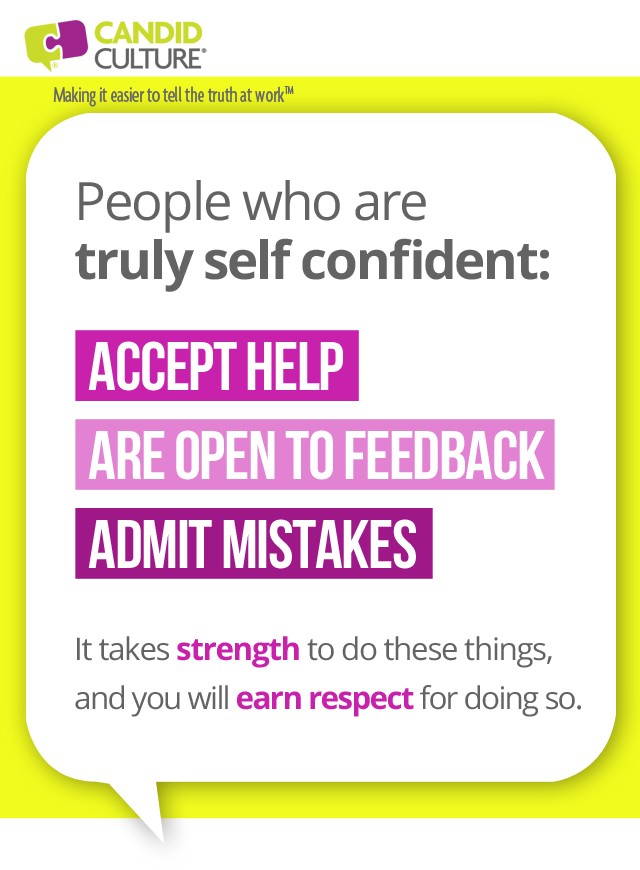
When someone who works for me is willing to admit mistakes, I think more of them. When employees ask for help rather than spin their wheels unnecessarily, I’m appreciative. When they’re open to feedback, I’m grateful they’re easy to work with. And the same is likely true for you.
Arrogance masquerades as self confidence. People who are arrogant come off as strong and self confident, but it’s a façade.
It may seem like your personal power and reputation will be diminished by admitting mistakes and accepting help. But this couldn’t be further from the truth. It takes strength to say we don’t know how to do something, to embrace feedback that stings, and to admit bad choices. And strong, self confident people do all of these things, regularly.
You won’t lose credibility or damage your reputation by being humble, instead you’ll be seen as real, relatable and willing to admit a lack of perfection. And all of those things take strength that ingratiate you to others. So be yourself. Don’t pretend you’re better or more knowledgeable than you are. Authenticity goes a long way.
Lots of organizations do exit interviews after employees give notice. Exit interviews can be a source of helpful information. Employees have little to lose after they’ve quit, so they’re likely to speak candidly about their work experience. But asking for feedback after an employee has quit is a little (a lot) too late. The time to ask about an employee’s working experience is every 90 days, if not more frequently.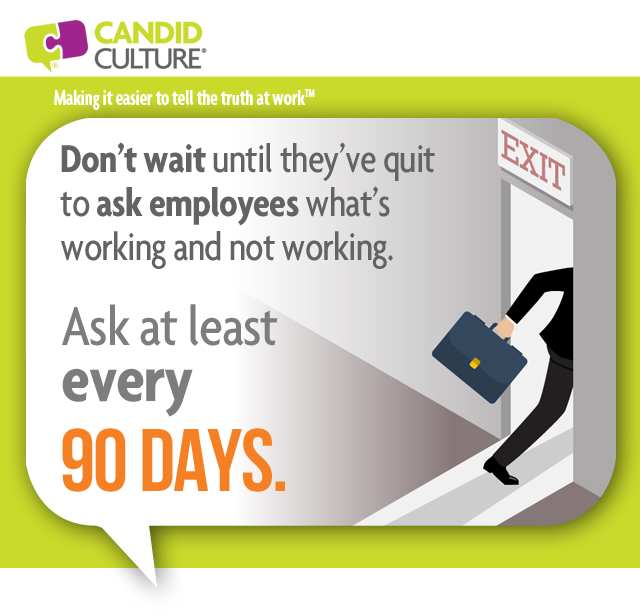
Employees quit. It’s a natural part of doing business. And some turnover is healthy and helpful. Surprises, however, are not helpful and are unnecessary. Turnover should rarely, if ever, be a surprise. The writing is always on the wall, if you ask the right questions and make it easy to speak freely.
Most employees are concerned about giving feedback when their input is negative. Employees at almost every company cite “a list,” and those who speak up, end up on it, and then mysteriously leave the organization. Mind you, no one has ever seen the list, but employees at all types of organizations are certain it exists.
If you want to reduce the turnover in your organization and increase employee engagement and satisfaction, ask for feedback regularly, and make it easy to speak candidly.
Five ways to get your employees talking before they quit:
- Ask for feedback at the end of every meeting. Simply ask, “What are you enjoying about your job? What are you not enjoying?”
Or ask, “What makes your job easier? What makes your job harder?”
- Manage your responses to feedback. The easier it is to tell you the truth, the more truth you’ll get. Employees are afraid of their manager’s reactions. Resist the urge to become defensive (which is very difficult to do). Saying, “I’m sorry that was your experience. Thank you for telling me,” goes a long way. Employees will breathe a sigh of relief and are more likely to speak candidly in the future.
- Replace one satisfaction survey with roundtable discussions during which a leader or manager asks a small group of employees for feedback. Live conversations build trust and loyalty. Written surveys do not.
- Help employees who aren’t a good fit, exit the organization. Don’t wait for poor performers or employees who aren’t a good culture fit to leave. Help misplaced employees find a better match. The right employees raise performance and morale, the wrong employees destroy both.
- Don’t be afraid to ask for feedback. Just because you asked for feedback, doesn’t mean you have to act on that information. Employees don’t typically expect all of their requests to be met. It’s often enough just to be able to speak and be heard.
Keep doing exit interviews, and add quarterly or monthly requests for feedback. Talk with people over the phone or in person. Ask one or two simple questions to get the other person talking. Manage your face. Smile. Say “thank you” for the feedback. And watch your employee engagement and satisfaction rise.