Posted under Career Management on April 7, 2013 by Shari Harley. 5 Comments
Last week some unknown person sent me emails predicting my future. According to the anonymous clairvoyant, in ten years my life will be going well. I’ll have a son who is bright but doesn’t apply himself (shocking), and I’ll be offered a job in Oshkosh that I shouldn’t take. After the third predictive email, the sender wanted to know if I had questions about my future. I didn’t.
The whole thing was wildly creepy.
No one should take advice from someone with this much discretionary time. The emailer needs a volunteer job.
Why would I want someone else to tell me my future? That’s something I enjoy creating.
I’ve got a friend who feels a black cloud follows her. She feels bad things repeatedly happen to her and there’s nothing she does to create these situations, which is, of course, complete garbage.
It may be easier to blame someone or something for the bad things that happen to you, but if someone else is responsible, you have no control. And if you have no control over what happens to you, there is nothing you can do to create the life you really want.
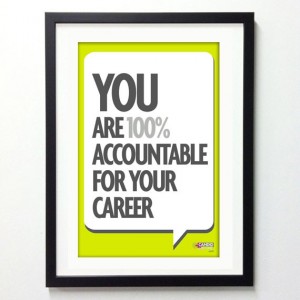
I see myself as 100% responsible for everything that happens to me. As antithetical as it sounds, life is easier when I’m accountable. If I miss a plane because of traffic, I should have left for the airport earlier. If I get overcharged in a restaurant, I should have checked the bill more carefully. If I do a bunch of work for a client and later find out that the work I did isn’t what the client really wanted, I should have asked more questions upfront and asked for feedback earlier.
When I’m responsible for what happens to me, I have some control. When someone else is responsible, I have no control.
I’ll admit to going to a psychic…once. In 2001 I took a transfer from Denver to New York. Living in New York was fun and exciting, and great for my career, but I didn’t enjoy living in such an urban city. I agonized over what to do for two years – go back to Denver, stay in New York, or move someplace else?
Desperately unhappy, but not being able to make a decision, I went to see a psychic. Clearly I had given up. I was going to let someone I’d never met, who didn’t know anything about me, decide my future. Unless you’re at the Jersey Shore and decide to have your palm read for fun, seeing a psychic is abdicating responsibility for your life.
Instead of seeking answers about what might happen, pursue the things you want. If you want a different job in your organization, tell someone who can do something about it. If you got passed over for a job, ask the hiring manager for feedback of what would have made you a better candidate. If the hiring manager doesn’t give you any information, ask your current boss to get the information for you. If one of your co-workers excludes you from projects, ask him why. If someone you work with seems to dislike you, ask for feedback about what you did to damage the relationship. Regardless of how challenging the situation and how disappointing the results, there is ALWAYS something you did to either contribute to the situation or something you can do to change the situation.
I don’t mean to tell you what to do. Nor do I mean to minimize how hard some life circumstances are. But I do want you to see yourself as in charge of what happens to you.
Create the life you want by:
Asking, “What do I really want, and what’s one thing I can do right now to get closer to that goal?” Then take one step. Then take one more, and so on.
If negative things are happening, ask, “What could I have done differently to have a different outcome?” Or, ask, “If I could do this over again, what would I do differently.” Then next time, do it differently.
Regardless of how hard or bad something is, there is ALWAYS something you can do to make the situation better. Take your life, your career and your relationships into your own hands, where they belong.
Email us if you want this career management phrase on a poster, note card, notebook, or magnet.
When the people we work with don’t do their jobs, we might find ourselves saying, “He should be more on top of things.” “She shouldn’t make commitments she can’t keep.” “He doesn’t know what he’s doing, and that’s not my problem.” The challenge is, when your coworkers don’t perform, it is your problem.
When your coworkers don’t get you the information you need in a timely way, you miss deadlines. When you work from incorrect information, your reports are wrong. When others don’t work with you, you look bad. So you can be right all day about how others perform, and your reputation will still be negatively impacted.
I don’t suggest you enable your coworkers by doing the work others don’t. I do suggest you help your coworkers be successful by holding them accountable.
Here are a few things you can do to manage your career and get what you need from your business relationships:
Don’t assume others will meet deadlines. Check in periodically and ask, “What’s been done so far with the XYX project?” Notice, I didn’t suggest asking, “How are things going with the XYZ project.” “How are things going” is a greeting, not a question.
Set iterative deadlines. If March 20th is your drop dead deadline, ask to see pieces of work incrementally. “Can I see the results of the survey on March 5th, the write up on March 10th, and the draft report on March 15th?” One of the biggest mistakes managers and project managers make is not practicing good delegation by setting iterative deadlines and reviewing work as it’s completed.
Don’t just email and ask for updates. The people you work with are overwhelmed with email. And email is too passive. Visit people’s offices or pick up the phone. Saying, “I emailed him and haven’t heard back” makes you look as bad as the other person who missed a deadline.
You might be thinking, “Holding my coworkers accountable is awkward. I don’t have the formal authority, and I don’t want my coworkers to think I’m bossy or damage my business relationships.”
It’s all in the how you make requests.
If you’ve seen me speak or have read the business book How to Say Anything to Anyone, you know I believe in setting clear expectations at the beginning of anything new. That could sound something like, “I’m looking forward to working with you on the XYZ project. How would you feel if we set iterative deadlines, so we can discuss work as it is completed? You’ll get just-in-time input, making any necessary adjustments as we go, and we’ll stay ahead of schedule. How does that sound? How are the 5th, 10th, and 15th as mini deadlines for you?”
Many people put large projects off until the last minute. People procrastinate less when large projects are broken into smaller chunks with correlating deadlines. You strengthen your business relationships and support people in meeting deadlines and not procrastinating when you agree on completion dates when projects begin. Also, most of us unfortunately know what it’s like to put a lot of work into a project, have someone review our completed work, and then be told we went down the wrong path and need to start over. It’s days like this that make being a Walmart greeter seem appealing.
Ask more. Assume less. Don’t assume your coworkers will do what they’re supposed to do. Ask upfront to see pieces of work on agreed upon dates. Pick up the phone versus rely on email to communication. And know that the people you work closely with are a reflection of you. Strengthen your business relationships. Get people working with you, and everyone will look good.
Posted under Uncategorized on March 1, 2013 by Shari Harley. 0 Comments
You can say more than you think you can at work. You just need to lay some groundwork, and most people don’t. So difficult conversations remain…difficult. Change your business communication and improve your business relationships.
Listen to my conversation with colleague Heather Stagl on her radio show, A Change Agent’s Dilemma and get the words to use to say anything to anyone.
Every time I get on a plane I’m grateful that skype isn’t allowed and that cell phones haven’t made it to the friendly skies. I can’t imagine sitting in a relatively small, contained space for that long, while numerous people chat away.
There was no such luck in jury duty last week when people passed the time watching TV on their phones and iPads, WITHOUT headphones. Does anyone think this is acceptable business etiquette? Please post a comment here. I’d really like to know.
Watching TV on an iPad and phone are still somewhat of a novelty. My fear is that soon, watching TV in public places without headphones will be like talking on the phone in a coffee shop – the norm. I am apparently, one of the few people who finds talking on a cell phone in restaurants and coffee shops rude. And one of my employees let me know that this makes me sound old and cranky. I can accept that I’m both old and cranky.
If you find yourself in a public place with someone watching TV or listening to music without headphones, here’s what you can say: “Would you mind using headphones?” It’s as simple as that.
If s/he tells you s/he doesn’t have any, then you can say, “Would you mind not listening to music or watching TV without headphones? It’s distracting.” The worst the person can say is no. And if you don’t want to make the request directly, then ask someone working in the location you’re spending time.
If you say nothing, and it bothers you, you’re training people to that it’s OK to fill public spaces with TV and music that you don’t want to be watching and listening to. And both will quickly become the norm.
When confronted with a challenging conversation or situation, everyone has a reaction of some type. Some people laugh nervously. Some people get quiet and retreat. Other people turn red. Others yell. And some people cry. All of these reactions are normal and natural.
If people didn’t have emotions we’d be androids. And while there are probably days you wish your coworkers acted more like Siri, if the people you work with don’t think more critically than your iPhone, they aren’t of much use to you.
The problem with expressing emotions at work is that it makes people uncomfortable. And often when people are uncomfortable, they don’t know what to do. They just want the situation to go away. And unfortunately in this situation, that means they want you to go away, which is not how you want your boss, coworkers, or customers to think about you.
Avoid crying at work. It makes the person across from you feel uncomfortable and helpless. Men and women alike don’t know what to do when someone they work with cries. They just want the person to stop crying or leave.
I’ve heard some people describe criers as manipulative, as if they cry to orchestrate a certain outcome. I don’t believe that. I think people who cry at work do so involuntarily. It’s their natural reaction to stress. That said, crying at work is not good for professional reputations or relationships.
Here’s what you should do if you have a crier in your office:
Hand the person a tissue.
Know that you are responsible for how you deliver information. You are not responsible for the person’s reaction.
If the person can continue the conversation, keep talking.
If s/he can’t continue the conversation, end it and talk another day. Say something like, “I can see this is very difficult, and I’m very sorry about that. Why don’t we finish the conversation another day.”
If the person doesn’t leave your office, stand up and open your door. That will prompt the other person to stand up.
Here’s what you should do if you’re a crier:
Don’t have difficult conversations when you’re tired, stressed, or are having a bad day.
Practice potentially difficult conversations so you feel more prepared and in control.
Know that nothing is personal.
If you sense you are going to cry, get out of the meeting before you do.
Take a walk outside to burn off stress.
If you cry in a meeting, apologize and try to stop.
If you can’t, excuse yourself from the meeting and circle back to the person when you’re more composed.
None of these suggestions are intended to sound cold or unempathetic. Instead, they’re intended to help criers manage their professional reputation and career. You don’t want someone to be afraid to give you bad news because they fear your reaction. Anything that gets in the way of telling you the truth makes it likely that you won’t get real feedback. And without consistent, candid feedback, you’re working in the dark.
Not knowing how you come across and how your work is perceived are the things that lead to being fired, overlooked for projects, and laid off. Make it easy to tell you the truth by managing your emotions during difficult conversations. As hard and at times seemingly unrealistic as it seems, leave your feelings in your car.
There is one job interview question recruiters and hiring managers must ask. And the answer should be a deal breaker.
The most important job interview question for any role and level, in every organization: Tell me about a time you received negative feedback.
This is NOT the same question as tell me about a weakness. Or tell me about a time you made a mistake at work. Those are also important job interview questions to ask. But they’re not the most important question.
Let’s assume everyone you interview is age sixteen and older. Unless your candidates live in a cave, never speaking to anyone, it’s not possible to arrive at age 16 without having received negative feedback. The feedback can come from a friend, teacher, or parent. It doesn’t need to be work related.
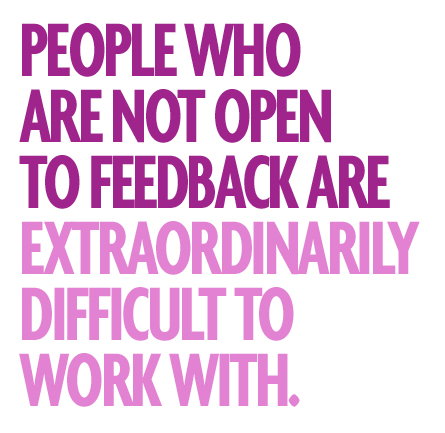
The point of the question is to discover whether the candidate is open to feedback. People who are not open to feedback are extraordinarily difficult to work with. They aren’t coachable. Any type of feedback they receive will result in resistance and defensiveness.
Employees who aren’t open to feedback won’t change or improve their behavior, regardless of how effective a manager is. Instead of listening to feedback and taking corrective action, employees who are not open to feedback will tell managers why they are wrong.
Everyone you interview has received negative feedback at some point. The question is whether or not candidates were open enough to listen to the feedback. People who aren’t open to feedback won’t be able to answer your question.
If candidates can’t tell you about a time they received negative feedback, ask a follow-up question. Your job as the interviewer is to give candidates every possible opportunity to be successful. If you don’t get the answer you’re looking for, ask the interview question in two different ways, until you’re certain the candidate can’t or won’t answer the question.
If candidates can’t tell you about a time they received negative feedback, ask what their reputation is at their current job or was at a previous job. Candidates probably won’t be able to answer this question either. Most people don’t know their reputation at work.
Even if a candidate doesn’t know with certainty his reputation at work, the answer he provides will give you a sense of how self aware he is. People who are self aware are more open to feedback and are easier to coach and manage than people who are not self aware.
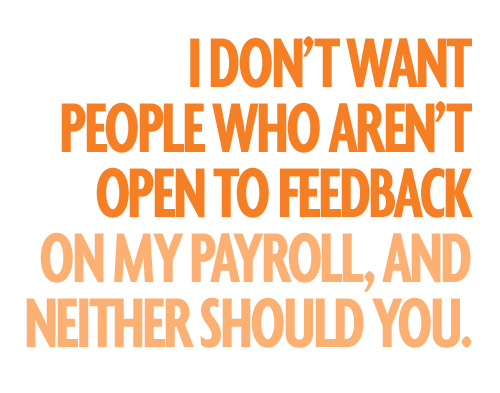
I really do eliminate candidates who demonstrate that they aren’t open to feedback –whether I’m hiring for Candid Culture or for one of my clients. I don’t care how credentialed or experienced the candidate is.
Sue: “I shouldn’t have to tell him what I want. He should just know.”
Bob: “She expects me to read her mind. I’m not a mind reader.”
This age-old romantic relationship complaint is as common at work as it is at home.
Several years ago, before I started Candid Culture, I wrote down my annual performance goals, and asked my manager to approve the goals, which he did. But we didn’t weigh the goals. Neither I nor my manager articulated what percent of my bonus should be dedicated to each goal. The company practiced pay-for-performance and paid bonuses based on goal achievement.
At the end of the year, my boss reviewed my performance goals as part of my performance appraisal. There was one very small project that I didn’t finish. And when I say small, I mean, really, really small. So small, that detail-oriented me shouldn’t have included the project on my list of performance goals. My boss dinged me 15% of my annual bonus for not completing that one very small project. Apparently he thought the project was important. And I lost a chunk of change.
I was really upset. But it was my fault. I didn’t work with my boss to weight my projects or performance goals. So when it came time to determine bonuses, the decision was subjective, which is not what you the employee wants.
When evaluating performance, Managers don’t really want subjectivity either. When there are no clear criteria for awarding bonuses, pay increases, or company stock, managers can have a hard time making decisions, and employees often feel treated unfairly. Written guidelines for how compensation is allocated reduce the feeling that compensation decisions are unfair and subjective.
Your manager may or may not verbalize his expectations for the year, but that doesn’t mean he doesn’t have expectations. A professional athlete would never get on the field without knowing the rules of the game, and neither should you. Don’t go to work without knowing what, specifically, is expected of you.
Ask your manager these questions each quarter. Don’t guess!
What projects are most important this quarter?
How is my work being evaluated? What are the criteria for a good job?
How often would you like to review work in progress so you can give feedback, and I can make adjustments as projects progress?
The bottom line is:
Don’t wait for someone to tell you what to do at work.
Like speeding limits, not knowing the rules doesn’t mean you’re not subject to them.
Write down your performance goals and get them approved in writing by your manager, even if your manager is difficult to schedule with. While it’s not ideal, you can write your performance goals down and email them for edits and approval, without discussing live.
Review performance goals quarterly, at a minimum. Monthly would be better. Bring your goals to your one-on-one meetings with your manager and discuss progress regularly. Don’t make your manager ask you for updates.
If you’re not having one-on-one meetings with your manager, start. Employees are accountable for asking their manager for feedback.
Make changes, in writing, to goals that change or become irrelevant.
If your compensation or annual performance rating is tied to goal achievement, write down specifically how each goal contributes to your compensation or annual rating. Giving each goal a numerical value (a percentage) is ideal.
These guidelines may sound like a lot of work or overly formal. In my experience writing agreed-upon performance goals give employees a sense of control. When I know what I need to do, and I know how I’m being evaluated, I feel like I am in charge of where I put my time. If I elect not to finish a project, I know how I will be affected. And that makes me feel like I’m running the show.






 Sue: “I shouldn’t have to tell him what I want. He should just know.”