Most managers write performance appraisals from a blank page. They sit at their desks trying to remember all the good things employees did throughout the year. But it’s hard to remember a whole year’s worth of events. So the appraisal ends up being a review of the last quarter, which is all they can remember.
Don’t let this happen to you.
The time to start preparing for your performance appraisal is now. Not in January, now.
Two months ago I wrote a blog encouraging you to ask your boss’s permission to give him/her a list of your 2012 accomplishments. Just in case you didn’t do it, I’m reminding you again.
Most of us are not great at self promotion. We think that if we do great work, the right people will notice, and we’ll get the recognition – status, money, responsibility – we deserve. In fact, many people critique others who are good at self promotion thinking that they’re suck ups, who make themselves look good at others’ expense. And we don’t want to be like that. So we decide, “I’ll quietly do my job well and eventually I’ll get the recognition I deserve.”
You can promote yourself and the work you do without appearing arrogant, self inflated, or trampling on others.
Think about it this way, no one knows the work you do better than you do. Your boss doesn’t follow you around. S/he doesn’t know all the great stuff you do every day. It’s your job to tell her.
Here’s how to promote yourself:
Create a one-page sheet of your projects and accomplishments. Bring this sheet to your one-one-one meetings with your boss, however frequently they occur. At the end of the year these sheets become the cheat sheet from which to write your review. Aggregate all the information you’ve captured during the year and ask your boss’s permission to provide it to help him/her write your appraisal. S/he won’t say no. Writing appraisals is time consuming. If you can make the process easier, it strengthens your relationship with your boss and makes you look good. But you must ask for permission to send the list.
If you haven’t been assembling a list of accomplishments, create one for 2012 now. And start creating a list in January of 2013, and add to the list regularly.
It’s your job to promote yourself and tell the people you work with what you’re doing. Simply say:
“Here’s what I’ve been focused on…”
“Here are a few projects my team finished…”
“Here’s something I’m working on…”
“I’m really proud of…”
Any of these phrases will do the trick. Don’t make your boss guess. Make it easy to promote you.
I received lots of emails last week about performance appraisals gone wrong. Some made me sad. Some made me sigh. And the ‘best of’ the worst was so outlandish it made me laugh out loud. Really laugh out loud. Not that LOL thing we overuse.
The ‘best of’ the worst examples of performance appraisals are below.
Bad example #1: Giving mixed messages.
• Giving an employee working on a long project gift cards as a reward and then during the performance appraisal telling her she did the whole project wrong and had to start over.
Bad example #2: Waiting too long to give feedback.
• Giving an employee a performance appraisal six months late.
Bad example #3: Being lazy.
• Using the employee’s self appraisal as the final appraisal, without the manager adding any of his or her own comments.
Bad example #4: Never awarding the highest rating possible, to anyone.
• If a one is the best rating and a five is the worst rating, no one ever earns a one.
Bad example #5: Holding people to expectations and standards but not sharing those expectations.
• Not clarifying at the beginning of the year what the expectations are and what a good job looks like.
Bad example #6: Never giving employees feedback about their performance.
• Writing performance appraisals and documenting performance issues, but giving none of the written or verbal feedback to the employee.
Bad example #7: Giving small amounts of vague feedback.
• Giving little to no data in the review because the manager didn’t work closely enough with the employee to observe performance directly and didn’t ask others in the organization to provide feedback.
Bad example #8 (I received this example SEVERAL times): Providing only a written appraisal.
• Handing an employee a written appraisal while in a meeting with other people and never having a conversation.
This is just hilarious:
“During my annual performance appraisal I was asked if I was manic. After a moment or two of trying to understand what my supervisor meant by the comment, I finally asked. My supervisor replied, “Well, you are so upbeat about your job all the time, I just thought you were manic. Nobody can be that happy about working here.””
The winner for being the ‘best of’ the worst:
My manager tossed my performance appraisal on my desk saying, “Just look this over and sign it. I want it back by the end of the day.” Of course, the appraisal was full of feedback and expectations that I had never received.
I told my manager, “There is a lot of information here that was never discussed with me. I would have liked the opportunity to discuss these issues before it showed up in my review.”
The manager replied, “See this is why I didn’t want to meet with you! I knew you would react badly! Just man up, take the feedback, and sign the thing! It’s due to HR today.”
You can’t make this stuff up.
Managers: If you do a little better than these ten examples of performance appraisals, you’re outperforming your manager peers. Sad but true.
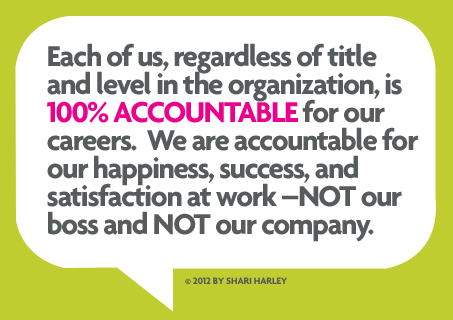
Employees: You are responsible for your career happiness, success, and satisfaction, not your boss. Ask for expectations at the beginning of anything new and for regular feedback.
Take your performance into your own hands:
1. Don’t wait for your boss to set expectations. Ask your boss for his/her expectations. Get very clear on what a good job looks like, before you start working on a project and/or when the year starts.
2. Write annual goals and review them with your direct supervisor at least quarterly. During your regular one-on-ones, ask for feedback. If you don’t have regular one-on-ones, start. Ask your boss’s permission to schedule a one-on-one at least quarterly to update him/her on projects and to gather feedback.
3. Ask for regular feedback on pieces of work as you complete the work. Don’t wait until the end of a project to get feedback.
4. Ask for feedback about your overall performance once a quarter.
Ask these questions:
• How am I doing so far this year performance wise?
• What mistakes have I made from which I need to recover?
• What aspects of my work have contributed most to the organization?
• What do I need to do between now and the end of the year to ensure a positive performance appraisal?
The performance appraisal system doesn’t have to be rife with challenge and lead to disappointment. Take more control over your conversations and thus your outcomes.
I’ve never had a performance appraisal that didn’t make me want to quit. Throughout my 15-year corporate career, before starting Candid Culture,I had some great bosses. And I always got good ratings and positive reviews. But there was always some comment or piece of feedback, in every performance appraisal, that frustrated me or impacted my raise or bonus in a way that felt unfair.
And each time I got feedback that felt unfair, I looked for how I contributed to the situation.
Which means it’s our job to ask the expectations of the people we work with and collect their feedback throughout the year, so we’re not blind-sided at year end.
Below are some tips to ensure you give and receive a useful and trauma-free performance appraisal.
If you read my last blog post,you know that your boss may not know all the good and not-so-good things you do on a daily basis. It’s your job to let her know about your accomplishments.
Assemble a list of things you’ve accomplished this year. This list might include emails and feedback from people you work with both inside and outside your organization. Ask your boss’s permission to send her the list. And tell her the information is intended to make it easy to write your appraisal.
If you don’t have feedback from your peers and internal or external customers, ask for it. I define customers as anyone you need to get your job done and anyone who needs you to get their job done. Send a short email to five or six people with whom you work closely, and ask them to send your boss some feedback about your performance this past year. If they’re comfortable sending you the feedback directly, all the better. Guide your customers by asking specific questions. That way you’ll get specific feedback, versus, “Dave did a good job this year.”
Ask questions like:
What’s one thing I did this year that made the most difference to you or your department?
What’s one thing I could have done differently this past year?
Don’t be scared to ask for feedback from your customers. Most people are so hesitant to give negative feedback that they’ll typically be easier on you than you are on yourself.
Most performance appraisals only contain feedback from the last few months of the year. As managers sit in front of a blank appraisal form, it’s all they can remember. It’s your job to help your manager remember all the good things you did throughout the year. And I don’t know of a manager who won’t appreciate having written, bulleted data from which to write appraisals. Bullets are easier to read than paragraphs. Make it easy to scan your list of accomplishments.
Writing performance appraisals doesn’t have to give you a headache. Receiving appraisals doesn’t have to make you wish you stayed home that day. Plan specific, useful feedback conversations and then move on to planning for 2013.
Managers, here’s a video I created on how to give a useful performance appraisal. And my new book How to Say Anything to Anyoneis perfect preparation for both managers and employees. The book won’t be in bookstores or on Amazon until January, but we have advance copies on our website.