Posts Tagged ‘manage employees’
Lots of organizations send out employee engagement surveys with the desire of improving employee engagement and retention; unfortunately, they often damage both in the process.
There are a few employee engagement survey pitfalls that luckily are easy to avoid.
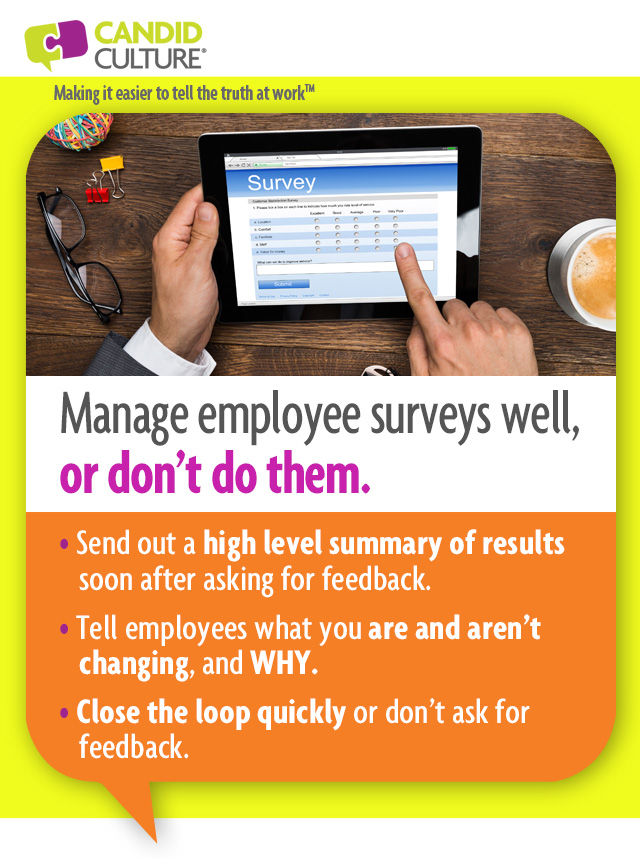
Here are three practices to follow when sending out employee engagement surveys:
- Shorter is better. I hate to say this, but no one wants to fill out an employee engagement survey. It’s time consuming, employees doubt the survey will yield results, and they worry that their feedback isn’t really confidential.
Make your employee engagement survey easy to fill out by making it short. And by short, I mean 25 questions or fewer. You’ll get a better response rate to a 25-question survey than a 65-question one.
- Provide employees with survey results quickly. Most organizations ask for too much information. Leaders are overwhelmed by the volume of survey information, so they spend months and months reviewing it, while employees comment on yet another employee survey with no communication.
Send out a succinct communication sharing the top few learnings – the good and the not-so-good — within a few weeks of sending out the survey. You don’t need to take action at the same time. Simply keep employees in the loop by communicating a quick summary of what you learned. If you wait too long to share the feedback, it often never gets communicated. And the next time you send out a survey, employees will remember the absence of information and be hesitant to fill it out.
- Within 90-days, tell employees what you will and won’t be changing, based on the survey feedback, and tell them why. Employees don’t need or expect all of their input to be utilized. Closing the loop with clear communication about what you are and aren’t changing, and why, is often sufficient.
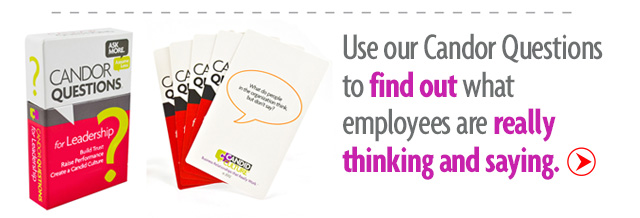
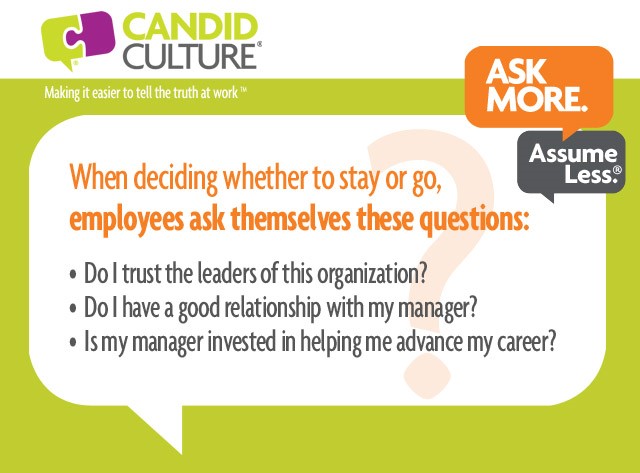
“My boss is a jerk and my career is going nowhere in this organization, but there’s yoga and a pool table, so I think I’ll stay,” said no employee ever.
Employees enjoy concierge service, free lunch, ping pong, and social events at work, but these perks don’t improve retention or performance. The only perks known to improve employee loyalty and commitment is time off and a flexible schedule. Everything else is nice to have, but does not impact career decisions.
Organizational leaders and managers have been led down a path of expensive distractions disguised as employee retention strategies. Eliminate the noise and focus on the four things that really matter to employees, and your best people will stay.
This is what’s important to your employees:
- I trust the leaders who run this organization.
- My opinion means something. I am listened to.
- I feel respected (by my manager) and have good relationships in the organization.
- My work is challenging and interesting.
So what should you do if you want to be a best place to work?
Here are Four Employee Retention Strategies Managers Can Take:
1. Meet one-on-one with employees and have meaningful discussions about his/her performance and career goals.
2. Ask employees for their opinion and demonstrate that you’ve heard them.
3. Provide opportunities for employees to do work they enjoy.
4. Ensure employees who want to advance in your organization are learning and growing.
Read about our Be a Great Place to Work leadership training program that eliminates the noise and teaches the things leaders and managers really need to do to retain the best employees.

I could give you a list of fifty employee retention strategies you could follow to improve employee performance, engagement and retention. But the truth is, there are really just four things you must do. Employees may appreciate the other 46 things but don’t necessarily need them to stay with your organization and do their best work.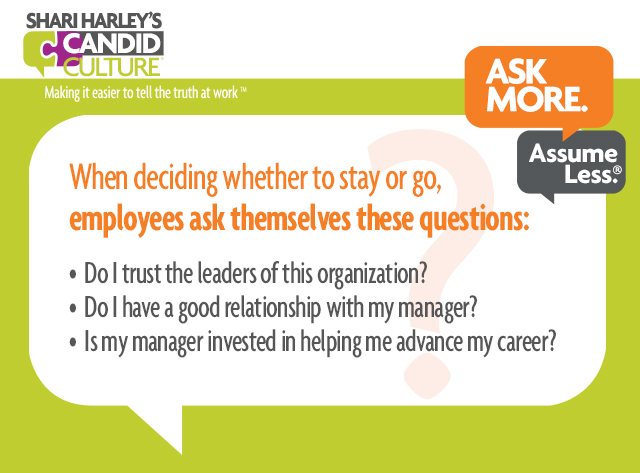
The Colorado Society of Human Resource Management hosts an annual Best Companies competition, and organizations of all sizes compete. Last year I led a workshop before the awards ceremony. The purpose of the workshop was to share the things that make an organization a great place to work. While researching the program, the things that separate the great companies from the less desirable places to work became very clear. I’ll share those employee retention strategies here.
Employees ask themselves these questions at work:
- Do I trust the leaders of this organization?
- Does my opinion/voice matter in this organization?
- Do I have a good relationship with my manager?
- Is my manager invested in helping me advance my career?
Employees enjoy yoga, concierge service, espresso, and social events at work, but these perks don’t necessarily improve retention or performance. The only perk known to improve employee loyalty and commitment is a flexible schedule. Everything else is nice to have, but not essential.
This is what’s really important to your employees:
- I trust the leaders who run this organization.
- My opinion means something. I am listened to.
- I feel respected (by my manager) and have good relationships in the organization.
- My work is challenging and interesting.
So what should you do if you want to be a best place to work?
Four Employee Retention Strategies Leaders Can Use to Create Relationships with Employees at All Levels:
1. Know employees’ names, talents & career goals.
2. Be visible. Talk to employees.
3. Give more information than you think you need to. Employees want to know how your organization is performing.
- Hold town hall meetings. Give financial updates.
- Use ‘Ask the CEO’ boxes to encourage questions and feedback.
- Encourage senior leaders to conduct small, roundtable discussions with employees at all levels.
4. Align leaders’ words and actions.
- Organizational guidelines are applied consistently among all employees.
- Don’t gossip or chuck other leaders under the bus.
- Be consistent. Don’t say, “The CEO says this, but we’re going to do this instead.”
Four Employee Retention Strategies Managers Can Take:
1. Meet one-on-one with employees and have meaningful discussions about employees’ performance and career goals.
2. Ask employees for their opinion and demonstrate that you’ve heard them.
3. Provide opportunities for employees to do work they enjoy.
4. Ensure employees who want to advance in your organization are learning and growing.
Read about our Be a Great Place to Work leadership training program designed for Senior Leaders and HR Professionals.