Many businesses are struggling to overcome negative and permanent online reviews on Yelp, Google, TripAdvisor, Glassdoor, etc. And they’re wondering why customers and employees go online vs. giving feedback directly. The answer is simple.
Giving feedback online is easy. Giving feedback directly is harder, for many reasons. No one wants to be the person who complains. Feedback is likely to be received with a defensive at worst and explanatory at best response, and who really wants to deal with that? At work we fear we’ll get “in trouble” for giving feedback, etc. etc. I could go on and on.
Customers go to Yelp and Google when they either don’t have an alternative or after they have provided direct feedback and didn’t feel heard. Provide customers an easy method of giving feedback and they won’t need to go to Yelp. This is true for your employees too.
If you want your customers and employees to give you feedback directly instead of blasting you online when they’re unhappy, make it easy to give you feedback, regularly.
Here are four ways to help prevent negative online reviews and improve the data you get from customers and employees:
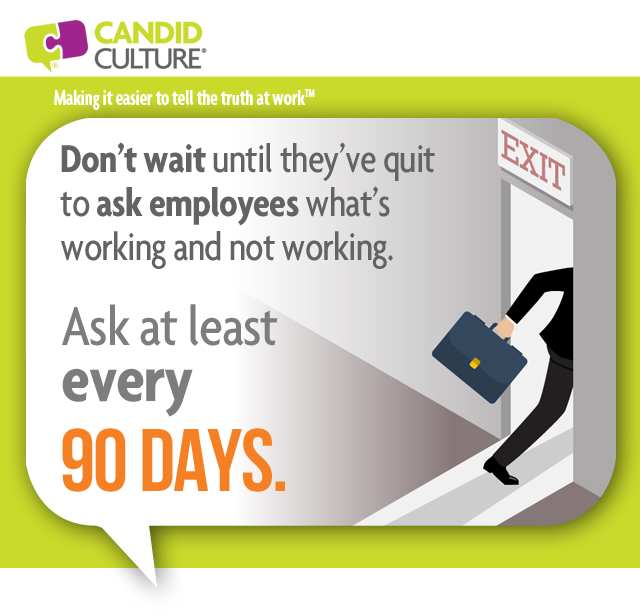
Ask customers and employees for feedback regularly. Don’t wait until the end of the year or after a service has been provided to ask for feedback. Ask for feedback during the customer’s experience. Ask employees for feedback every 90-days.
If you’re going to send online surveys, keep them short. Never ask a customer more than five questions, and two is better. Ask a version of, “What are you appreciating about your experience? What could we change on your behalf?” What else do you need to know? Too many businesses send exhaustive and exhausting surveys to customers after a service has been provided. It’s unrealistic to expect customers to complete 30+ survey questions. Keep it short. You’ll see better response rates.
Call 10% (or fewer if you have thousands of employees and customers) and ask for feedback. It’s such a rare occurrence to receive a phone call asking for feedback, it’s an immediate loyalty and relationship builder.
Don’t request a positive score on a survey. Sending a survey and asking for a certain response type is a turnoff. Uber drivers who ask me to rate them a five never get that rating. The best way to get an awesome rating is to be awesome.
Ask for feedback early and often, and make it easy to give. P.S. And no anonymous surveys – a topic for another day.
Posted under Uncategorized on December 2, 2024 by Shari Harley. 0 Comments
Lots of organizations do exit interviews after employees give notice. Exit interviews can be a source of helpful information. Employees have little to lose after they’ve quit, so they’re likely to speak candidly about their work experience. But asking for feedback after an employee has quit is a little (a lot) too late. The time to ask about an employee’s working experience is every 90 days, if not more frequently.
Employees quit. It’s a natural part of doing business. And some turnover is healthy and helpful. Surprises, however, are not helpful and are unnecessary. Turnover should rarely, if ever, be a surprise. The writing is always on the wall, if you ask the right questions and make it easy to speak freely.
Most employees are concerned about giving feedback when their input is negative. Employees at almost every company believe there is “a list,” and those who speak up, end up on it, and then mysteriously disappear from the organization. Mind you, no one has ever seen the list, but employees at all types of organizations are certain it exists.
If you want to reduce the turnover in your organization and increase employee engagement and satisfaction, ask for feedback regularly, and make it easy to speak candidly.
Five ways to get your employees talking before they quit:
Ask for feedback at the end of every meeting. Simply ask, “What are you enjoying about your job? What are you not enjoying?” Or ask, “What makes your job easier? What makes your job harder?”
Manage your responses to feedback. The easier it is to tell you the truth, the more truth you’ll get. Employees are afraid of their manager’s reactions. Resist the urge to become defensive (which is very difficult to do). Saying, “I’m sorry that was your experience. Thank you for telling me,” goes a long way. Employees will breathe a sigh of relief and are more likely to speak candidly in the future.
Replace one satisfaction survey with roundtable discussions during which a leader or manager asks a small group of employees for feedback. Live conversations build trust and loyalty. Written surveys do not.
Help employees who aren’t a good fit, exit the organization. Don’t allow poor performers or employees who aren’t a good culture fit to drag down other employees. Help misplaced employees find a better match. The right employees raise performance and morale, the wrong employees destroy both.
Don’t be afraid to ask for feedback. Just because you asked for feedback, doesn’t mean you have to act on that information. Employees don’t typically expect all of their requests to be met. It’s often enough just to be able to speak and be heard.
Keep doing exit interviews, and add quarterly or monthly requests for feedback. Talk with people over the phone, via video, or in person. Ask one or two simple questions to get the other person talking. Manage your face and body language. Say “thank you” for the feedback, and watch your employee engagement and satisfaction rise.
Sign Up
Career tips you won't get elsewhere. Sign up to get a free tip card.