
Ask for Specific Feedback – Make Performance Appraisals More Useful
Performance appraisals are, for many, the most dreaded day of the year. Most employees anticipate the meeting, wondering what their manager will say. In addition to hearing about the situations your manager, and others in your organization, observed throughout the year, why not tell your manager what you’d like to know?
It’s perfectly appropriate to tell your manager you’d like feedback about a specific aspect of your performance or about a certain project or piece of work. And the time to ask for this feedback is at least one month BEFORE your appraisal meeting.
If you ask for feedback during the meeting, you’re likely to catch your boss off guard. Managers don’t typically follow employees around or call into every meeting in which employees participate. As a result, your boss may not have an answer to your question. They are likely not thinking about the specific input you want.
Most people don’t like to be caught off guard or feel they can’t answer a question. Asking for feedback in the moment, that your boss can’t address, may embarrass your manager. Don’t put managers on the spot. Set your boss and yourself up for success by asking for specific feedback BEFORE meetings, and give your manager a chance to observe you doing that kind of work.
Ask a vague question, get a vague answer. Ask a specific question, get a specific answer. If you want specific feedback, let your manager know and give her time to observe you doing the actions you’re asking about BEFORE the feedback conversation.
If you want to know how you manage telling internal or external clients “no”, give your boss a chance to see or hear you do this. If you want feedback on how you built relationships with peers virtually this year, give your boss a chance to observe that behavior or time to ask your peers for input.
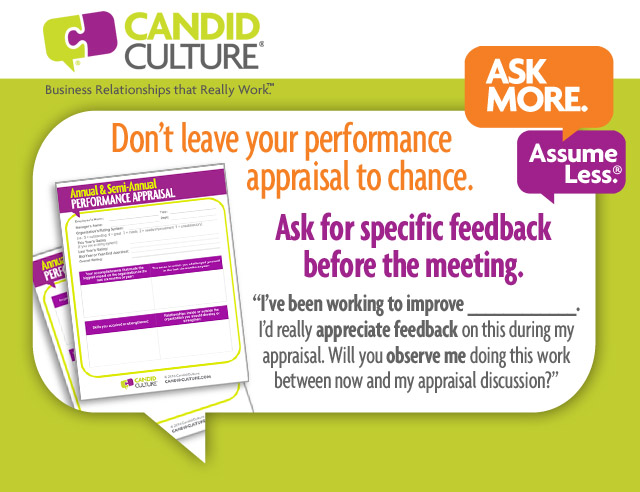
Here’s how asking for specific feedback might sound: “My annual performance appraisal is in June. I am, of course, interested in everything you have to say. I’d also like feedback on how I lead large meetings. I’m leading two meetings between now and my appraisal. If you have the availability to call into either one and listen to how I elicit participation while maintaining control of the meeting, I’d really appreciate it. I’ll send you the call-in information.”
When you tell your manager the specific feedback you want to hear and give her an opportunity to observe you doing that work, you demonstrate seriousness about getting feedback and that you respect your manager’s time. You’re also likely to get more useful, specific feedback.
The practice of asking for specific feedback before one-on-one meetings and giving your manager time to observe you doing that work, is something I recommend doing all year, not just when preparing for performance appraisals. Feedback should be delivered as work is produced. The annual review should be just that, a review of conversations that happened during the year.
Remember, you get what you ask for. Ask a vague question, get a vague answer.