Posts Tagged ‘corporate team building activities’
Early in my career, I worked with a woman I didn’t get along with. We were on the same team and had the same role, but didn’t see eye to eye on how to approach work or solve problems. And when we didn’t agree, things got ugly. I have to admit to being afraid of her.
The odd thing is that socially, we did fine. When our team socialized outside of work, we had fun and got along well. That’s when I realized that there was no correlation between camaraderie and working well together.
Lots of teams go bowling, to baseball games, and out for happy hour as team building activities. And while team members may enjoy being together at these events and get to know each other personally, they don’t learn how to work well together and how to resolve conflict.
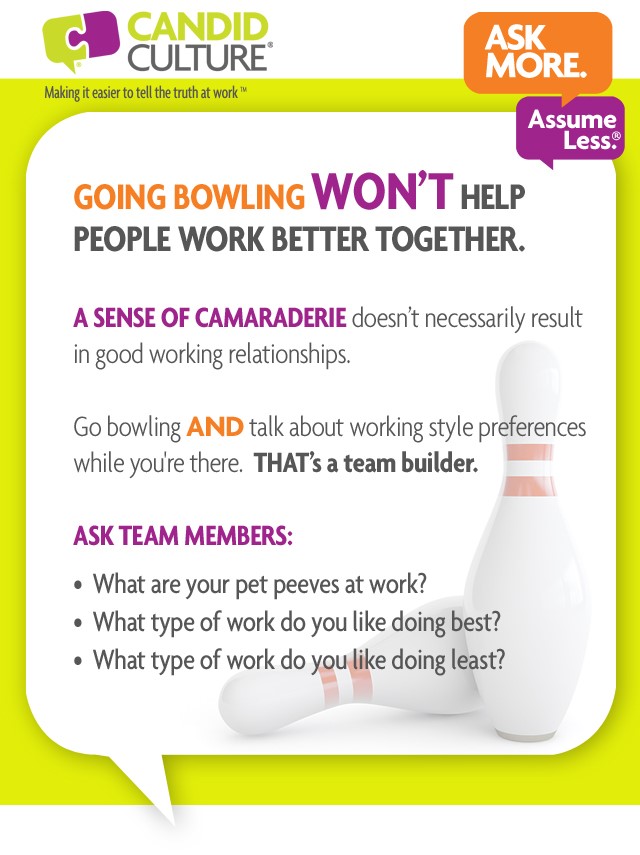
Go bowling or out for happy hour, just don’t expect people to work better together as a result of those activities. If you want to do impactful team building activities, give team members a chance to learn about each other and themselves, and make agreements of how team members will work together in the future. Create occasions for candid conversations.
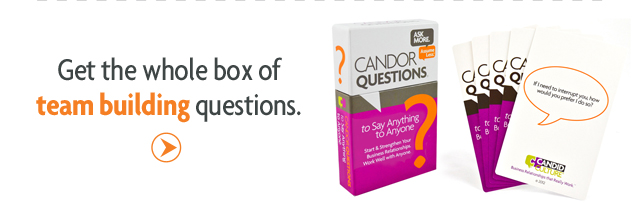
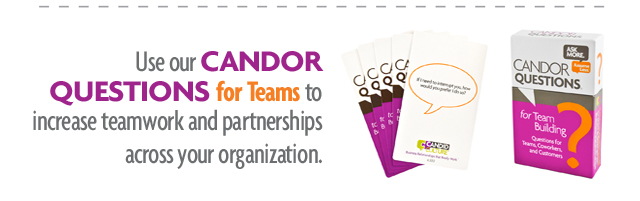
When I lead corporate team building activities, I put people in small groups, give the group a box of Candor Questions for Team Building and time to answer the questions. People talk about things they should have talked about when they started working together. Team members learn about each other’s working style preferences and what each person needs from both the job and each other. But most importantly, team members have permission to talk about things they normally don’t, and begin to create a climate of candor, which is essential for any group working together.
For a team to work well together, it must be safe to tell the truth. Teams need to talk about the things that impact them most – each other. So go bowling and out for happy hour. But also create opportunities for team members to talk about the things that matter most — how they impact each other at work.
How many times have you sent someone five emails and become frustrated when none were returned, or thought an employee was happy, only to be surprised when they quit, or needed to talk with someone but couldn’t get their attention, so you walked by their office throughout the day, wondering if it was ok to knock? Working with other people doesn’t have to be so hard.
Taking the time to ask team building questions is much faster than recovering from missteps with other people. Ask the questions at the beginning of anything new – when you hire a new employee, get a new customer, or start a new project. You can ask questions in person, via video, or over the phone. Always ask live versus via email or a survey. And keep asking the questions as you work with people.
I use the Candor Questions below, when I onboard a new team member at Candid Culture. The questions help the entire team get to know each other better and learn how to work together.
- What will keep you working here and what would make you want to leave?
- What’s the best way to get information to you – voicemail, text, or email?
- What time is too early to contact you?
- What time is too late?
- Do you leave your email and/or text alerts on at night/when you go to sleep?
- Would you prefer I send all emails and text messages during regular business hours?
- What frustrates you at work?
- What are your pet peeves?
- What’s something you want to learn, skill or business wise, that you haven’t had a chance to do?
- What’s something you wish I would start, stop, or continuing doing?
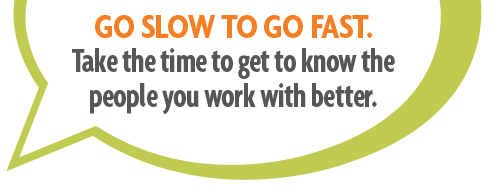
We move so fast at work and are so focused on completing goals, we often don’t take the time to really get to know the people we work with. I feel very strongly that asking the team building questions above will help people work better together. We’ll make fewer ‘mistakes’ with each other, and get more done with less stress and more ease. As William Ury said in his book, Getting to Yes, “Go slow to go fast.”
Asking questions about working style preferences and goals is an ongoing process, and it’s never too late. You can ask the team building questions during meetings or just slip them into your conversations. The process doesn’t have to be formal or time consuming. The point is simply, don’t guess what people need and are expecting from you, ask.
Early in my career, I worked with a woman with whom I didn’t get along. We were on the same team and had the same job, but didn’t see eye to eye on how to approach work or solve problems. And when we didn’t agree, things got ugly. I have to admit to being afraid of her. She was nasty when things didn’t go her way.
The odd thing is that socially, we did fine. When our team socialized outside of work, we had fun and got along well. That’s when I realized that there was no correlation between getting along outside of work and working well together.
Lots of teams go bowling, to baseball games, and out for happy hour as team building activities. And while team members may enjoy being together at these events and getting to know each other personally, they don’t learn team members’ working style preferences, the work others are really good at, and the things at which team members are not as good.
Go bowling or out for happy hour, just don’t expect people to work better together after doing those activities. If you want to do impactful team building activities, give team members a chance to learn about each other and themselves, and make agreements of how team members will work together in the future. Create occasions for candid conversations.
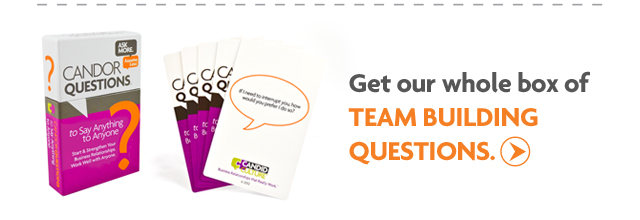
When I lead corporate team building activities, I put people in small groups, give the group a box of Candor Questions for Team Building and time to answer the questions. One person in the group asks one question from the box. Everyone in the group answers that person’s question. The person who asked the question then answers his own question. Then another person on the team asks a question and so on. A great conversation always ensues.
People talk about things they should have and wished they were talked about when they started working together. Team members learn about each other’s work style preferences and what each person needs from both the job and each other. But most importantly, team members have permission to talk about things they normally don’t, and begin to create a climate of candor, which is essential for any group of people working together. For a team to work well together, it must be safe to tell the truth. Teams need to talk about the things that impact them most – each other.
So go bowling and out for happy hour. But also create opportunities for team members to talk about the things that matter most — how they impact each other at work.
About fifteen years ago, I worked with a woman with whom I didn’t get along. We were on the same team and had the same job, but didn’t see eye to eye on how to approach work or solve problems. And when we didn’t agree, things got ugly. I have to admit to being afraid of her. She was nasty when things didn’t go her way.
 The odd thing is that socially, we did fine. When our team socialized outside of work, we had fun and got along well. That’s when I realized that there was no correlation between getting along outside of work and working well together.
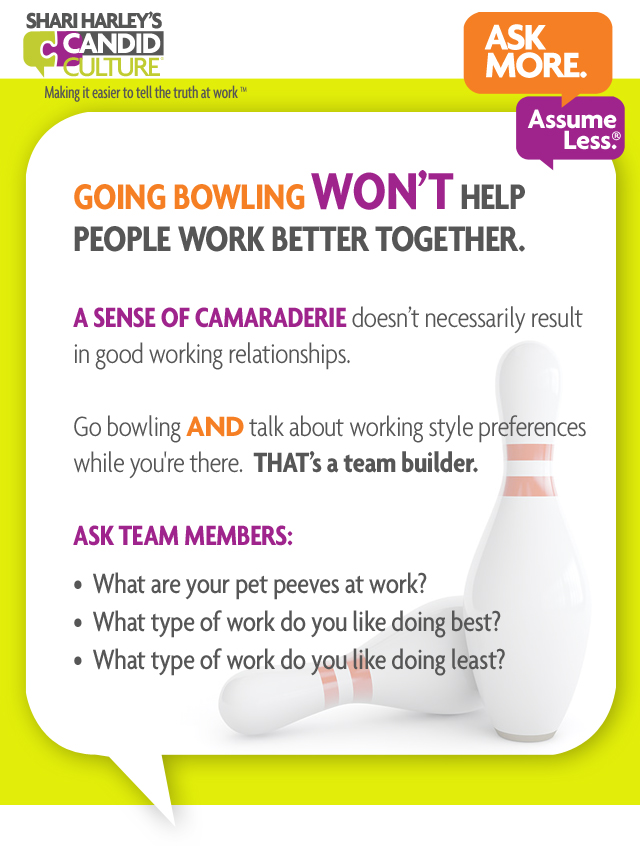
Lots of teams go bowling, to baseball games, and out for happy hour as corporate team building activities. And while team members may enjoy being together at these events and get to know each other better personally, they don’t learn team members’ working style preferences, the work others are really good at, and the things at which team members are not as good.
Go bowling or out for happy hour, just don’t expect people to work better together after doing those activities. If you want to do corporate team building activities, give team members a chance to learn about each other and themselves, and make agreements of how team members will work together in the future. Create occasions for candor.
When I lead corporate team building activities, I put people in small groups, give the group a box of Candor Questions to Say Anything to Anyone, and time to answer the questions. One person in the group asks one question from the box. Everyone in the group answers that person’s question. The person who asked the question then answers his own question. Then another person on the team asks a question and so on. A great conversation always ensues.
People talk about things they should have and wished they’re talked about when they started working together. Team members learn about each others’ work style preferences and what each person needs from both the job and each other. But most importantly, team members have permission to talk about things they normally don’t, and begin to create a climate of candor, which is essential for any group of people working together. For a team to work well together, it must be safe to tell the truth. Teams need to talk about the things that impact them most –each other.
So go bowling and out for happy hour. But also create opportunities for team members to talk about the things that matter most –how they impact each other at work.