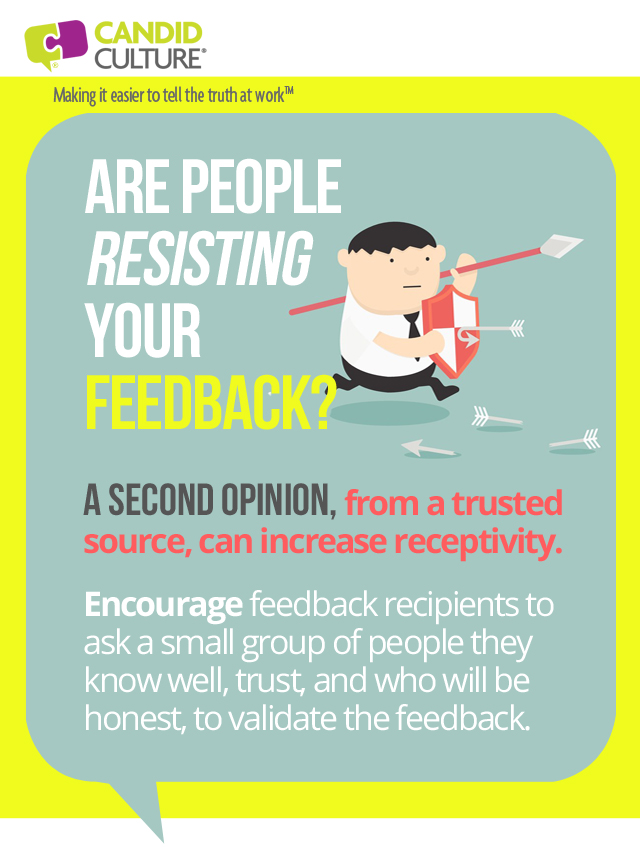
People get defensive when they receive negative feedback. It’s hard not to. Everyone wants to be seen as competent, and when we receive negative feedback, our competence is called into question, so we react.
There are several things you can do to reduce others’ defensiveness – ensure you have a trusting relationship and thus have earned the right to give feedback, watch your words, deliver feedback in a private setting, etc. But for today, I’m going to focus on getting a second opinion.
If you want people to be more receptive to your feedback, consider encouraging them to get a second, third, or fourth opinion. I’m a fan of casual 360-degree feedback – when we ask for feedback from people both inside and possibly outside our organization. Think of 360-degree feedback like an orange, it’s all the way around, like a sphere. When you get 360-degree feedback, you gather input from all the different types of people you interact with, thus getting a more comprehensive and accurate picture of performance. There are different types of 360-degree feedback. 360-degree feedback ranges from a formal, online, anonymous survey to casual conversations. In this instance, I’m suggesting something I call The Core Team.
I suggest everyone has a Core Team of three to five people who love you, know you well, and have your back. Most important is that you trust these people. Your Core Team may be personal or professional relationships or a mixture of both. You may have worked with Core Team members or not. What all Core Team members have in common is that they know you well, want what’s best for you, and will tell you the truth when asked.
My core team consists of a friend from high school, two people I used to work with, and my dad. When I get feedback that I’m having a hard time reconciling, I ask people on my Core Team to validate the feedback. It doesn’t matter if they’ve worked with me or not. I am who I am. I do the same annoying stuff in my personal and professional relationships. A personal Core Team member can provide valid, professional feedback. Sometimes they agree with the feedback I’ve been given and sometimes they don’t. But I always get compelling information to think about. And because I trust the people on my Core Team, I listen to what they have to say.
Don’t be disheartened if people don’t trust your feedback and aren’t receptive. Instead, see their resistance as human and encourage them to get a second opinion. And then talk again a week or a couple of weeks. Listening to and incorporating feedback is a process. It takes time, courage, and patience.
When I led leadership development training for a large mutual fund company we offered a lot of training focused on helping people have hard conversations. Over time I realized that despite that I’d bought and offered the best training programs I could find, the training wasn’t helping. Managers didn’t give enough feedback, and when they did give feedback, employees were often left confused, wondering what they needed to do differently.
I decided that what was missing was the conversation before the crucial conversation. It wasn’t that managers didn’t know what they wanted to say; many managers felt they couldn’t say what they wanted to say. There wasn’t sufficient safety or permission for giving feedback, so managers said little or delivered messages that were so vague, employees were left wondering if there was a problem. This is how the idea for Candid Culture was born.
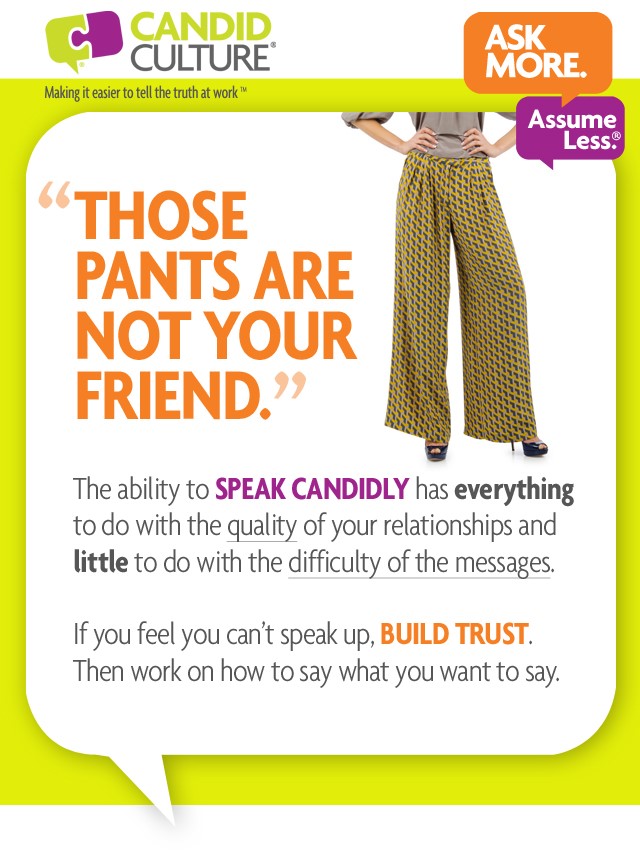
If you’re struggling with giving feedback, I doubt it’s the message that’s the challenge. The distinction between being able to tell the truth (as you see it) and saying nothing, is the quality of your relationship.
Think about the people – personal and professional – who can say anything to you. These are the people who can tell you the person you’re dating is wrong for you, that a piece of clothing is not flattering, or that you dropped the ball. You may not enjoy getting the feedback, but you’re able to hear what they have to say and take it in, because you know they care about you and have your best interests at heart. You trust their motives. When you trust people’s motives, they can say anything to you. When you don’t trust people’s motives, there is little they can say.
If you’re struggling to give feedback, evaluate your relationship by asking these questions:
Does this person trust me?
Does this person know that I have their back under any circumstances?
If the answer to either of the questions is no, it’s not giving feedback you’re struggling with, it’s the quality of your relationship. Work on building trust with this person and you’ll be able to say whatever you feel you need to say.
Here are four steps to building trusting relationships:
Ask questions to get to know people better than you know them now.
Tell people you want them to succeed and demonstrate that by being supportive of their efforts.
Set the expectation that you will give both positive and upgrade feedback as events happen, because you want the person to be successful.
When you deliver feedback, be extremely specific. Feedback that is specific will be received much better than vague feedback, which is typically judgmental.
When people know that you respect and support them, you have a great deal of freedom to speak up. When people don’t trust your motives, giving feedback is almost impossible. The recipient will become defensive and dismiss whatever you say, rationalizing that you don’t like them.
Worry less about giving feedback – for now. Instead, build trust. Get to know people better, then work on giving feedback.
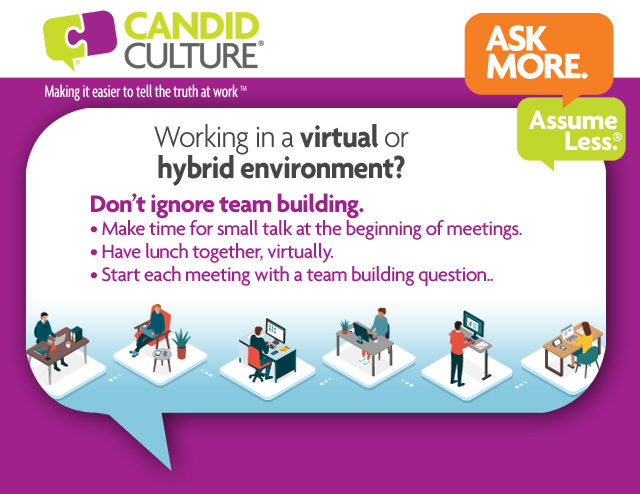
One of the most frequent questions I get is how to retain an organization’s culture and build teamwork when people work virtually. It’s easy to forget about team building when you’re working hybrid or think that team building can’t be done virtually, or decide to wait to do team building until your whole team can get together in person. My advice; don’t wait.
Often the most meaningful aspects of work are the people we work with and the relationships we build. When you leave a job, you leave your laptop and take your friendships. You can build team work virtually; you just need to make the time.
Spend the first few minutes of virtual or hybrid meetings on small talk, just like you would if you were gathering in a physical conference room.
Eat lunch together, virtually. Remember when people used to sit together in the office breakroom or cafeteria? Why not eat together via video? Team building doesn’t have to be elaborate. It can just be spending time together.
Humans need people contact and relationships. Connections with our coworkers make us feel connected to our organizations.
Small talk and group lunches create camaraderie, but they don’t teach people how to work together. In addition to social activities, give people a chance to talk about working style preferences. You don’t have to do personality assessments and long training programs to build teamwork. Just give people a chance to talk about how they like to work, on a regular basis.
Tell your team you want to help people get to know each other better, so work gets done more easily. Start each team meeting with one of the questions below, then move on to your meeting agenda. Do this all year.
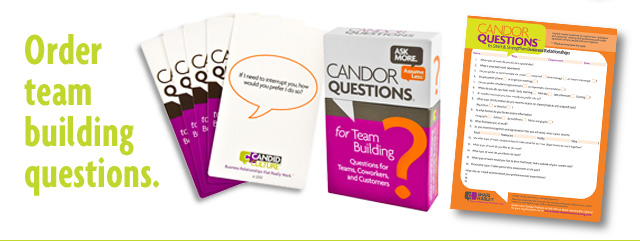
Here are a few team building questions you can use:
What are your pet peeves at work?
What time of day do you do your best work?
Do you leave your email, phone, or text alerts on at night? If I text you after hours, will you get a ping?
If I email you on weekends and evenings, do you think I expect a response? Would you prefer I send messages only during regular business hours?
What’s an area of our business you’d like to learn more about?
What’s something you’d like to learn to do that you don’t have a chance to do now?
Read a question to the group. Give everyone at the meeting the opportunity to answer the question about themselves. And remember, the meeting leader/facilitator speaks last. People will often follow the most senior person’s lead. You want people to answer authentically rather than providing what they think is the ‘right’ answer.
Team building doesn’t have to take a lot of time or money. Don’t wait until everyone is in the office or for a future retreat. Help coworkers spend time together formally and informally, getting to know each other better now.
Sign Up
Career tips you won't get elsewhere. Sign up to get a free tip card.