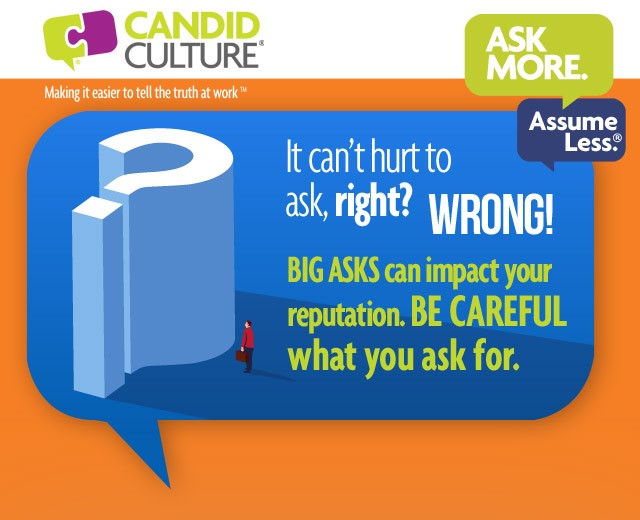
We’ve all heard the expression, “It doesn’t hurt to ask.” But what if it can and does?
A past, full-time nanny told me she was planning to attend a party the night I had an overnight work trip planned. She told me I need to find alternative care for my son while I was out of town. I had made an agreement with the nanny when I hired her. She could take any day off during the year, except when I was traveling for work. And I would provide months of notice when I scheduled a work trip. Her request to attend a mid-week, party when I was traveling was incredibly stressful (for me) and made me question her judgment and her commitment to the job.
While it’s true that you won’t get what you don’t ask for, it’s also true that requests form others’ impressions of us. Some asks may create the impression that we’re difficult to work with. Other requests may create the impression that we’re out of touch or entitled. Be brave in what you ask for but also be judicious and aware of how requests may impact others.
So, what shouldn’t you ask for at work? What’s appropriate in one environment may not be ok in another.
Here are a few do’s and don’ts to follow when making requests:
Don’t ask for anything that requires your boss to break the rules or treat you differently from other employees. This may seem obvious, but I’ve been asked for things that I couldn’t legally provide. A candidate asked me to write them a monthly check towards their personal health insurance plan versus participating in our company-sponsored health insurance plan. It’s an innocent request but put me in a very awkward position and I said no.
Consider how your requests impact other people. Will your request for time off create challenges for your teammates?
Don’t ask for or take time off during the busiest times of the year. Ask your boss what those busy times are and then plan accordingly.
Don’t ask for exceptions unless you’re desperate – being paid in advance to cover unforeseen personal expenses, taking time off you haven’t earned, and using company resources for personal use. All of these may seem acceptable in the moment, but if they make your boss bend or break the rules, they’ll likely make you look bad too.
Be brave. Be bold. And be careful what you ask for. Your reputation is more important than a request that feels important right now but will be insignificant by next year.
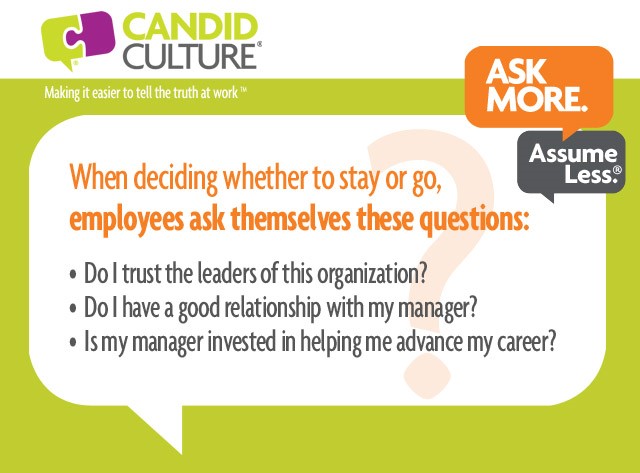
“I don’t like my boss and my career is going nowhere in this organization, but we get free lunch and the office has a game room, so I think I’ll stay,” said no employee ever.
Employees enjoy free lunch and ping pong, but these perks don’t improve retention or performance. The only perks known to improve employee loyalty and commitment is time off, a flexible schedule, and the ability to work from home. Everything else is nice to have, but does not impact career decisions.
We’ve all heard about the great workplace exodus. Employees are leaving jobs in droves for a different life. To retain employees, a job has to work for employees’ desired lifestyle – the number of hours employees want to work, the amount of commuting and travel they want to do, and the social aspects that get met at work. Once those basic needs are met, leaders and managers can focus on other things.
Organizational leaders and managers have been led down a path of expensive distractions disguised as employee retention strategies. Eliminate the noise and focus on the four things that really matter to employees. And provided you meet your employees’ lifestyle needs, your best people will stay.
After lifestyle needs, this is what’s important to your employees:
I trust the leaders who run this organization.
My opinion means something. I am listened to.
I feel respected (by my manager) and have good relationships in the organization.
My work is challenging and interesting.
So what should you do if you want to be a best place to work?
Here are Four Employee Retention Strategies Managers Can Take:
1. Meet one-on-one with employees and have meaningful discussions about performance and career goals.
2. Ask employees for their opinion and demonstrate that you’ve heard them.
3. Provide opportunities for employees to do work they enjoy.
4. Ensure employees who want to advance in your organization are learning and growing.
Read about our Be a Great Place to Work leadership training program that eliminates the noise and teaches the things leaders and managers really need to do to retain the best employees.
Last week we had movers in our warehouse moving products in and out of storage. The movers charged by the hour. Shortly after they arrived, I noticed one of the movers on his phone. Then I noticed another on his phone. I didn’t say anything. The phone use continued. So, I politely asked the two movers to only use their phones when they were on a break. And then I felt badly about saying something and spent the rest of the day apologizing. I didn’t want them to think I was ‘mean’.
I know it was ok to hold them accountable. I was paying a lot of money for their time. It was completely reasonable to expect them to be working. But I want to be liked and approved of (yes, even by the movers who I’ll never see again).
Every time I apologized or sought to justify my message, my communication lost power. Why say anything if I’m going to spend the day regretting and retracting my message?
After the experience with the movers, I realized how often I apologize for making requests, even perfectly legitimate and modest requests. And I’m wondering why I do this? Are we taught it’s not ok to ask for things?
Making requests is a subtle form of giving feedback. It’s less direct than what I call the “tell method.”
It’s ok to have expectations. It’s ok to make requests. And it’s ok to hold people accountable. I know this. You know this. And yet, I see how often I and others apologize for making requests and giving feedback. I feel like we need a regular pep talk – a little bird whispering in our ear each time we ask someone to do what we hired them to do. “It’s ok to ask. You aren’t mean. It’s ok to hold people accountable. If people don’t want to do the work they agreed to or can’t accept feedback, they’re not the right people.”
I’ll just keep giving myself that pep talk, because it’s ok to ask and not feel badly about it.
Sign Up
Career tips you won't get elsewhere. Sign up to get a free tip card.