Thanksgiving is coming up. Many people will spend time with family and friends they haven’t seen in a long time. Some people will be indoors with a larger group than they’ve seen in almost two years. And many people are anxious about that.
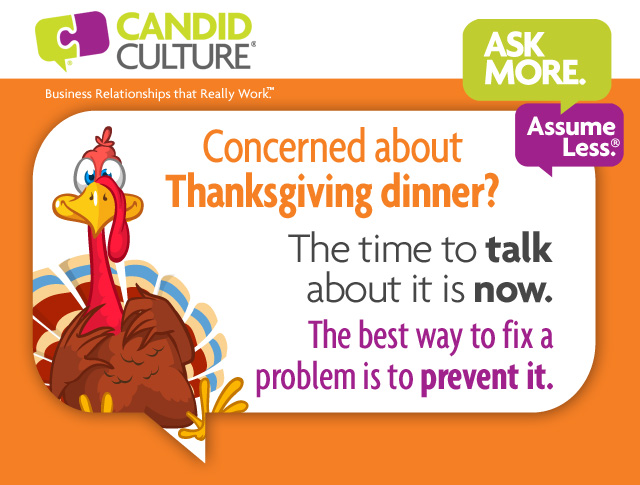
The time to talk about what everyone needs to feel comfortable at Thanksgiving dinner is now. Don’t wait until Thursday. Consider what you need to feel comfortable and make requests today. Breakdowns are predictable. And what you can predict, you can often prevent.
How many people do you feel comfortable being in the same room and house with? Do all attendees need to be vaccinated? Do you want assigned seating so people sit with people they see regularly? Do you want people to take Covid tests before attending an event? You can likely have whatever you’re willing to ask for. But you likely won’t get what you don’t ask for.
You may be concerned that your requests are too much and thus you’re hesitant to make those requests. If you’re afraid to ask for something, feeling like it’s just too big of an ask, say that. Saying how you feel has a lot of power and is disarming. It could sound something like, “I’m feeling nervous about Thanksgiving dinner. I’ve been hesitant to say anything because I don’t want to offend you. Is it ok if I ask a few questions?”
“I haven’t been in the same room as a group of people I don’t know well in a long time. How many people are coming? What requests are you making of guests from a health and safety perspective? Are you comfortable asking that everyone be vaccinated and take a rapid Covid test before arriving?”
Sprinkle your questions into the conversation. Ask for what you really need. Asking these questions of the host before the dinner is a lot less confrontational than telling a guest they’re sitting too close to you and asking if they’re vaccinated. Thinking through your needs and making requests before an event is always easier than trying to change a situation. The best way to prevent an uncomfortable situation is to talk about it before it happens.
When my son started pre-school and kindergarten, I went to new parent orientation. At those orientations I sat next to parents who told me their questions about the programs. But they never asked the people running the meeting their questions. They wondered in silence, whispering to seat mates who didn’t know any more than they knew. I’m always flabbergasted by these situations until I remind myself that people don’t like to admit they don’t know something. No one wants to look stupid.
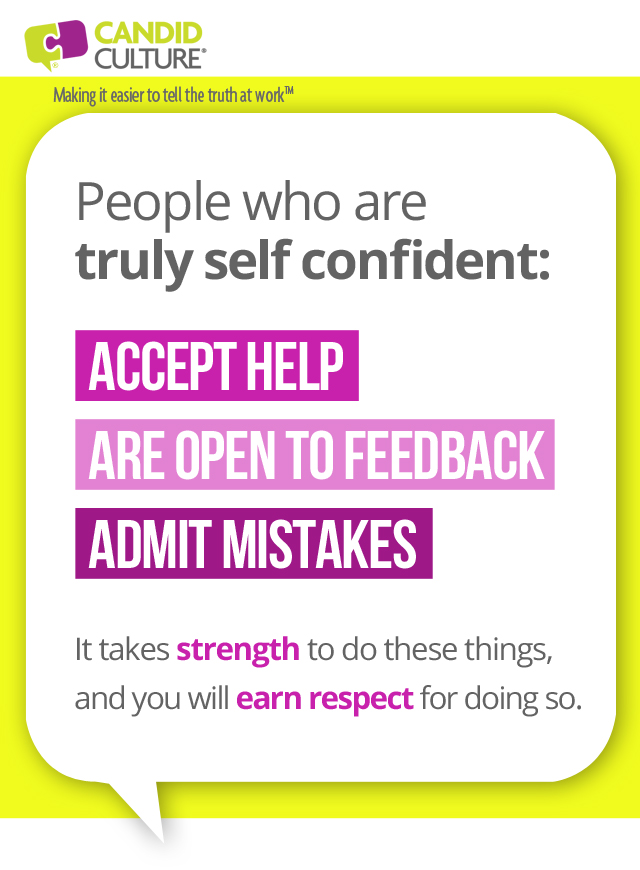
Most of us aren’t eager to admit when we don’t know something, need help, or make a mistake. We fear these things will damage our reputation and make us appear less than to others. But neither are true. It takes strength and self confidence to admit mistakes, accept feedback, and ask for help. Strong, self-confident people do all of these things.
When someone who works for me is willing to admit mistakes, I think more of them. When employees ask for help rather than spin their wheels unnecessarily, I’m appreciative. When they’re open to feedback, I’m grateful they’re easy to work with. And the same is likely true for you.
Before launching Candid Culture, I worked with a CEO who frequently lead with, “I may not be the smartest guy in the room, but…” The CEO was trying to appear humble and relatable, but he was the smartest guy in the room and we all knew it, thus his attempts were false and came off as such. Arrogance masquerades as self confidence. People who are arrogant come off as strong and self confident, but it’s a façade.
It may seem like your personal power and reputation will be diminished by admitting mistakes and accepting help. But this couldn’t be further from the truth. It takes strength to say you don’t know how to do something, to embrace feedback that stings, and to admit bad choices. And strong, self-confident people do all of these things, regularly.
You won’t lose credibility or damage your reputation by being humble, instead you’ll be seen as real, relatable, and willing to admit a lack of perfection. And all of those things take strength that ingratiate you to others. So be yourself. Don’t pretend you’re better or more knowledgeable than you are. Authenticity goes a long way.
Get the words to say the hardest things in two minutes or less. If you work long enough, you’ll eventually be confronted with these situations. Giving feedback doesn’t have to be hard.