
Sometimes we ask people for feedback when we don’t really want the answer.
• Do I look fat in these pants?
• Do you think ______ (insert name of person you’re dating) is right for me?
• Was I rude to ______ (insert name of person who annoyed you)?
• Did I do a good job on ______ (insert project)?
Don’t ask questions you don’t want answered. If you do ask, don’t get defensive when you get an answer you don’t like.
If you ask for feedback, people may just give it to you. When they do, make it easy on them. So they’re willing to do it again. Don’t get defensive!
Every time we get defensive, we train people not to tell us the truth. And it doesn’t take many instances of dealing with our defensiveness before people learn that telling the truth (as they see it) is just too hard. So they stop. And we continue dating the wrong people, while wearing the wrong pants.
The right answer to feedback is always “thank you”, regardless of what you think of the feedback. It could sound something like, “Wow, that’s really disappointing. Thanks for telling me.”
If you want someone’s opinion, ask for it. And accept whatever they say graciously, regardless of what you actually think. And if you don’t want honest feedback or can’t take it without saying “thank you”, don’t ask.

You may be looking forward to seeing your family this weekend, but may not be looking forward to their inquiries and advice about the status of your life.
Unsolicited feedback is often unwelcome. Most people are more open to hearing another’s point of view when she asked us if she can share it first.
If your family starts to pry or give unsolicited feedback, there are a few things you can do.
- Thank them for caring. Then tell them that you’re really trying not to think about ______ (insert topic). And ask if you can talk about something else.
Or…
- Thank them for caring, and tell them that you aren’t looking for advice about _____ (insert topic). Again, you appreciate their concern and will come to them for guidance, when that’s what you want.
The people in your life care about you. They want to make a difference. Chances are they are not even aware they’re giving unsolicited advice. Many people give advice so automatically, they don’t even know they’re doing it.
Things not to do:
Don’t apologize for not wanting to talk about a subject or for rejecting unsolicited advice. Unless you’ve been rude or mean spirited in your communication, you have nothing to apologize for.
You could consider trying to prevent unsolicited advice by setting expectations before awkward conversations happen. Tell your family and friends that you are excited to see them, but don’t want to talk about _______ (insert job, spouse, speeding tickets, weight loss, or whatever ails you). Or, tell them that you do want to share what’s happening with (insert situation) but are not looking for advice. Tell your family and friends, if they can resist the temptation to tell you what to do, you’ll be happy to give them an update.
Here are a few sample scripts:
“Thanks so much for being concerned about my career. I really appreciate it. I’m not looking for advice right now, but if I want to talk about it, I’ll let you know. Thanks again for being concerned.”
Yes, you really can say this.
Here’s another one: “Thanks so much for being concerned about me. I know you want me to be happy and only want what’s best for me. I don’t really want to talk about my relationship with Lisa/Bob. But again, I really appreciate your concern.”
Yes, you can really say that too.
If you want more sample language, there are many more examples in my new book. And in honor of unsolicited advice week (a.k.a. Thanksgiving), we’re having a buy one-get-one free special. Maybe your mom will read the book!!

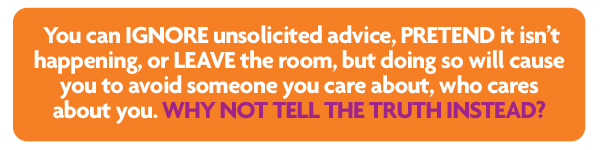
You may be concerned that speaking up will damage the relationship and decide it’s easier to say nothing. But the relationship is damaged anyway. When we avoid people or are afraid to say what we really think, our relationships need work. So why not speak up, make a request, and see if things get better?
If you have a tendency to give unsolicited advice, catch yourself. Try this instead, “I’ve been thinking about your desire to break into a new field work wise. I have a couple of ideas. Do you want to talk about it?”
Or, “I’ve been thinking about your relationship with Joe/Suzanne. You mentioned it’s been a struggle of late. Do you want to talk about it?”
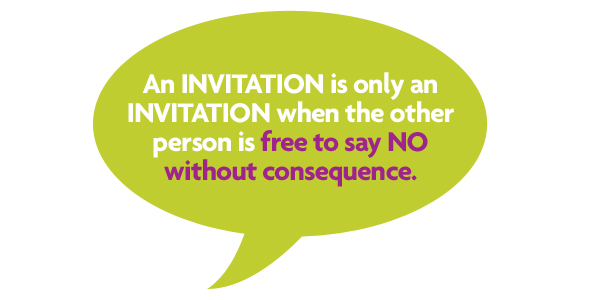
Then let the person say no. If you’re going to make a conversation available, it must be ok to say no! If the person can’t say no without offending you or damaging your relationship, you’ve made a demand, not a request.
Make your holiday less stressful and more fun by telling the truth. If it goes badly, you can blame me. Be sure to call and tell me, so I can write about you next week. I’ll ask for your permission before I do it!
A few months ago, a participant in one of my programs asked me if introverted leaders are at a disadvantage in the workplace? The answer is a resounding YES!
Her question reminded me of a conversation I had with a manufacturing plant manager years ago. He was frustrated with his safety manager who was quiet and didn’t speak up in meetings. The plant manager was gregarious and hired people who matched his style. Everyone on his leadership team, excluding the safety manager, was outspoken. Their team meetings were boisterous events in which everyone talked, excluding the safety manager. The plant manager felt that if the safety manager didn’t start speaking up in public settings, his contribution and career would be limited.
Often the only exposure most employees get to their organization’s senior leaders is in meetings. And introverts often don’t speak up in meetings. Senior leaders often decide that because they’ve never heard ______ (insert name) speak, s/he must have nothing to say. This isn’t true, of course. And it isn’t fair. But it is how it is.
Extroverts think as they’re speaking, hence the expression think out loud. Introverts typically think through their thoughts before they share them.
Introverts have a lot to say. And because they process before they speak, what they have to say can be more thoughtful than what extroverts say. But the senior people in your organization are busy. While they may want to get to know each employee personally, they simply can’t. Busy schedules and limited exposure force senior people to form quick and sometimes inaccurate impressions and judgments about employees.
Introverted leaders need to find ways to make their opinions and contributions known. And they can do that in a variety of ways that are aligned with their personal styles. None of us are going to, nor should we, become a different person to fit in at work. We can adapt and adopt different behaviors, but we are who we are. And if we try to be someone we’re not, that façade will eventually become unbearable, and we’ll quit.
My advice is to be yourself, and find ways to share your contributions in a way that resonates with your personal style.
Here are a few suggestions for introverted leaders:
- If you’re uncomfortable speaking up in meetings, email your ideas to senior leaders, where appropriate.
- Ask for a one-on-one meeting with your boss’s boss. Ask your boss to support the meeting and tell him/her that you know you’re quiet and you want to increase your exposure in the organization. Don’t go around your boss. This will never bode well. Simply demonstrate self awareness, commitment to your career and to the organization, and ask for your boss’s support. Prepare an agenda for the meeting that includes potential solutions to organizational challenges.
- Make sure you are meeting with your direct supervisor at least once a month. During the meetings share your most recent accomplishments. These meetings are an appropriate place to self promote. If you don’t tell your boss all the great things you’re doing, s/he may not know. And if s/he doesn’t know what you’re doing, she definitely can’t share your accomplishments with others. If your boss doesn’t schedule one-on-one meetings, ask for the meetings. That request can sound like, “I know how busy you are. I want to be sure you know what I’m working on and that I get your input on projects. Can we meet once a month to discuss?” There are more examples of how to get more face time with and feedback from your boss in chapters five and nine of my new book How to Say Anything to Anyone.
- Push yourself. If you’re asked to present at a meeting, do it, even if you’re uncomfortable. Make notes and practice out loud until you’re more comfortable.
- Ask for exposure to different types of work and departments in the organization. Cross train where appropriate. Offer to help on projects outside of your role. Meet people in other departments. Get to know more about what others do and how you can add value to their department and projects. This will demonstrate your commitment to your career and to the company, and will give you exposure to different people and parts of your organization.
In other words, push yourself. Your job will feel richer and you’ll be positioned to do more.